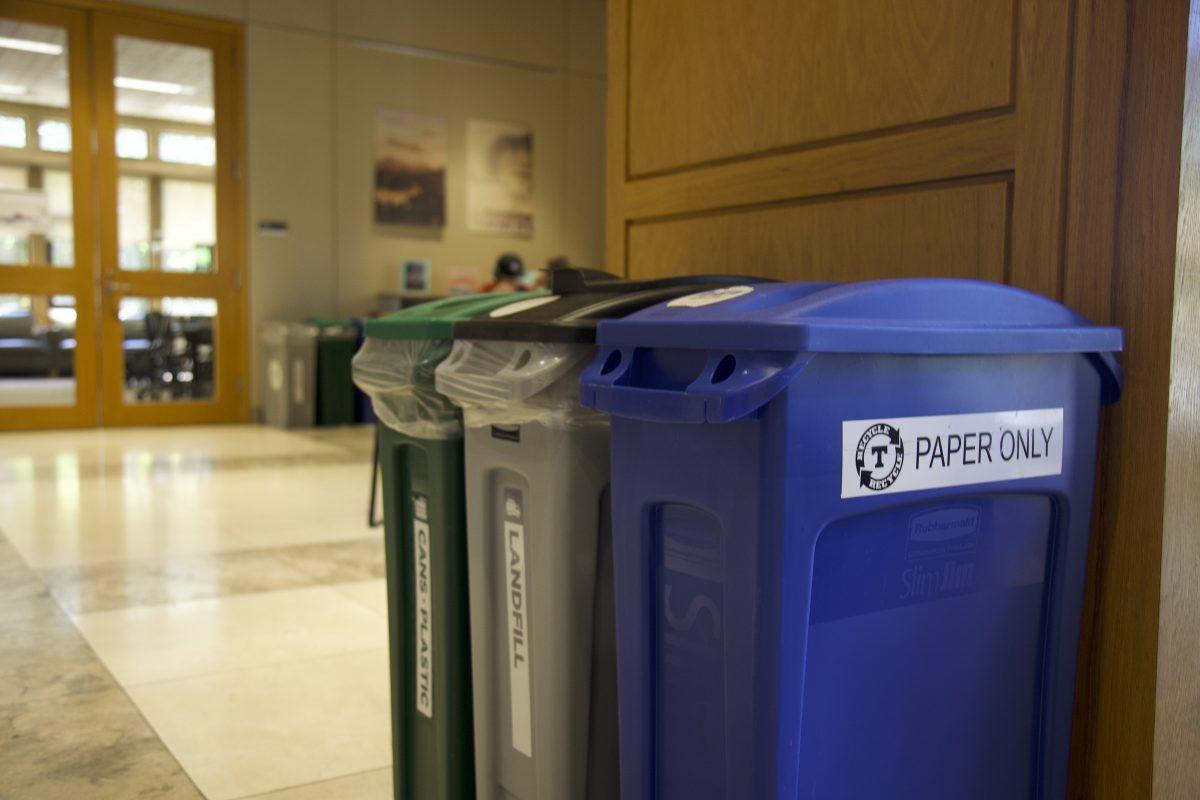
While 43% of American households participate in recycling, only 87% of the materials they put in recycling bins are actually recycled and sent to market as sellable commodities. This means that the other 13% of the materials end up in landfills due to contamination or their inability to be sorted.
Common misconceptions about recyclable materials and the recycling process itself cause many to unknowingly participate in “wishcycling” — a term used to describe when a person disposes of waste in a recycling bin believing it will be recycled when it most likely cannot be.
Here are five guidelines you can follow to make sure you aren’t the “wishcycler” of the friend group.
Take plastic bags and wraps to retail stores with recycling drop-offs
One mistake many recyclers make is attempting to recycle plastic bags and wraps, including grocery bags, candy wrappers, chip bags, zipper bags, toilet paper overwrap and more. These bags and wraps are stretchy and get stuck in recycling machinery, causing havoc to the sorting process.
Instead of putting your plastic bags and wraps in your curbside recycling bin, take these materials to a participating retail store with a designated recycling drop-off. These stores provide a way for your stretchy plastics to get to a facility that has the ability to sort and process them effectively.
Some local stores with recycling drop-offs include Target on Washington Pike, Walmart on Kinzel Way, Lowe’s on Clinton Highway and JCPenny on Kingston Pike. You can search for other stores near you that offer recycling services on Earth911’s recycling center quick search.
Dispose of glass at a city drop-off center
A less common recycling mistake, but still a prevalent one, is attempting to recycle glass products in curbside single-stream bins. When glass is put into single-stream recycling bins — those where all types of recyclables are mixed, as opposed to those that have separate bins for each type — the glass often breaks, making the load unsortable. The bin’s contents are frequently considered contaminated, and the whole load can become destined for a landfill.
Still, glass is a highly valued recyclable due to its ability to be recycled over and over while retaining its quality and purity. Though glass cannot be recycled in convenient curbside bins or single-stream systems, you can still recycle glass at several places around Knoxville.
One easy-access spot to drop off your glass is UT’s 24-hour Public Recycling Drop-Off located at 2121 Stephenson Drive Dock 24. There are also five City of Knoxville Drop-off Centers — one in each of the four directional regions and one downtown — attended by Goodwill Industries.
Make sure plastic bottles and containers are clean and dry
Another action that leads to unintentionally wishcycling is depositing hard plastic bottles and containers covered in food remnants into recycling bins. Plastic and cardboard containers must be “empty and rinsed clean of food debris before being recycled,” according to the Environmental Protection Agency.
It can be tempting to toss your to-go boxes and soda bottles straight into the recycling bin, but doing so can soil the whole load and cause harm to the recycling facility’s machinery. Instead, rinse out plastic bottles and containers with water before placing them in a recycling bin. The good news is: These items are perfectly recyclable in curbside bins, which you can find all across campus.
Donate your used clothing
Textiles cannot be recycled due to complications in sorting, processing and costly mechanisms. While there are some textile-to-textile recycling organizations working to find a cost effective way to recycle clothing, the system is not yet well established. Until the kinks are worked out, it’s better to donate your used clothing to secondhand clothing stores.
There are several stores in Knoxville that take clothing donations in small quantities and in bulk. Goodwill and KARM each have a number of locations around the city, and The Thriftique at Knox Pride, which opened in January, and Greater Goods on Kingston Pike both accept clothing donations of all kinds.
The Free Store on campus is another convenient place to donate your clothing and one that gives back to the UT community by offering secondhand clothing to students completely free.
Familiarize yourself with your state’s and city’s rules
The best way to ensure that you’re recycling the right way is to check your local recycling agency’s website for guidance. Recycling rules vary by state, and sometimes by city, so it’s important to be aware of what you should and shouldn’t recycle, as well as how to recycle various items, in a specific area.
You can find Knoxville-specific and Tennessee-specific recycling guidelines on the Tennessee Environmental Council’s website.