University commitment to free speech, due process and shared governance resolution
The Faculty Senate passed a resolution at its Monday afternoon meeting aiming to restore confidence in UT governance following controversy over the termination of Tamar Shirinian.
The resolution, proposed by Eva Cowell and David Butler, co-chairs of the Faculty Affairs Committee, outlines the University’s commitment to “due process, free speech, and shared governance” and resolves that UT administration provide a written statement to the university community reaffirming its commitment to those values.
“A key part of UT Knoxville’s reputation is built on our commitment to the rule of law, and our own policies,” Butler said. “However, recent actions have damaged faculty trust that the administration will follow these rules consistently and uphold the established processes that safeguard faculty rights.”
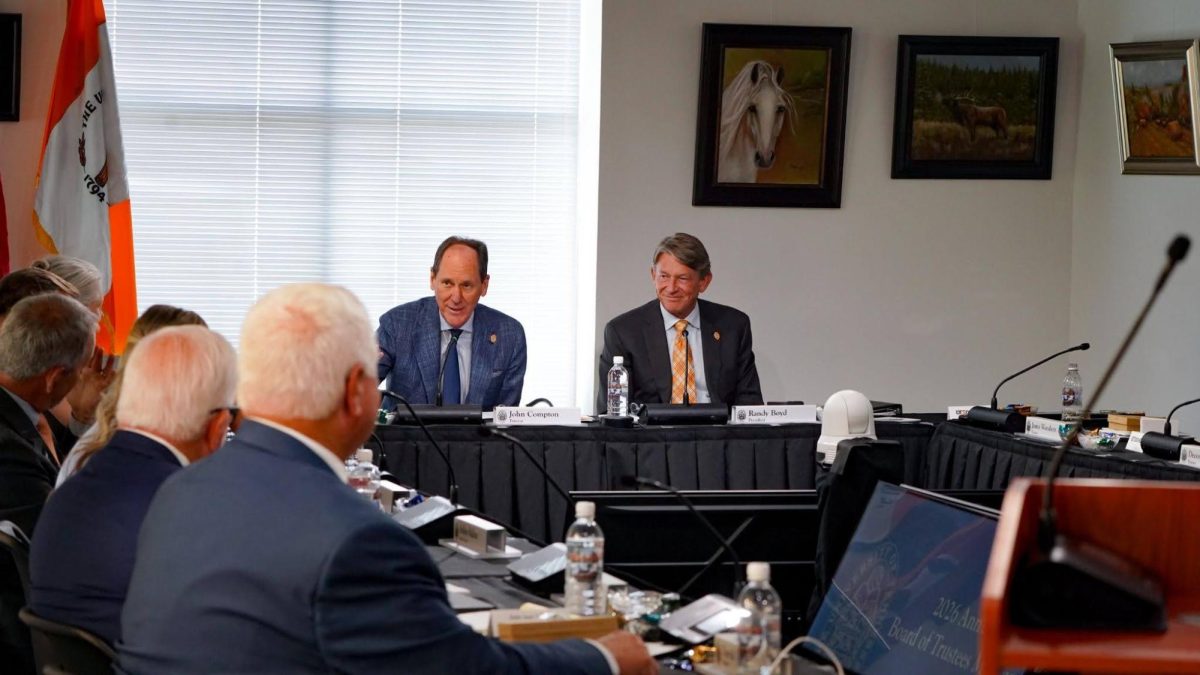
The resolution references UT’s Faculty Handbook, UT Board of Trustees Policy, Tennessee State Law and the Constitution of the United States. It also mentions a recent comment by UT President Randy Boyd from October’s Board of Trustees meeting.
“We are committed to following all university policies, all state and federal laws and to the protection guaranteed by the first amendment,” Boyd said.
The document claims university administration “violated these principles,” “failed to provide due process” and “violated shared governance” in its termination proceedings.
“This resolution provides a clear path to restore confidence in university governance,” Butler said. “It is a call to protect the processes that ensure fairness and the freedoms that power our mission of education, discovery, and outreach.”
Typically, the senate votes by holding up paddles with their names. For this resolution, the senate voted privately through paper ballots or a digital link. 59 senators voted in favor of the resolution, 11 voted against it and nine abstained from voting.
Enrollment overview
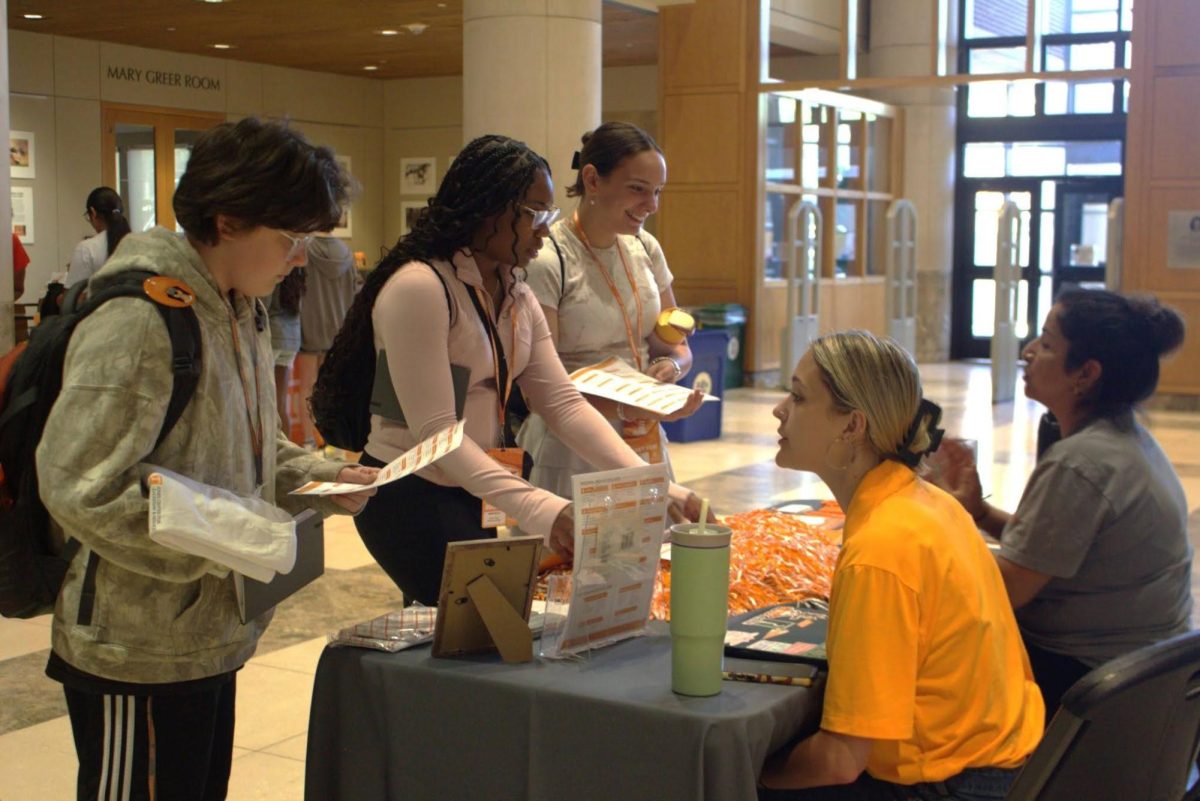
The faculty senate addressed enrollment goals as college application season comes to a close.
Kari Alldredge, vice provost for enrollment management, provided an enrollment overview. Part of the university’s strategic enrollment plan is to reach a total enrollment of 55,000 students by 2030.
Alldredge said UT is on track to reach 70,000 applications this year. Despite the increasing number of applicants, the university is beginning to flatten out first-year enrollment after years of growth, keeping a target first-year class size of 7,100 students.
“The way we grow enrollment in the future will look very different,” Alldredge said.
UT is focusing on increasing enrollment through online programs. According to Alldredge, there are 45,000 people in Tennessee enrolled in fully online degree programs out-of-state.
“We should be carving into that market share,” Alldredge said. “It’s going to take a little time to plant seeds, to scale up, but it’s an exciting opportunity.”
Alldredge said the university is continuing its commitment to serving Tennessee applicants first, creating first-year classes with in-state students first and building the remainder through out-of-state applicants. Additionally, UT is in its second year of offering guaranteed admission to in-state students who meet certain academic thresholds.
“It is much harder to get in as an out-of-state student than it’s been in the past,” Alldredge said.
Volunteer core evaluation
Looking ahead, UT Provost John Zomchick discussed new initiatives UT governance is working on.
Beth Avery Foster, vice provost for academic affairs, assembled a committee to review Volunteer Core, UT’s general education curriculum. The committee’s purpose is to evaluate whether or not the current curriculum meets its three intents: intellectual breadth, civic responsibility, and personal growth.
“I’ll come clean,” Zomchick said. “I think that we have too many requirements at the moment.”
Artificial intelligence initiative
The provost is also starting an initiative to consider what resources the university can provide to answer faculty questions about AI.
“I’ve been hearing a lot from various faculty these days, and from students, about artificial intelligence — about what the university should be doing about artificial intelligence, about our role we should have in helping our faculty become more adept in the use of artificial intelligence — so that they can understand where their students are, and perhaps lead their students toward an understanding about the benefits, and the limits or dangers, of artificial intelligence” Zomchick said.
Association of public and land-grant universities award
Zomchick finally highlighted the university’s recent win of the Innovation and Economic Prosperity Economic Engagement Connections Award, awarded by the Association of Public and Land-grant Universities.
“It was very gratifying to get that,” Zomchick said. “It is also gratifying to see the recognition that the university is getting nationally for what it’s doing.”
The Faculty Senate will meet again Feb. 2, 2026.