A tiny, vampiric bug crawls onto the shoe of an unsuspecting hiker. It climbs up to deliver a painless bite – one with serious consequences.
Tick-borne illnesses have reached some of the highest rates in a decade, prompting a strong demand for solutions.
In a new study published in the European Molecular Biology Organization Journal, scientists at the University of Tennessee College of Veterinary Medicine have discovered a protein found in ticks that could prevent disease transmission.
The research was conducted by professor Hameeda Sultana, alumni postdoctoral fellow Waqas Ahmed, and various former and current graduate students.
“When ticks bite, we get a highly inflammative bump,” Sultana said. “It is not just a nuisance, but if they’re infected, they can transmit the viruses and bacteria to us.”
Lyme disease, Rocky mountain spotted fever and alpha gal syndrome are just a few of the conditions caused by tick bites. Tick-borne diseases cause a range of issues including fever, rashes, allergic reactions, paralysis and, in some cases, death.
Sultana’s sparkling green earrings swayed as she excitedly spoke about her findings. She said this field of research had unconventional beginnings, but it provided a pathway for her lab’s success.
“This line of research emerged from the field of cancer biology and neurosciences,” Sultana said, “however, my lab is the very first lab to discover and talk about exosomes from ticks and mosquitoes.”
The lab focuses on arthropod-derived exosomes, small, bubble-like structures that are important for cell communication.
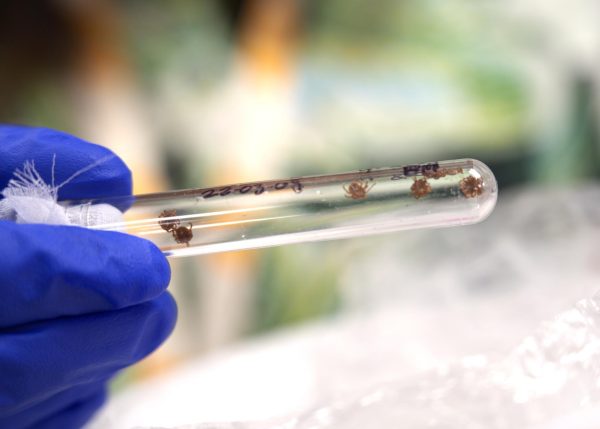
Sultana and her team discovered a protein carried by these exosomes in tick saliva that assists in disease transferral. After this discovery, the lab conducted many transmission experiments to observe the effects of manipulating the protein.
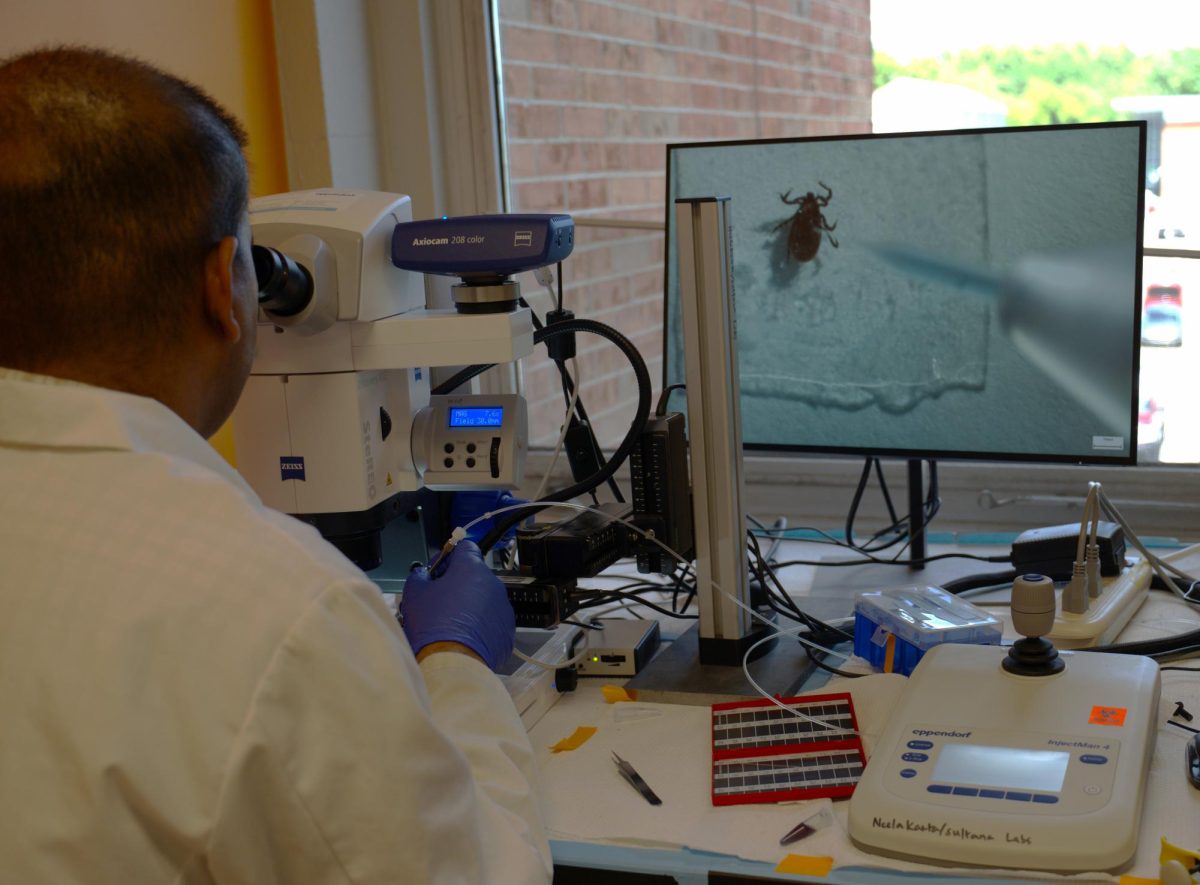
“When we silence this molecule,” Sultana said as she pointed to a screen displaying a small, brown tick being pierced with a minuscule needle, “we have an ability to micro-inject DSRNA into the body of the ticks.”
By silencing the molecule, the ticks were unable to feed properly, therefore unable to efficiently infect the host.
Then, a purified version of the protein was given to mice in doses. The tests found that the mice had a higher rate of survival due to the antibodies created against the protein.
Understanding these proteins could be the first step toward preventing tick-borne disease transmission by laying the groundwork for the potential creation of vaccines and medicines.
“We strongly believe that this antibody and protein can go into something called transmission blocking vaccine studies,” Sultana said.
According to Sultana, by targeting this exosomal molecule, the creation of immunizations and topical creams to deter ticks and prevent illnesses could be a real possibility.
The lab received funding from the National Institutes of Health, but the grant they are operating under will conclude this month.
Sultana is seeking additional funding to expand this line of research, with plans to conduct transmission experiments first in higher primates and later in humans.
This discovery highlights UT researchers’ commitment to scientific progress and public safety.