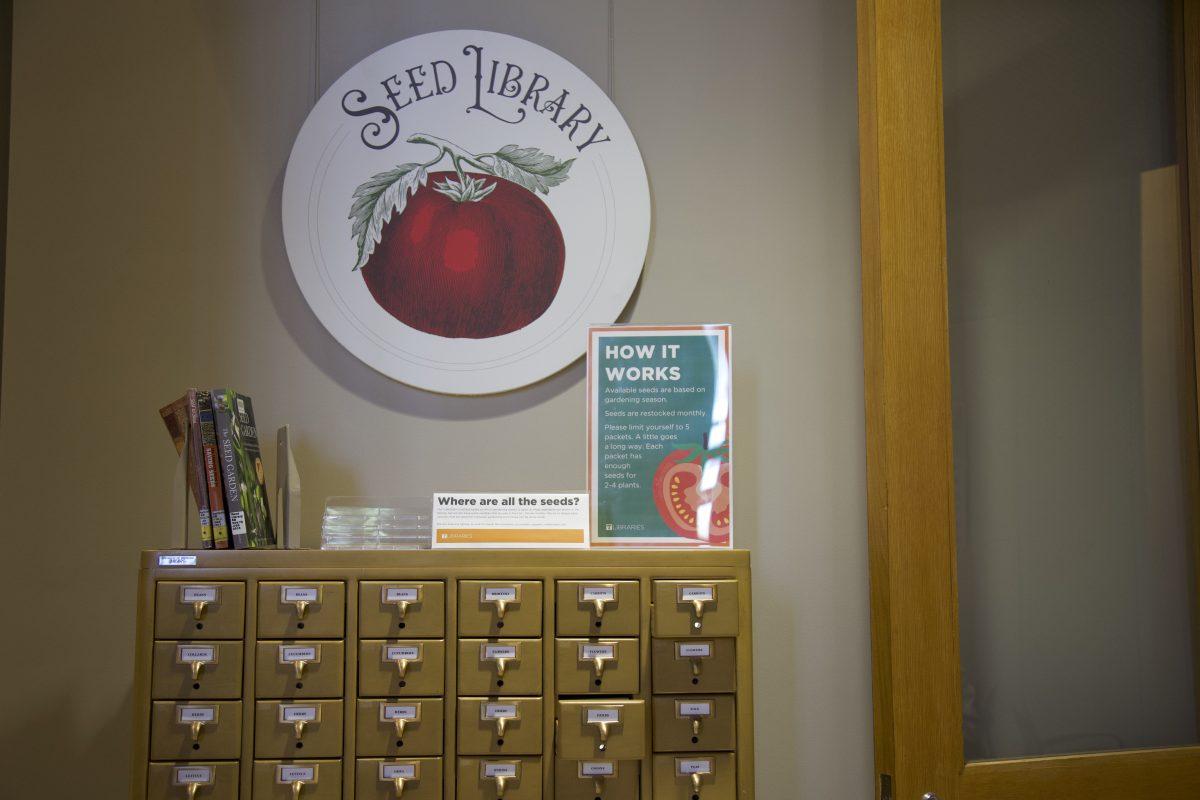
The University of Tennessee has an amenity to the Hodges and the Pendergrass libraries: the seed libraries. The seed libraries in both Hodges and Pendergrass is open to all staff and students. The Hodges seed library is on the second floor near the front entrance, and the Pendergrass seed library is near the computer lab.
According to the University of Tennessee’s seed library website, the purpose of incorporating a miniature garden within the two libraries is to “move forward the frontiers of human knowledge and enrich and elevate the citizens of the state of Tennessee, the nation, and the world” by instructing the students about the importance of living healthy and food availability.
Food insecurity is a prominent issue, especially among college students. For example, the Help Center at Temple University states that “more than 4 million students are food insecure.”
Luckily, the University of Tennessee has many resources to help students who deal with food insecurity. Some of the resources include the Grow Lab, Big Orange Pantry and the Seed Library.
In both seed libraries, there are a variety of seed types to choose from. For example, the Hodges library has food products such as beans, tomatoes, broccoli and watermelon seeds. Pendergrass Library has similar seeds as well as wildflowers and flowers.
Sarah Johnson is a librarian at the University of Tennessee and was raised in Knoxville. Her job is to help students and staff find the resources they need in the library. Johnson spoke about why she loves being a Vol librarian.
“I get to teach, review and organize collections, and interact with new people,” Johnson said.
Like Johnson, Samantha Ward is also a librarian who is the director of the Pendergrass Agriculture and Veterinary Medicine Library. She grew up in Tennessee and worked part time at a library. This side job inspired her to make a career out of it.
When Johnson brought the idea of a seed library to the administration, they thought the idea was beneficial and added it to both libraries. Ward spoke more about the administration’s thought process for the seed library.
“In 2016, UT set a bold new initiative to enhance students’ development and educational experiences through experiential learning,” Ward said. “The UTK Seed Library was developed to support that vision by facilitating engagement through experiential learning opportunities across the curriculum, creating opportunities for learning communities, transdisciplinary projects, and research opportunities for students and faculty.”
Not only does the seed library help with food insecurity, but it is also useful in academic settings. Students can take seeds to grow them for their courses. The Grow Lab has also used them to grow products that are then sent to Smokey’s Pantry. Ward spoke more about the other opportunities that come from the seed library.
“A couple of the other cool things that we’ve done have been working with UT’s Entomology and Plant Pathology Department and Bee Campus initiative to host a honey tasting and also collaborating with McClung Museum to host a talk with their curators that was accompanied by a soil painting activity and a seed collection exhibition,” Ward said.
In addition to the food going towards those resources, the seed library was a tremendous help for supporting Vols in need during COVID-19. In 2020, the people in charge of the seed libraries shipped seeds home to students. This was part of the Seed to Table Summer Program where any student could sign up to get seeds and learn more about the process online.
The process to start building your own sufficient garden is quite easy. All you need to do is go to one of the libraries and pick out your desired seed packet. Once you have your seeds, you can take them home with you and plant them without needing to return anything. It is recommended that no one takes more than five seed packets to make sure there is enough for everyone.