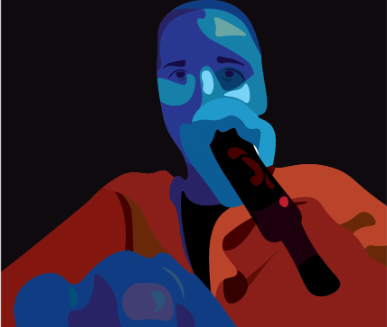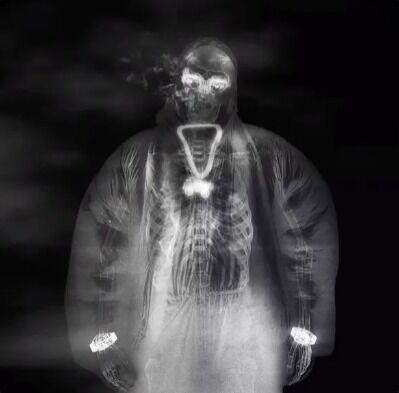
No one in hip-hop had a more productive summer than Portland native Noah Oliver Smith, known to most as Yeat. Having released his sophomore project “2 Alivë” in February, it peaked at No. 6 on the Billboard charts and got the attention of Lyrical Lemonade’s Cole Bennett, who directed the video for the album’s single “Still Countin.”
Yeat performed at Lyrical Lemonade’s Summer Smash in June and saw himself sent to TikTok stratospheres and noted as a box office game-changer with his song “Rich Minion,” accompanying the newest installment of the “Despicable Me” series. Capping off his summer with the September release of a third studio album, “Lyfë,” it really didn’t feel like there was a voice as attention-grabbing as his.
Yeat’s rise to stardom has been almost as surreal as his rise to rage fame. Doubling down on the vocalic ridiculousness that guys like Young Thug and Playboi Carti introduced amidst a beat selection that sends your stomach to your throat with every count, it’s hard to not get absorbed into the universe Yeat seems to add to with every new project. Metallic percussion, mangled wails of pill-filled joyrides, it’s all a part of the character that’s been built around Yeat since he first donned the now-infamous turban. If this world can’t be his, he’ll just make his own.
Immersion is probably the word that first comes to mind in regard to the rage-rapper. Since his earliest days, Yeat has always been a little left of center in relation to his contemporaries. His ad-libs read more tortuous than giddy — he has a rotation of repeating made-up words in his arsenal that his fanbase seems to have integrated into their everyday vocabulary. Even his production style seems more exclusive to his stylized takes than it does complementary of them. It’s sonic absorption in the truest sense of the phrase. Beats let all their extremities drown into and ooze out of one another fluidly to create mixes that seem to just swirl everything into a synth stew with a dash of battery acid.
On “Aftërlyfe,” Yeat’s vocal variety even extends itself to alter-egos. New characters like “Kranky Kranky” and “Luh geeky” make their debuts on this fourth installment in the Yeat universe.
The rapper took to Instagram earlier this week, saying, “Them features is myself, I’m just different people sometimes.”
We’d be amiss to simply dismiss a move like this as hilarity, though. Once again, it’s a part of a gimmick that comes across as meme-caliber until you ask yourself the question, who on Earth could do that and get away with it? It’s a question with only one real answer, and to be honest, it only really goes to solidify Yeat’s cult status. For him, features aren’t industry connection muscles to be flexed, but rather opportunities to accommodate for foreign visitors, even ones who may not live on our planet.
Once you’re strapped into “Aftërlyfe” and its hyperspeed voyage through whatever galaxy Yeat occupies, it becomes clear that the journey is top priority for our linguistically innovative, multiple-personality wielding captain of this spaceship. A lot of his criticisms come in the form of complaints of repetitiveness, and a comparison to those adjacent to his sound. His torment isn’t as eloquently stated as Future’s, he’s not nearly as wild and wobbly at the party as Lil Uzi and his projects seem to feed in and out of one another to a point that they can’t be separated from into disparate installments.
As true or false as these claims may be, they completely avoid the intention Yeat brings to “Aftërlyfe.” He’s not focused on whatever the struggles of planet Earth may be. In fact, he’s more concerned with getting off-world as soon as possible. It may be his current place of residence, but by no means a final resting place. This notion made clear about five tracks in, on “Nun id change.”
An ode to synthwave that’s urgency is on par with that of the “Drive” or “Tron: Legacy” soundtrack, Yeat croons over a numbness amidst excess, saying, “I don’t think that I can feel, I just wish that I could feel.”
His vocals undulate through the pain as the arrangement’s g-forces whip you somewhere less tangible, less locked in to reality. While Yeat accredits a lot of his inspiration and first steps into music to drugs, it seems to be a vice he’s willing to go off-world to escape.
Where Yeat’s home planet is and what his intentions are here on Earth still remain a mystery even after this latest project. The lore surrounding him is one that borders on cult-status, still less than a decade into what’s sure to be a storied career for the 23-year-old.
Wherever his final destination is, the efforts to get there submerge themselves deeper and deeper into the dissonance and chaos that spike that hypnotic drink he keeps serving before take-off. Hailed by fans as a curator of eternal feeling, and by haters as a shallow attempt at iconography, to know if Yeat is gimmick or grandeur will most likely still be undefined after the sonic dust has settled from “Aftërlyfe’s” zero to a hundred charge onto streaming.
There is only one thing that can be said for certain, and that is that Yeat will continue to do Yeat. Extraterrestrial or otherwise, his movements within music and culture are as far from human as anyone in his arena up to this point. Just as his yelps and ad-libs seem to bounce around the cosmos, so will his personage for years to come.