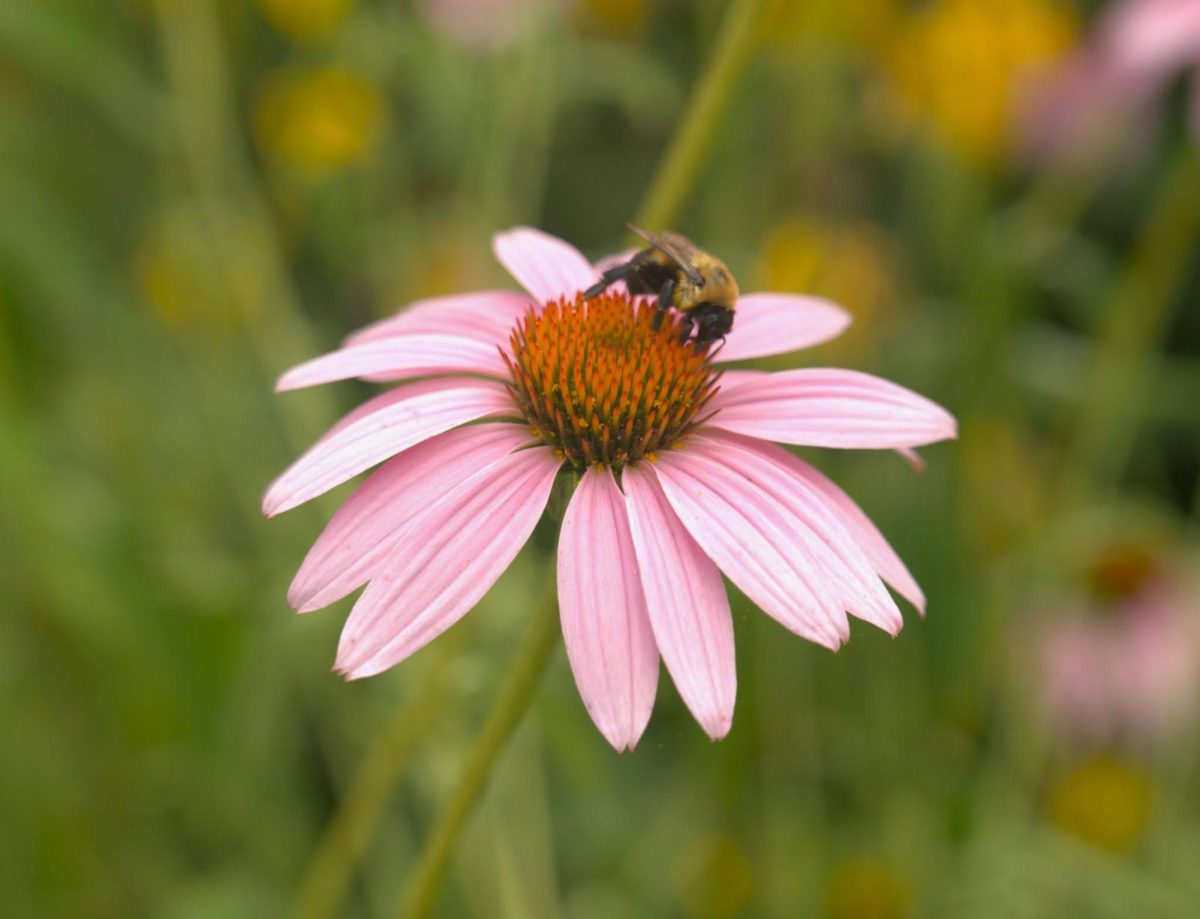
Lively honeybees bounce from flower to flower. The muted whirring of hummingbird wings can be detected by attentive listeners.
The middle of a warm Tennessee summer is a fitting time to celebrate our incredible pollinators.
Animal pollinators are responsible for aiding fertilization for around 35% of the world’s food crops. That means one out of every three bites of food you eat is all because of the efforts of pollinators.
National Pollinator Week is June 22 through 28 this year. Here are five ways you can show some appreciation for the hardworking insects and animals that help feed the world.
Plant native flowers
Planting local species is much more ecologically responsible than introducing non-native or sometimes invasive plants that could potentially harm the state’s flora.
There are a myriad of flowering plants that pollinators enjoy. The Tennessee Pollinator Plant Database can be used to identify plant species in your region popular with native pollinators.
Volunteer at a local nature center
For a more hands-on approach, volunteering your time at a nature center allows you to spend time outdoors and advances the efforts of employees and fellow volunteers.
Many centers offer opportunities to plant flowers, create educational materials for youth groups and some provide short-term research programs for those interested in learning more about pollinators.
Create an observation journal
During your time off from studying, consider taking time to observe the natural world. Using a journal or notebook, sketch the pollinators you see.
By taking notes on their movements, preferences for certain flower species and wing designs, you can learn more about what makes our native pollinators special.
Visit the UT Gardens
Open from daylight to dusk, the University of Tennessee hosts the State Botanical Gardens. The garden has a wide variety of ornamental plants including vivid florals, edible vegetation and an arboretum collection.
Not only is it a nice escape from the hustle and bustle of city life, but it is a phenomenal environment to use your observation journal to document pollinators in action.
If you are spending your summer in western or middle Tennessee, stop by the botanical gardens in Jackson or Crossville for the annual “Garden Buzz” events to celebrate with others in your community.
Create a pollinator-themed craft
The anticipated summer break from classes is an opportunity to exercise your creativity. There are so many ways to incorporate pollinators into artwork. If creating a collage of bee and butterfly drawings does not entice you, perhaps using clay to mold a fruit bat will garner your attention.
If your summer plans include working with children, introduce pollinator concepts to them with interactive activities or experiments that let them gain an understanding of the pollination process through experiential learning.