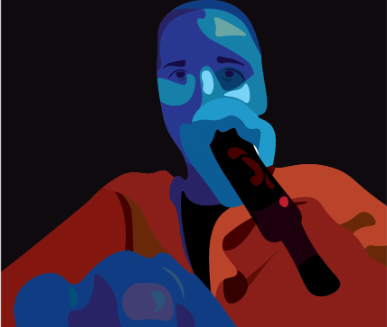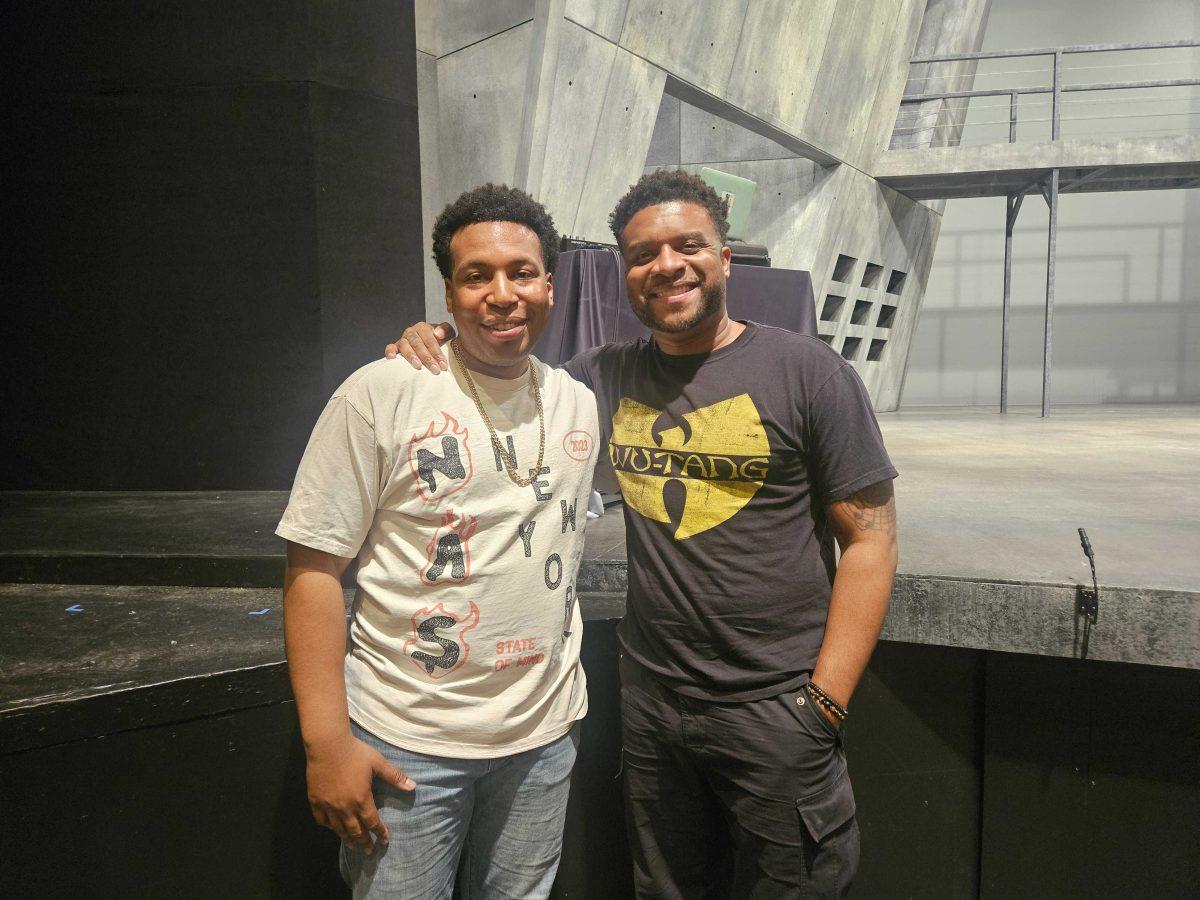
On Monday, Feb. 26, UT alum and hip-hop artist Drew Drake and playwriting poet Keenan Scott II delivered stunning performances at their Slam Narrative show, where they explored the intersectionality between slam poetry and theatre.
Their experiences, both pleasant and painful, bled through in all the words they said. Through the usage of literary devices and rhythm, they weaved a tale of stories about identity and Blackness. They had much to say about the experience of being Black in America and how that has influenced their art.
Drake is an alumnus of UT who graduated in 2016. He has returned to UT this semester as a professor in the theatre department and also plays the role of Father in this year’s run of “The Giver” at the Clarence Brown Theatre. He is even teaching a class next semester called “Theatre and Social Justice.”
In Drake’s poems, he told tales about his grandmother and memories, criticized toxic masculinity, highlighted issues that can persist in Black families and called out the racism underlying our education system.
In Scott’s pieces, he talked about his dreams, the poverty and suffering that exists in poor Black communities and of the times when we feel empty. He said that our contradictions are what make us human.
Madison Wall, a freshman studying nursing and an employee at the Clarence Brown Theatre, was mesmerized by the show.
“I was really engaged, despite not being too interested in poetry,” Wall said. “I thought all the pieces were really powerful. While I couldn’t relate to the experience of racial discrimination, the way they spoke and portrayed it was really powerful.”
After finishing their presentation, Drake and Scott sat down and talked about Scott’s origins in playwriting and slam narrative as an art form.
Slam narrative is the use of slam poetry in a narrative form, with roots in African folklore. When working with actors, Scott has to work to introduce them to the art of slam poetry. It’s one of the ways he creates a slam narrative.
“Most poets are by nature actors, especially in slam poetry,” Scott said.
Scott’s play, “Thoughts of a Colored Man,” made it to Broadway in 2021 after an unfortunate delay in 2020. The play details the lives of seven Black men in Brooklyn, with each character going through their own stories before eventually converging. It is a story with many questions of identity and community. Amsterdam News has hailed it as “the most important play of the 21st century.”
When Scott first started writing in 2006, he felt excluded. It was clear to him that the curriculum taught back then was not made for an African American man. He says he would rather create what he doesn’t see than complain, so he began to write the stories he wanted to see.
“It felt like we weren’t trained to be our best selves,” Scott said. “We were being trained to fit in this stereotypical box.”
Scott graduated from UT in 2009 amid the recession, so he made a living working plenty of different jobs whilst also workshopping his play with Howard University. Eventually, the play made it to Broadway. He said he had a lot of fun producing “Thoughts of a Colored Man” when he first began pitching it, and to this day, he has over 100 drafts of it.
“Our experiences were very common as young Black men in America,” Scott said.
Some artists that inspired Scott include Spike Lee, Langston Hughes and Nikki Giovanni. He works on many projects, so he can switch to a different one when writer’s block hits. When hitting a wall, he consumes other works of art before returning to his own.
Scott has played the part of writer, actor, director and producer. Being in these different roles has allowed him to view his writing from different perspectives. When it comes to acting, he says one of the biggest factors is coming prepared.
“I like actors that come to the table with choices,” Scott said. “I don’t know what’s going to work if you don’t show up as your full self.”
As of right now, Scott has a lot of exciting projects in store, including working with TV and film, hoping to get greenlit. He may revisit the Clarence Brown Theatre in the future.