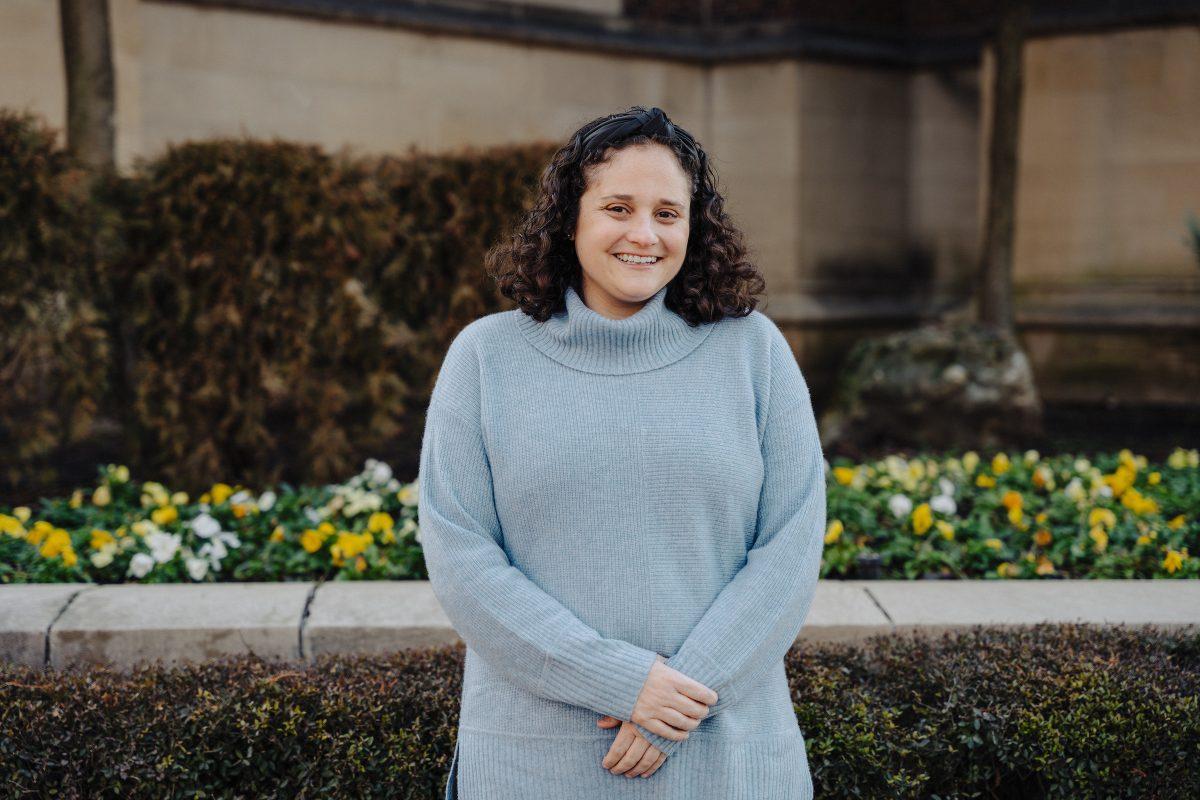
As of Feb. 1, Jessi Gold assumed the position of inaugural chief wellness officer for the University of Tennessee System. Gold’s primary focus in this position is to advance mental health culture and resources across all five UT campuses — Knoxville, Chattanooga, Pulaski, Martin and the Health Science Center at Memphis. While Gold will focus efforts on faculty and employees, she said her largest focus is on students.
During the first six months to one year of her position, Gold will conduct a needs assessment by visiting each UT campus to learn more about its unique culture and existing health resources. She seeks to learn about how students benefit from current initiatives on campuses and ways they can improve.
“I think that one of the cool things about the job is it wasn’t created out of a crisis, and I have to run in and fix a bunch of things immediately,” Gold said. “You’ll often see jobs like this coming to be because something bad happened and then they need to do things and they need to do them quickly. The good thing is we have a little bit of time. … I can figure out what’s working and not. I can figure out all the great stuff that people have been doing and really understand it.”
After graduating with a bachelor’s and master’s degree in anthropology from the University of Pennsylvania, Gold’s passion for talking to people and learning their stories led her to pursue psychiatry at the Yale University School of Medicine. According to Gold, psychiatry felt like one of the few specialties in which doctors can still spend time with people and see their stories and backgrounds really matter. She went on to pursue her residency training, where she was also chief resident, at Stanford University.
Gold described college as an especially unique time for mental health stressors, as it’s often the first time people are away from home and are surrounded by people constantly. It’s also a time for identity exploration, when people try substances for the first time and when mental illnesses like bipolar disorder and schizophrenia manifest, she said. Academic and social pressures also contribute significantly to college being a challenging time for mental health.
Gold said that when she was in college, she sought help from her campus counseling center. However, she was told she “wasn’t sick enough” and was turned away.
“I think college students struggle with kind of comparing everything on objective measures,” Gold said. “So like if your grades are fine, you must be fine. I had waited a really long time to get help and totally thought it was fine because my grades were fine. I ultimately ended up finding my own therapist and support and realizing that I did need help.”
Even as an associate professor of psychiatry at the UT Health Science Center and outpatient psychiatrist, Gold said she still sees a personal therapist herself. She frequently shares about her mental health on social media and through writing for publications like The New York Times, InStyle and Self.
“I’m the first to tell you I’m a constant work in progress,” Gold said. “I still burn out. I still have stuff I need to work on in therapy. I still make decisions about my own personal well-being in the context of work. I think it’s important for college kids to see that like people in administration that might look like they’ve got it all together, don’t always have it together and have to take care of themselves too.”
While Gold feels comfortable sharing her mental health journey, she says that no one owes it to anyone else to share their own. She emphasized that it’s up to each individual to determine whether or not they want to share about their mental health, how much they want to share and with whom they want to share it.
“I think that especially with social media, there’s this pressure to just talk about all of your stuff,” Gold said. “Sometimes people on social media call it trauma dumping, but I don’t know that people are always prepared for that or absolutely process what they’re saying or realize the repercussions of that.”
Gold mentioned that at a large institution like UT Knoxville, awareness about initiatives and resources can get lost since there’s so much going on around campus. Although, from what she’s seen so far, Gold said she has seen a lot of thought go into wellness at UTK.
“There’s all these people that have done a lot of work on it and created a lot of programs and are really excited about supporting students,” Gold said. “I think that’s really fun for me because I can see all of the work that people have been doing, what’s going on and how people feel about that.”
Bernie Savarese, vice president for academic affairs, research and student success for the UT System, spoke about the impact Gold will make as chief wellness officer.
“Dr. Gold’s commitment to promoting well-being, coupled with her expertise in counseling, will undoubtedly yield positive outcomes for our UT System campuses and communities,” Savarese said. “She will collaborate extensively to advocate for students and advance mental health and wellness initiatives at UT. Dr. Gold will build upon and bolster the ongoing exceptional work in counseling and wellness across our UT System campuses.”
Being seen as a safe and reliable resource is at the top of Gold’s list of priorities as she begins planning visits to campuses and meeting students in her role as chief wellness officer.
“I’m a big believer that I need to talk to students,” Gold said. “I’m not trying to make any policy or changes or come up with anything without student involvement.”
Gold encourages students to write her whenever they’d like. While she has a busy schedule, Gold said she will always make time to connect with students and use those connections to make UT a better place.