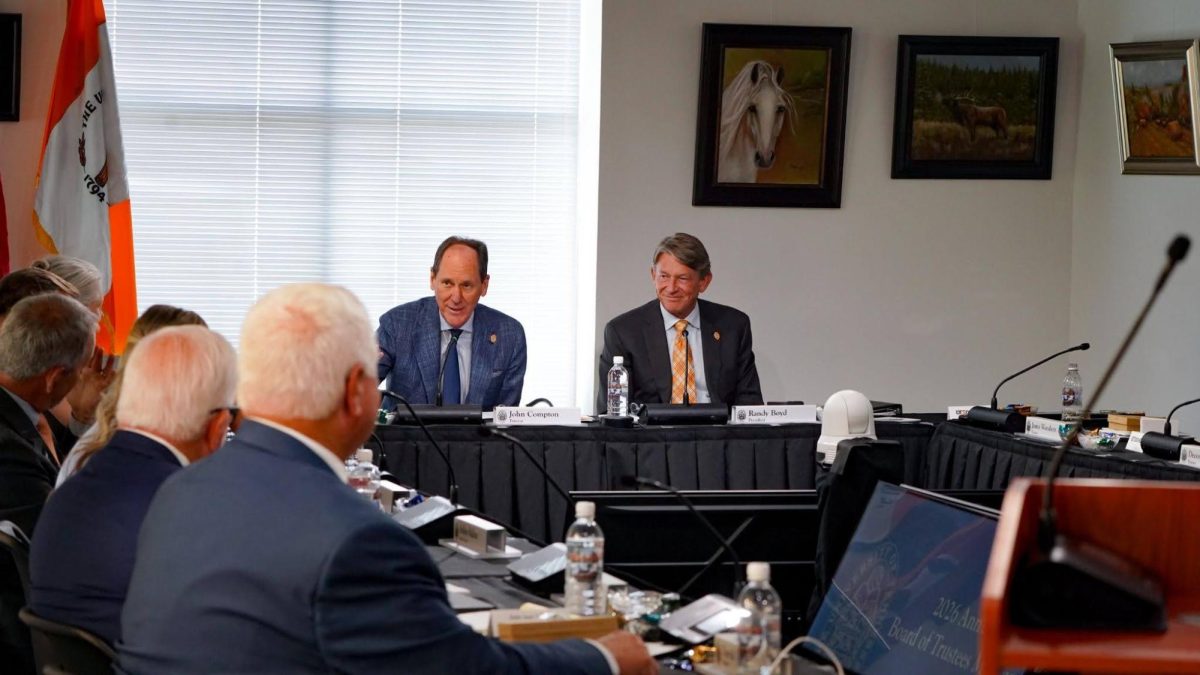
Senators did not revisit last session’s controversial amendments during Tuesday’s meeting of the Student Government Association’s Undergraduate Senate. As it stands, the phrase “students of all backgrounds and identities” remains within the senate’s bylaws.
Previously proposed under amendments 52 and 56, the changes were presented last session following Gov. Bill Lee’s signing of House Bill 923, the “Dismantling DEI Departments Act,” in May. The bill prohibits certain public entities from “maintaining or authorizing an office or department that promotes or requires discriminatory preferences in an effort to increase diversity, equity, or inclusion.”
The senate’s Access and Engagement Committee, which is outlined in article 5, section 8 of the bylaws, contains verbiage that some senators worry will jeopardize the working relationship between SGA and university administration. The amendments were written by Speaker of the Senate Campbell Butler and presented by Sen. Niya Angelova during the last senate meeting. Protesters gathered at the meeting to oppose the amendments.
The senate passed amendment 52 during the senate meeting on Sept. 30. Senators successfully replaced the word “equity” in article 5, section 8, paragraph B of the bylaws with “accessibility.”
The other change, under amendment 56, which was tabled at the last meeting, would have removed the phrase “of all backgrounds and identities” from article 5, section 8, paragraph C.
Sen. William Bricker, sophomore economics major and president of UTK College Democrats, commented on the bylaws’ language prior to Tuesday’s meeting.
“Nothing has changed in between last senate session and now,” Bricker said. “We are still determined to preserve a UT that serves students of all backgrounds and identities, regardless of those who want to push us away from that noble ideal.”
Students spoke during the meeting’s open town hall, urging senators to keep the current language in the bylaws.
“Although I chose not to seek reelection because I felt I couldn’t devote the time my constituency deserved, I stepped away trusting that the senate continue acting in the best interest of all students,” former Sen. Madeline Bell, who served on the Access and Engagement Committee last year, said. “I now find myself questioning that assumption.”
Bell stressed the importance of prioritizing UT students and principles over government pressure.
“Compliance with external pressures should not come at the expense of our university’s core values,” Bell said.
Freshman public affairs major Jack Dempsey, who attended the last senate meeting to protest the amendments, returned Tuesday to ask again that the senate make decisions based on the interests of the university, not Nashville or Washington.
“All that should ever matter in a decision is conscience,” Dempsey said. “That is all that should ever matter in the spirit of morality.”

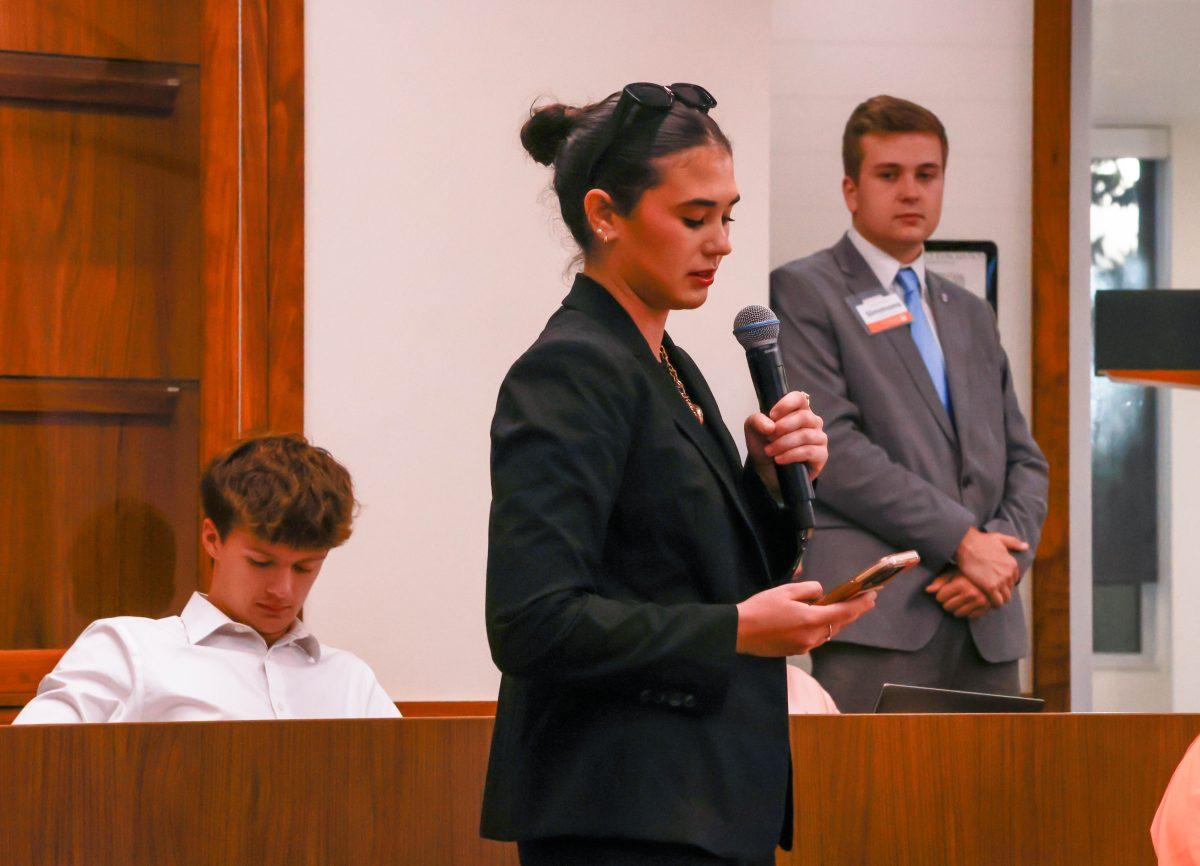
Freshman, Jack Dempsey, addresses SGA during the council meeting on Tuesday, Oct. 14, 2025.
No senator chose to bring amendment 56 back to the docket during the second reading period, killing the amendment indefinitely unless it is rewritten and presented in first reading again.
“Because it’s tabled, I assumed it would come up at (Tuesday’s) session,” Sen. Caroline Greenholtz, who leads the Access and Engagement Committee, said.
Kerry Gardner, UT director of media and internal relations, commented Oct. 2 on behalf of the university after last meeting’s protests.
“The Student Government Association (SGA) is a registered student organization (RSO) at the University of Tennessee,” Gardner said. “RSOs operate independently of the university, and some receive guidance and support from university departments. During a recent review of its bylaws, the SGA executive board sought counsel regarding potential amendments. As with all independent RSOs, decisions regarding governance and policy changes rest solely with SGA.”