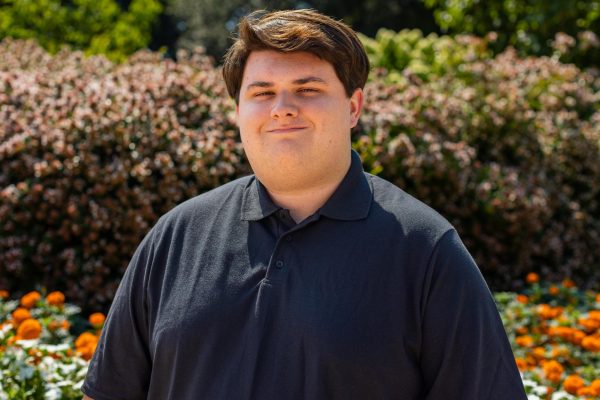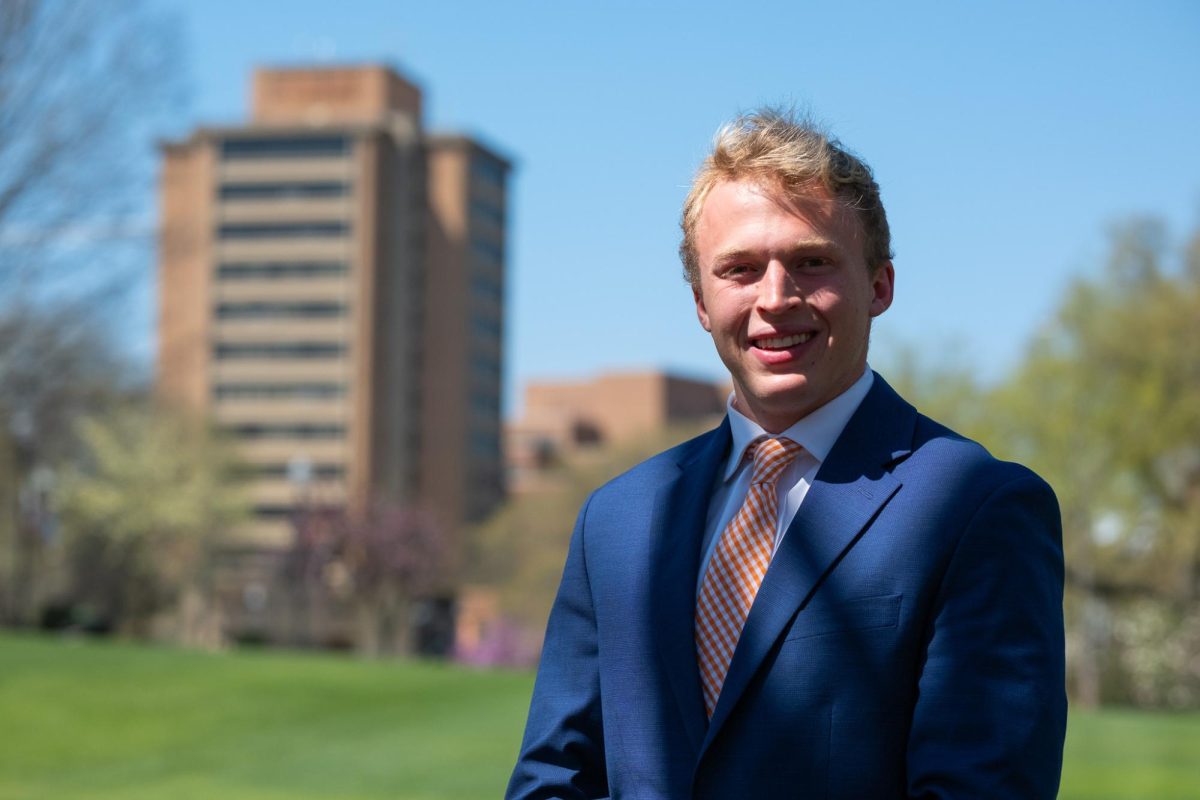
Zack Duncan, a junior hailing from Signal Mountain, Tennessee, is running for student body president in this year’s Student Government Association elections. Duncan, an astrophysics major with minors in geography and military science, has been involved with the SGA since freshman year, when he served on the First-Year Council. He spent his first semester of sophomore year as senator for the College of Arts and Sciences before studying abroad in Australia. The following is a conversation between Beacon staff writer Olivia Lee and Duncan.
This interview has been edited lightly for clarity.
Q: What do you believe you will do better than your opponent, and what evidence from your past experience supports that?
A: I really don’t want to trash my opponents. I’d prefer to try to keep maintaining the high road and set a good example for anyone running in the future. With that being said, just looking at being a doer and getting more done, in terms of partisanship, I don’t think any of it plays a role in university politics. There really should be no big differences in policy between my competition and I. Both candidates I believe will, and should, have the best interest of all students at heart.
The question is, who is going to get more done in their 12-month term? I haven’t been in SGA recently, so the example I’ll give for that is I just restarted the Kappa Alpha Order fraternity. I’m the founding president, and in five months, we’ve achieved more than anyone on campus, especially in the Office of Sorority and Fraternity Life, ever thought we would. Anyone involved in Greek life has probably seen and can attest to the success and rapid growth we’ve had thus far.
Compare that to my competition, who is currently the chief of staff, essentially the number two to the current president, and they’ve gotten a lot of good done. But comparatively, what they’ve done in 11 months, doesn’t compare to what I and my team have done in five months with KA. So I just think the ability to delegate and efficiently solve problems sets me apart from my competition.
Q: How will you work with university administration when student interests conflict with administrative priorities?
A: This is actually a great question, one I’ve thought about a lot. One of my strategies once in office is going to be to spend the summer building connections with university administrators before starting to address some of the bigger problems that students are having. But at the end of the day, we’re here for the students. We’re not here so the university administrators can get promoted and make their bosses happy.
As long as university administrators have students’ best interests at the core of their motivation, there should be no problem. With that being said, I’m not just going to be holding grudges and get angry at university administrators who don’t see the same way I do in terms of helping students. I’m just going to go around them and go above them.
As student body president, I can reach out to anyone up the chain of command within the University of Tennessee administration, so if somebody’s not helping, say a transportation director, for example, doesn’t want to change parking on Fraternity Row, or the bus system to Sorority Village, or something else, and they’re not willing to help us with that because their boss isn’t going to like it, we’re just going to go above them to their boss. We’re not going to get into a fight with that administrator, we’re just going to go above them.
Q: What are a few high-priority issues for students you’ve identified and what will you do to address them in the first 60 days?
A: The biggest problem I’ve seen is that the student body president is not readily available to every student. The problem is, the student body president is just as accessible as Chancellor (Donde) Plowman is right now. The student body president has office hours and has an email address. It’s easier at this point to go see the chancellor and talk to her about your issues than it is talking to the student body president.
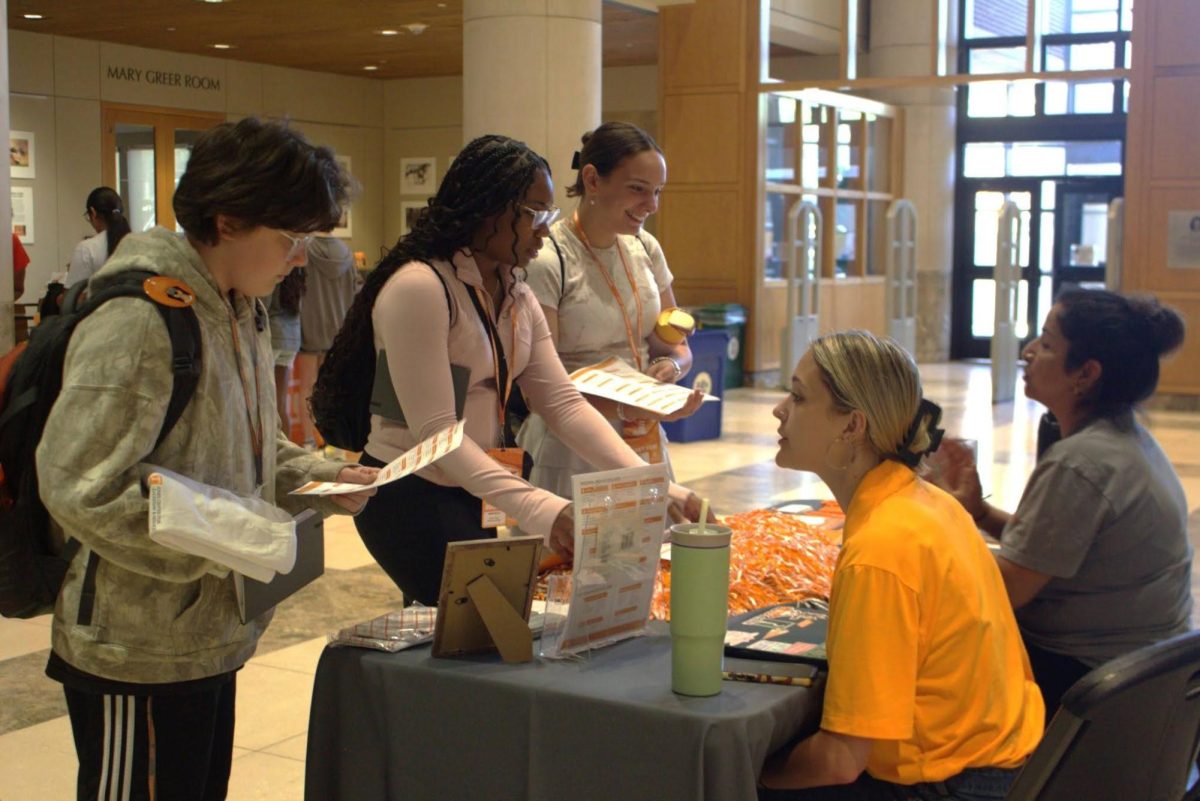
The first issue I want to address is accessibility and visibility, and what this is going to mean is regular tabling across campus, at least twice a week for three hours a day, rather than just office hours, to actually meet students where they are and not make them go out of their way to an intimidating office in the Student Union. The second way that is already seen in my campaign is keeping open a phone number that any student can text me and my team at.
That, in the fall, is going to remain open, along with an email address, where any student can reach out anonymously and talk about their issues and never even have to tell me their name or major. Anything that they want to get off their chest, they can do. From there, we’re going to find a ton of different issues to address. It’s hard to identify one core issue to address given that we have almost 40,000 students, undergraduates and graduates, at this university that are facing a wide range of issues.
Different areas of campus have different core issues. Overall, some big issues that I want to try to address are transportation issues, primarily, especially with bus systems and parking systems in Fraternity Park and Sorority Village. Overall, parking issues, especially for commuters on campus as we’re getting rid of G10, trying to address the roofie problem on campus, both on the strip and Fraternity Row. I don’t want to get into details and strategies on that because that will slow down the success of said initiatives in the fall, but (I) would love to get more into the details of that privately with voters.
Q: What do you believe sets you apart from the other candidate?
A: I think the biggest thing that sets me apart from the other candidate — we’re both qualified, but it’s my why. It’s my motivation for running. I don’t want to try to guess what her motivation for running is, but I can tell you what mine is. Mine is to make the world a better place. I’m an ROTC cadet, I’m not trying to go to law school after this, I’m not trying to get a job on capitol hill or posture, like I think many of the previous SGA presidents have.
My sole motivation is to know that I’ve made this campus, and in turn, our world, a better place in some way before I go off to who knows where. These days, the world is getting crazy. I plan to be an army infantry man. I don’t know, to be frank, without getting too deep, when my death will come, but when that day comes, I want to know that I’ve left the world better than I found it. At the point I’m at right now, I think the best way I can have an impact on as many people’s lives as possible is within SGA.
If I’m making an impact in SGA, you affect the next generation of leaders within the state of Tennessee, but the world. Because college people, especially coming from a flagship university like Tennessee, are going to go out and be the leaders in business, in civics and in everything you can think of. What sets me apart is my why, my motivation to make a difference for every student, not just to help myself.
Q: What organizations, administrators or leaders will you need to work with to accomplish your goals?
A: We’re going to need to work across the board, ranging from talking about addressing the roofying problem, (the Tennessee Bureau of Investigation) and the state police, as well as campus police, UTPD. When it comes to addressing parking problems — there’s going to be a lot we need to work with parking — but that’s probably going to include talking to even higher university administrators, because I know Parking doesn’t want to budge on a lot of the issues there.
Transportation is going to be a big realm that we’re going to have to work with. I will expect, over the summer, to develop relationships with the dean of every college so that when students in the fall come up and say they’re having problems with an academic system, with professors, something like that, I already have those relationships established to go address those issues, and many of those deans I’ve already established contact with, just to let them know I’m running for this office and ask them what their goals are, and many of them I think it will be no problem trying to work with them to address the issues of students.
Q: How have you used this past year to refamiliarize yourself with SGA despite not being involved?
A: I’ve been thinking about doing this run for student body president since April, when I spent about 14 days in New Zealand without a phone and just really reflecting on what I wanted out of life. That’s where that “why” developed, of wanting to make a difference for other students, especially freshman students, but whatever way I can, make the campus a better place.
After April — so that’s been almost a full year — I started having conversations with students, talking about potentially running, trying to figure out whether or not it would be worth it, and whether or not I could really make a difference. I’ve talked to a lot of students within SGA and adjacent to SGA, and that’s helped me form all the connections that I have now for my campaign team, which is built to include eight people that I would have never previously interacted with this year, trying to better understand SGA.
Most of my team includes people from SGA that are from different parts of campus that I never normally interacted with, as well as some who are outside of SGA but have always wanted to be involved and have new big ideas. Within my team, that makes up for any lack of knowledge I have, compared to the competition especially and what’s gone in SGA within the past year. But I’ve also kept up on social media and by following The Daily Beacon.
Q: Has your campaign been adhering to the $300 budget, and how has it made sure it is doing so?
A: Firstly, I’d like to say that I think campaign budgeting shouldn’t be totally unrestricted, but I do think it should be open a little bit more given that we’re only allowed $300, and seven days and eight helpers, to reach 40,000 students. It’s just nearly impossible. I do think campaign bylaws, especially in terms of budget, should be opened up a little bit, at least enough to be able to actually hand things out, like T-shirts and more merchandise, to spread the word of what the campaign is and get more people involved in SGA.
Last year, only 5,000 people voted because we’re not spending enough money, and we’re not spending enough time, and resources, and actually going out and meeting people where they are. With that being said, most of my campaign budget has been dedicated thus far to buttons. Buttons were the biggest thing, and they actually got backordered. I just got them today. I spent just over $150 out of my $300 on buttons. From there, we also had — and this was something we had to work closely with the election commission on — a dear friend of mine prints stickers. I had her print some stickers and asked how much, and she was like, “You don’t have to pay me, these are a donation.”
From there, I was questioning whether or not I wanted to use those because I didn’t know how much it’d be evaluated for, and Griffin (Eaker) told me I could just ChatGPT an estimate cost for how much it is to produce stickers in a mass amount, and that’s how much we charged it for. That was another $38 for 100 stickers, and those have gone very quick. We barely have any stickers left. I still have a little bit of money left to play with, not sure what exactly I’m going to do with it yet, but I just want to keep it in reserve.