“Is love of country unconditional?” Steven Smith, professor of political science and philosophy at Yale University, said. “Or is it dependent on our country’s meeting certain standards?”
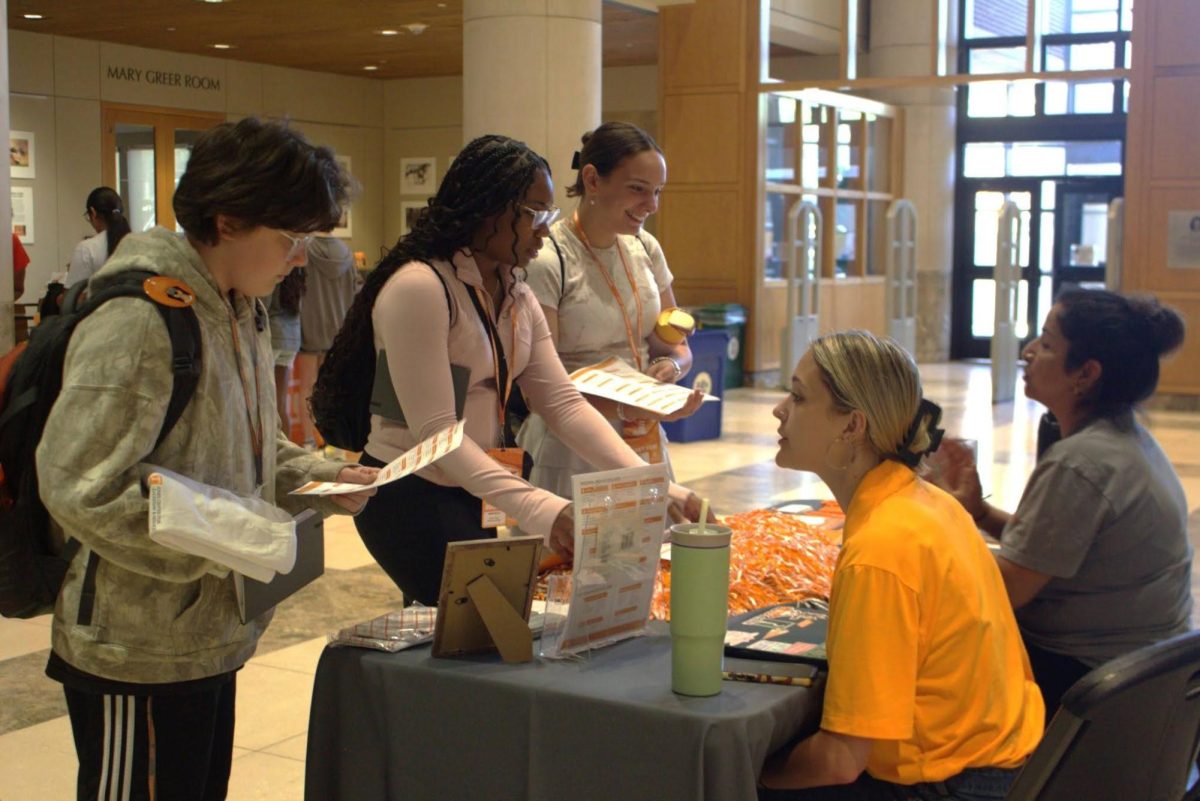
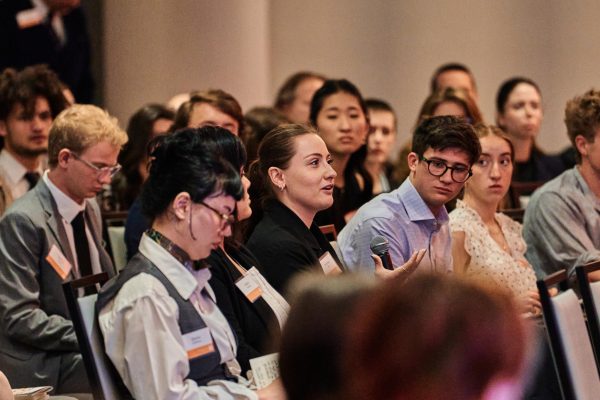
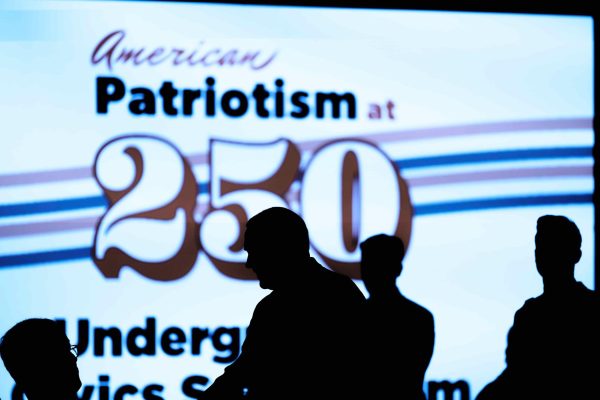
Hundreds of students from universities across Tennessee gathered in downtown Knoxville Saturday morning for the American Patriotism at 250 Undergraduate Civics Symposium.
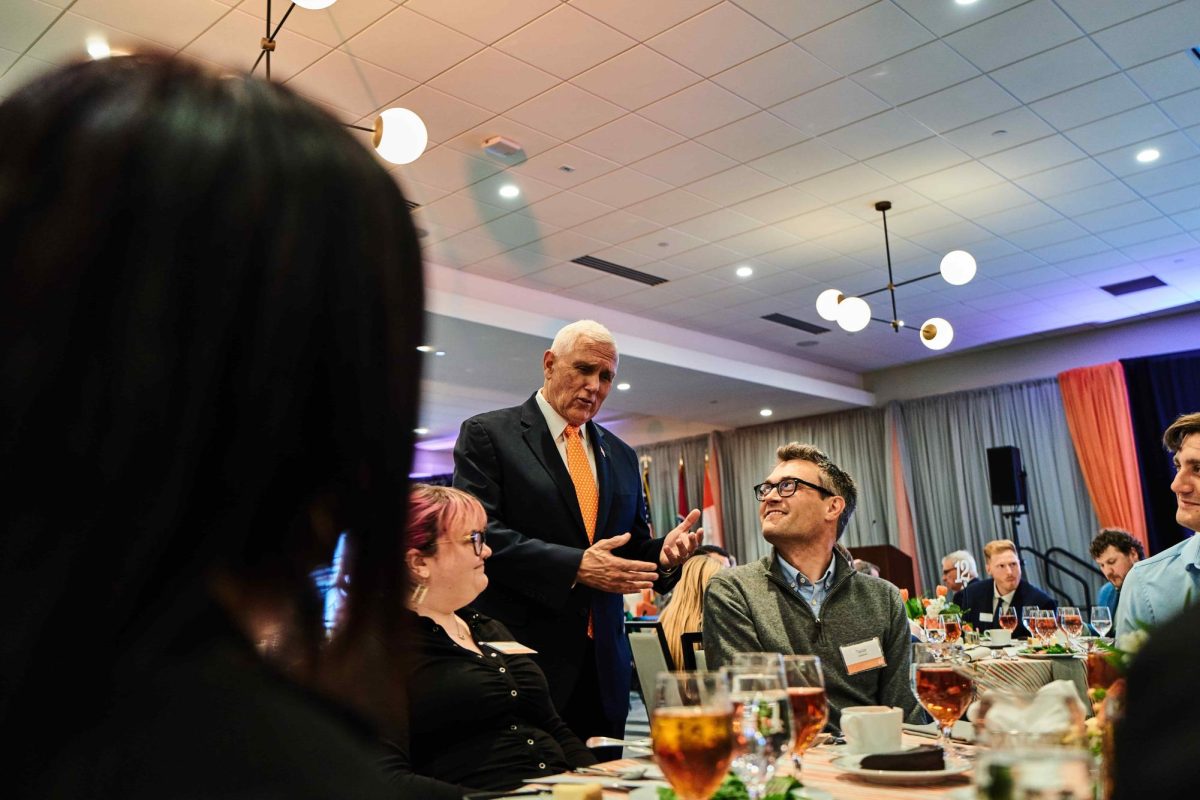
Hosted by the Baker School’s Institute of American Civics, the event offered students a chance to hear from Smith in a lecture on patriotism. Former Vice President Mike Pence served as the keynote speaker.
The symposium’s theme of patriotism was at the helm of each conversation. As the United States approaches its 250th anniversary, studies suggest national levels of patriotism are falling.
Many Americans are unhappy with the current administration’s handling of domestic issues, including immigration. Smith said some Americans he speaks to are hesitant to express patriotism due to concerns over nationalism.
“Nationalism and patriotism initially grew out of a legitimate desire for self determination and respect,” Smith said. “But over time, nationalism has morphed into an ideology of grievance and resentment. It has become a weapon for determining who is in, and who is out. Who belongs, and who doesn’t.”
Foreign affairs also have the nation divided. More and more Americans are voicing the desire for the U.S. to pull back from global involvement.
About 27% of Americans approved of President Donald Trump’s war on Iran according to a Reuters poll published days after the first strikes in early March. About a third approved of America’s strike on Venezuela in January.
“Nationalists seek the warmth of community, but usually at the expense of an outgroup that is deemed un-American and regarded as traitors and enemies of the people,” Smith said.
Pence exuded confidence in foreign nations having a positive view of American patriotism.
“They admire America, and they admire us because of our ideals and the principles enshrined in the Constitution of the United States,” Pence said.
A recent Gallup poll reported that NATO approval of American leadership decreased in 2025, standing at a 21% median approval.
“The world is a dangerous place, and no amount of wishful thinking is going to change that fact,” Smith said. “Nevertheless, the loyalty to country does not require me to be indifferent, much less hostile, to the needs of others.”
Smith is not opposed to patriotism. Instead, Smith expressed in his lecture a desire to restore patriotism to its original definition: love of country.
“We sometimes hear the statement, ‘My country right or wrong,’ but we often overlook the rest of the quotation, ‘If right, to be kept right, if wrong, to be set right,’” Smith said.
Patriotism is not relevant only at times of a country’s success, Smith said. It is equally important to be patriotic when one’s country demands accountability.
“Patriotism requires us not only to take justifiable pride in our country’s accomplishments, but feel justified moral shame in our shortcomings,” Smith said. “Patriotism can be combined with resistance.”
Pence also cited resistance as a form of patriotism, drawing on examples of civil disobedience seen during the Civil Rights Movement.
“Civil disobedience does not mean you excuse consequences. You accept and face the consequences if you take a stand,” Pence said. “When that’s an expression of patriotism is when you’re standing for the ideals of the American family, even if it’s not consistent with the law today.”
Smith warned against reckless protesting, encouraging responsibility and peace.
“Only when protesters learn to embrace the flag and repudiate violence will protest be considered patriotic,” Smith said.
Josh Dunn, executive director of the Institute of American Civics at the Baker School, echoed Smith and Pence’s statements, saying that the line between patriotism and nationalism can be found in America’s founding documents.
“I think that’s the primary point, trying to live up to our principles within the Declaration, and the constitutional principles, rather than just to blind loyalty,” Dunn said. “If we start with that shared understanding, that goes a long way on its own to living up to those principles.”