The Super Bowl is the one night a year when viewers are not only OK with watching commercials, they are excited for them. Something that is considered a nuisance 364 days out of the year is suddenly a highlight of the night for one. However, despite the event being over two weeks ago, I still find my disappointment in the advertisement lineup being a common topic of conversation with friends.
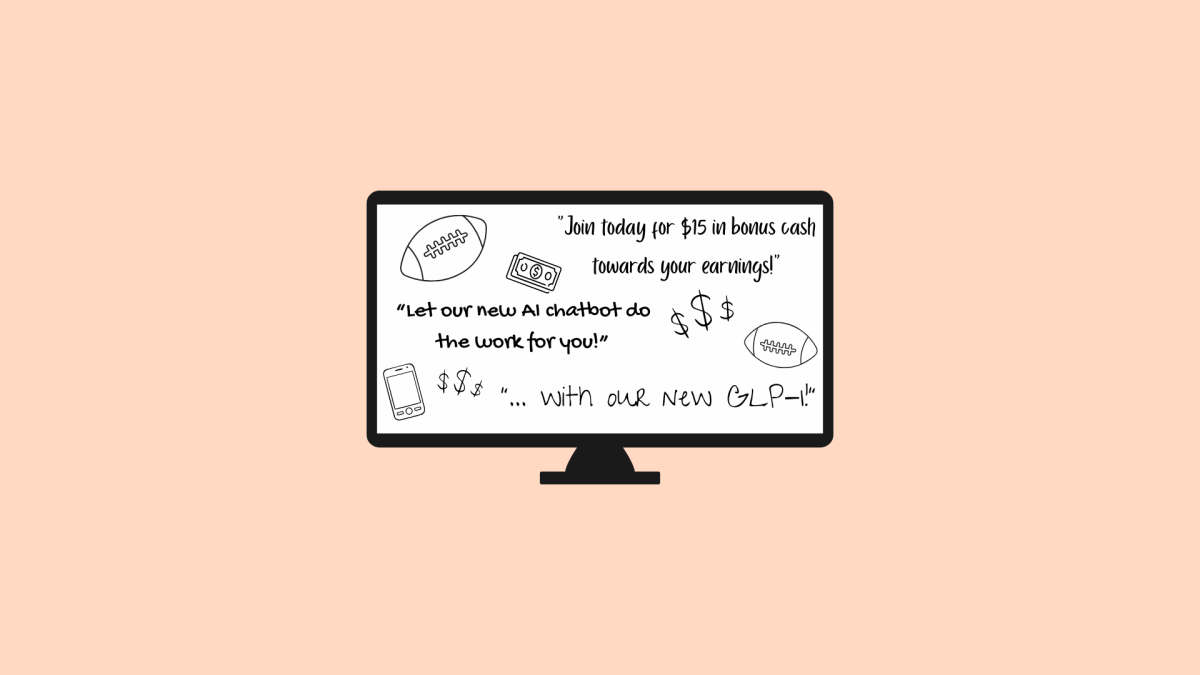
As an advertising major who often nerds out over a good ad campaign, I was more excited to watch the commercials than the game itself. When the game was over, although my preferred team had won, I reflected on the commercials and felt the anticipation I had was far greater than my feelings for what I had just watched. Don’t get me wrong — there were some good ones. Some brands still utilized creativity, humor, and got some celebrity cameos in there, too. That being said, the creative commercials felt drowned out by the mass amount of GLP-1, artificial intelligence and sports betting ads.
If you have engaged with any type of content over the past year, you probably would know that GLP-1s, AI and sports betting platforms are having their moment right now. It is nearly impossible to avoid their advertisements, and I guarantee that everyone knows someone in their life who uses at least one of the three. But the number of commercials for them during the Super Bowl felt excessive, as if they were being forced on me. Of course, I recognize the purpose of advertising is to convince the viewer to use their product, but the Super Bowl has always felt like an event where brands are less pushy and think creatively and outside the box to sell you on their product.
One thing I appreciate about Super Bowl commercials is that, even if I have no interest in the product, the detail, attention and effort they put into them are still entertaining, and at the very least, I can see what the brand was attempting to do. After all, these companies are spending millions on getting even a 30-second slot to advertise during one of the most-watched programs of the year. While I am not a Pepsi drinker, I still thought their ad featuring the polar bear was creative and full of small details that showed someone on their team was putting effort into the little things, even down to the music choice. However, many of these commercials didn’t feel like products for the everyday person, and many didn’t seem much different from the commercials I see during any other sports game. To me, this begs the questions: Is this just a representation of where we are as a society? Is this the new normal?
Globally, people are on a health kick. This goes beyond GLP-1s — protein in everything, “gym bro” culture, “hot girl walks,” you name it. Every tech company now has its own AI chatbot, especially following the seemingly overnight success of OpenAI’s ChatGPT. You can’t watch any sports game without every commercial break having at least two sports betting advertisements. And while there’s pushback on all of these things, they’re still bigger than ever, as the markets for them continue to grow. However, even for the average viewer who isn’t involved in this kind of discourse, it was just too much. Additionally, despite the sheer volume of commercials involving one of these three things, none of them particularly stood out as being filled with creativity. I see Serena Williams promoting Ro’s GLP-1 every time I turn on my TV, and could probably recite a FanDuel ad word-for-word after watching one hockey game with my dad. Some ads were completely AI-generated, which feels like the least creative thing a brand could ever do for the Super Bowl.
Both the creative and practical side of me believes this direction is simply not the way viewers want Super Bowl advertisements to shift. Nobody particularly likes commercials, but the Super Bowl is typically an exception to that. If you only have an audience’s attention for one night of the year, but take the unique, elaborate charm out of what people expect a Super Bowl ad to have, you most likely failed at your one shot to captivate their attention toward your product. On the business side, I find it hard to believe that this bland, repetitive lineup of commercials is a key to success for any brand — no matter the product.
Honestly, I couldn’t tell you which GLP-1s, AI chatbots or sports gambling apps were even advertised during the Super Bowl, because I felt like I was watching the same things over and over each time one came on. From what I’ve seen of online discussions, and from talking to friends and family, I’m not alone in feeling this way. Brands spend millions of dollars on Super Bowl commercials each year because they want their product or service to be seen by the world. But what makes your product stand out from others if your advertisement looks the same as all your competitors’? The answer is: you don’t.
Super Bowl ads are about being memorable. Iconic advertisements from past Super Bowls still spark discussion today. Apple’s “1984” commercial from over forty years ago is still getting taught and credited in advertising classes as starting the trend of elaborate Super Bowl commercials, and we all remember Kendall Jenner’s 2017 Pepsi commercial that sparked outrage — although “iconic” may not be the right word for that one.
Purchasing an ad slot for the Super Bowl is an investment in your company’s future to grow your business — if you don’t make bold choices that “wow” your audience, your commercial will just get lost with the sixty-something other commercials viewers saw that night.
Flannery Lemmonds is a sophomore at UT this year studying advertising. She can be reached at [email protected].
Columns and letters of The Daily Beacon are the views of the individual and do not necessarily reflect the views of the Beacon or the Beacon’s editorial staff.