If you’ve been online in the past week, I’m sure you’ve heard the buzz about Noah Kahan’s new album: “The Great Divide.”
This much-anticipated album is Kahan’s first album release since he quickly rose to stardom following the success of his 2022 album, “Stick Season.” Despite the immense pressure to live up to the standard “Stick Season” set, Kahan surpassed any and all expectations with “The Great Divide,” with the album immediately gaining high praises and receiving excellent reviews from both fans and critics alike.
Like many others, I was eagerly awaiting this album. Kahan has been in my top two most-streamed artists every year since discovering him in 2022, and I stayed up until midnight the night “The Great Divide” released, finishing the whole album before I went to bed. It’s safe to say that I was not disappointed. My Spotify hasn’t deviated from the album since then, and I’m to the point where I feel like I’ve sufficiently been able to take in and appreciate each song. It got me thinking about his discography as a whole and how his music just sticks with me differently than other artists. Why?
Some reasons immediately stuck out to me and others followed as I began to go down a rabbit hole of thoughts on what makes him unique compared to other mainstream artists. Everything I came up with traced back to one main quality: how authentic and truly human his music feels.
This goes beyond simply being relatable. Most music we listen to is relatable, or at least brings us back to a time in our lives when it was. What I find interesting about Kahan’s music, however, is that when you first listen to it, it doesn’t necessarily seem like it would be. In many of his songs, the situations appear ultra-specific. And of course, sad. Who is listening to music to get sad about what seems like a super-specific situation that they’ll never be in? But that’s the thing, these situations aren’t as far-fetched as it seems, and I think that’s why so many people gravitate towards his music.
It makes sense for labels to push for songs about love, breakups, independence or having fun, because, at the end of the day, the music industry is a business. These themes seem universal to the average person, and therefore are the quickest path to a hit single, so artists are going to keep using these themes. And to a point, it begins to feel inauthentic — the music feels like a money-grab instead of an attempt at connection. And when we can see celebrities’ lavish lifestyles on TV and social media, it becomes harder for people to feel connected to them. While romance and having fun may be relatable, their flashy and expensive lifestyles are definitely not, and it becomes hard to ignore how out of touch they are.
I think part of what made “Stick Season” blow up the way it did was that it felt like an album about a regular person with regular problems. It didn’t feel like an album specifically created to top charts and make millions — and that’s exactly why it did. People could see themselves in the songs and the complex feelings and vulnerability Kahan shares in them. And despite the success of “Stick Season” and new levels of fame Kahan reached because of it, “The Great Divide” continues to give the sense that he’s still a regular person with regular problems.
In a society that seems to increasingly idolize money and status, a celebrity coming off as down-to-earth is a breath of fresh air. People don’t want to feel like a customer when listening to music, as if their stream is simply helping purchase the singer’s next mansion. They want to feel a connection — that somebody out there has been through what they’re going through. When an artist’s “brand” is being a normal human, posting on their Instagram like your mutual friend with a modest small town upbringing, interacting with fans online and cracking jokes about their parent’s divorce at shows, people don’t even view it as a “brand” — they view it as just who they are. They don’t brush them off as an “industry plant” or feel like their every word is scripted by their PR team. In turn, fans resonate more with them and the struggles they sing about.
Most people don’t live a glamorous life. Everyone has problems they don’t talk about or emotions they’re ashamed of having. Kahan’s music encapsulates the complexities of being human: mental health struggles, religious trauma, insecurities, family dynamics, hometowns and the conflict between change and staying the same. Suddenly, the feelings that isolate us are the same ones connecting us to millions of people.
Kahan’s music offers refreshing perspectives that you don’t often see explored in mainstream music. While you can tell the songs are about situations that are very personal to his own life, many times it’s presented in a way just vague enough that people see their own experiences in them. And when people don’t see their experiences represented in the media, they’ll take any slight similarity, even if it’s a stretch, to feel a bit less alone in their struggles. One of the biggest battles he details in his music is his complicated feelings towards his hometown, something I think many college students can relate to.
I’ve seen “Stick Season” described online as about both loving your hometown and hating it, and I think that’s the perfect way to describe it. This theme reappears in “The Great Divide,” giving college students new songs to contemplate their entire lives as they drive between home and school. While “Stick Season” captures the emotions of looking back on your hometown after you left, “The Great Divide” relates more to the feelings you have when visiting and coming back.
The thought of where we wanted to see ourselves in the future is something that every student has had to think about at least once, considering that, at some point, they decided they wanted to see themselves here at UT. By junior year of high school, I was firm in my opinion that UT was the only place I wanted to go. Looking at colleges at home was never an option for me — I wanted to leave and see somewhere that wasn’t the same place I had seen for the past 18 years.
Although choosing UT was one of the most decisive decisions I’ve ever made (as a strong contender for the most indecisive person in the world), actually leaving home presented a much more complicated mental challenge for me. I wanted to get out so badly, then suddenly felt a leash around me, tying me to home that got tighter each time I left and came back.
I loved Knoxville, this was where I wanted to be more than anywhere. However, going home and being reminded that time there didn’t stop when I left — seeing all of the changes, seeing places that housed childhood memories torn down or replaced — filled me with a sense of dread. I felt like my entire world had moved on without me. I was not only a stranger at school, but also one as I drove around somewhere I had lived my entire life.
All of this to say, on those drives back to Knoxville — pit in my stomach, tears in my eyes — Kahan was on repeat. I know, I know, such a corny end to that anecdote, I’m sorry. But as corny as it sounds, I know I’m not alone. If I were, the song “You’re Gonna Go Far” wouldn’t have over 545 million streams on Spotify.
Kahan’s music embodies the slow realization that leaving home isn’t actually as straightforward as it seems — being unable to escape because your entire identity was created there. This is one of the strongest battles students struggle with — balancing between a desire to stop growing up and be a kid forever with the rationalization that you are going to have to leave and go out into the world to make something of your life. The apprehension against change, but the knowledge that it’s necessary.
This feeling doesn’t go away after you leave for your freshman year, and if anything, it gets stronger as you inch closer to graduation — realizing you’re faced with the decision again to take a step towards where you want to be in life.
One thing in life is a guarantee, and that’s change.
Kahan didn’t get popular trying to be relatable — he got popular trying to be himself, writing songs about his feelings and his own life experiences. In doing so, he found the jackpot of finding something both universal and thematically unique, and that’s the complexity of navigating change while simultaneously struggling to grasp it, drawing in tens of millions of dedicated fans because of how authentically human the experience is.
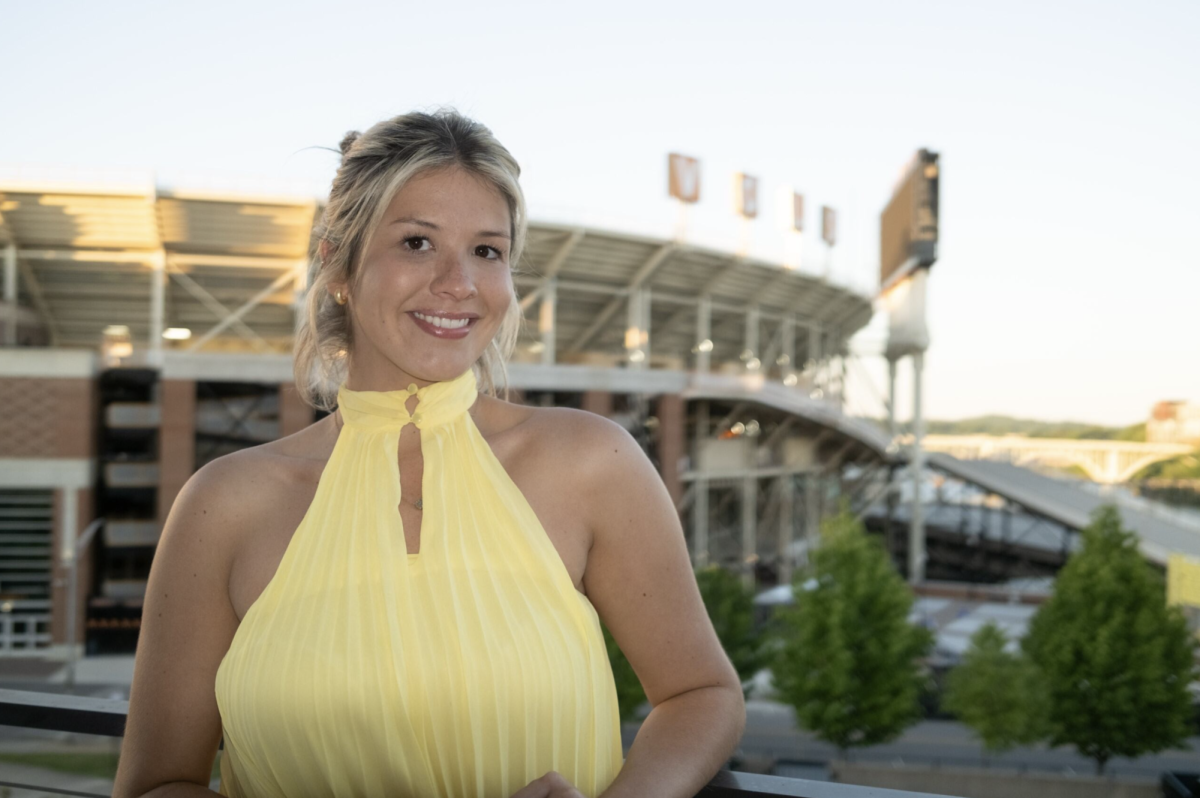
Flannery Lemmonds is a sophomore at UT this year studying advertising. She can be reached at [email protected].
Columns and letters of The Daily Beacon are the views of the individual and do not necessarily reflect the views of the Beacon or the Beacon’s editorial staff.