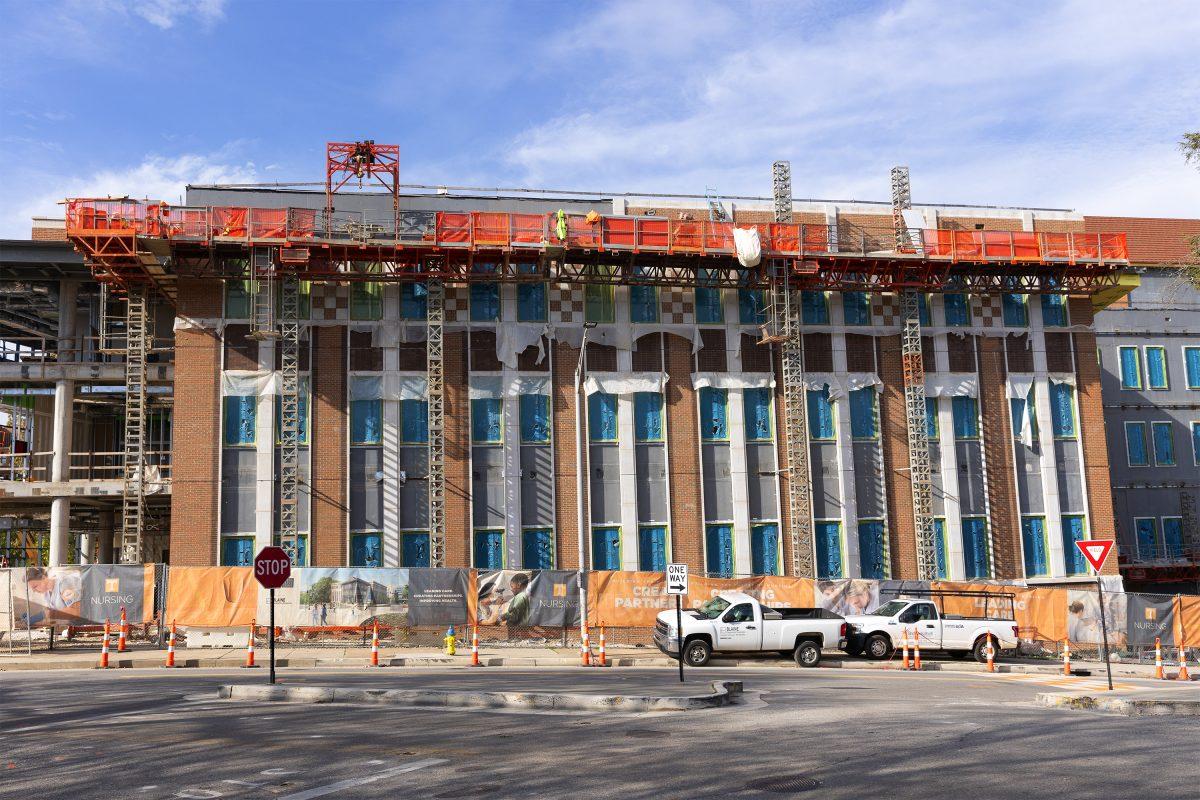
It’s now been over two years since the groundbreaking on the College of Nursing’s new Croley Nursing Building. With completion expected to be just in time for the fall 2025 semester, how have students and faculty within the college dealt with disruptions from the construction?
Disruptions for the school didn’t just begin when construction on the new Croley Building began. For years, the program has grown bigger than its home base.
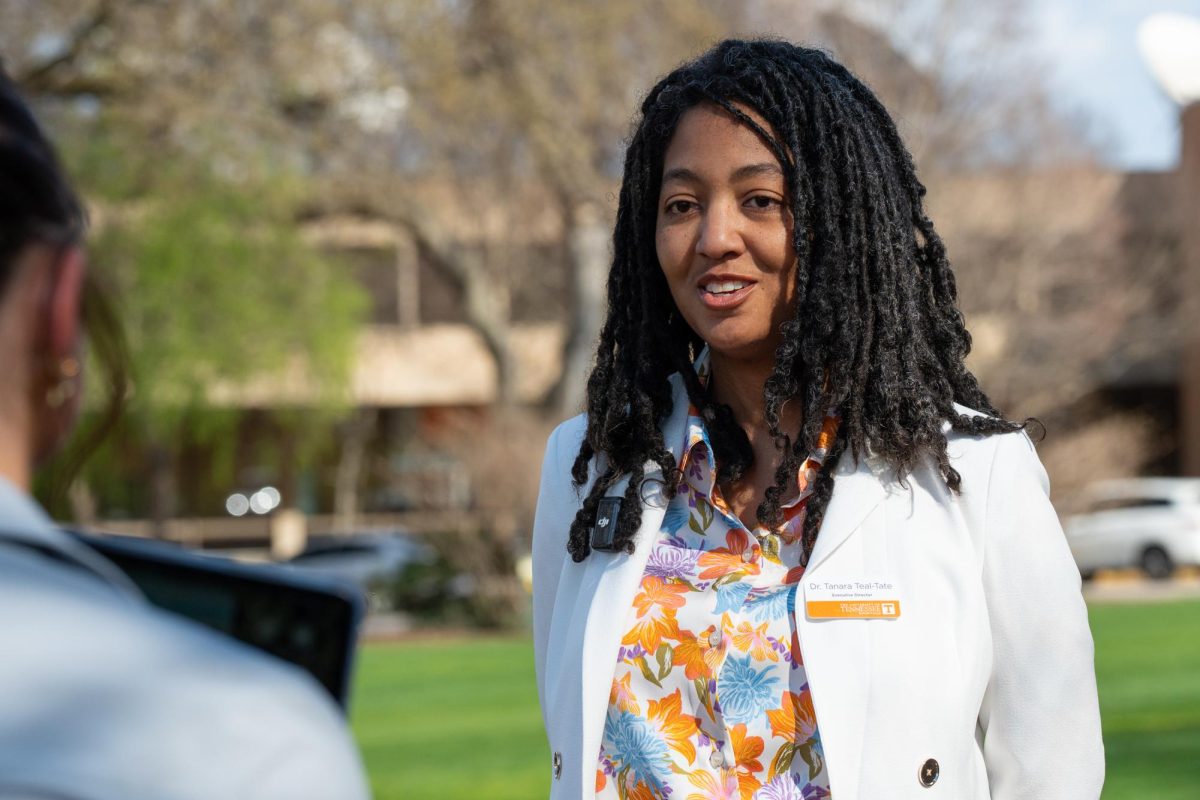
Demand for nurses nationally, and in Tennessee in particular, has skyrocketed and is expected to grow for years to come. According to the Department of Labor, jobs for nurses are growing at 10 times the national average. Dr. Susan Hebert, the assistant dean of simulation for the College of Nursing, spoke to the growing demand.
“We need more nurses in Tennessee,” Hebert said. “Our program has grown exponentially since we’ve had our simulation program. However, the space has not grown. We couldn’t keep up with the space growth because we were kind of land-blocked in the building we were at.”
The College of Nursing has grown by several hundred students in the past few years and aims to reach 1,400 nursing students over the next couple years. Just from 2016-21, the enrollment of the college grew by over 200.
The simulation program Hebert oversees is an essential part of nursing students’ education. The program aims to place nursing students in an environment as realistic as possible to what they’d encounter in the field.
“We have to make sure that (the nurses) are practice-ready, or ready to practice as soon as they graduate,” Hebert said. “Nursing is unique, as all healthcare professions are, in that it doesn’t have a lot of room for making errors when you’re first out there practicing and learning.”
Because of the space constraints in the old building, most classes, offices and lab space for the College of Nursing are spread across the entire campus. This problem was amplified when construction of the new building began, closing more space in the program, albeit temporarily.
The new Croley Building presents a huge opportunity for increasing efficiency and ease of access for students and faculty.
“For the first time in eleven years, this team and the students can get all of those experiences in the same building,” Dr. Hebert said. “That’s going to make it a lot more convenient and conducive to a teamwork-related environment. Because, on any given day, we will have activities going in all of those spaces simultaneously.”
For many students and faculty, traveling far distances — sometimes from opposite sides of campus — to get between nursing classes and labs has represented a logistical challenge. Jiro Greenberg-Osteer, a junior nursing student and member of the simulation team, has spent the last three years navigating the program spread across campus.
“They definitely have us traveling a lot across campus,” Greenberg-Osteer said. “There’s Service Building A, which is by the TRECS, which is on one corner of campus, and then I have a lot of lecture halls on the Hill, which is the opposite side of campus — so it’s definitely a lot of walking.”
The simulation program alone is in several far-flung spaces on campus. These include Service Building A, HITS Lab and Innovation North — which is located across the river.
A new and consolidated building for the College of Nursing will make collaboration and education much easier from the learner and teacher perspectives. The new building also provides a new face to the quickly growing and evolving nursing program at UT.
Dr. Victoria Niederhauser, the dean of the College of Nursing, told The Daily Beacon how students have adjusted to the current disruption.
“Our students are amazingly resilient and have adjusted to the new locations over the last two years,” Niederhauser said. “The college aims to provide a comprehensive educational experience and provide a comparable student experience for all students during the building transition.”
Construction on the new Croley Nursing Building is on track and both faculty and students are looking forward to working and learning in the new space.
“The new building has been a collaboration and brings together a space that is transformational and innovative while embodying the healing and wellness culture of nursing,” Niederhauser said.
The new Croley Nursing Building will include exciting features like the aforementioned simulation learning spaces, student study and gathering spaces, an area for fresh food, an outdoor patio, a healing garden and other amenities. Niederhauser is confident in the progress being made on construction of the new building.
“The building’s roof is now complete and secure from weather,” Niederhauser said. “Most of the windows have been installed. Utilities, including systems for water, electricity and other essential services are also installed.”
While the College of Nursing has long outgrown its space and been spread around campus for years, both faculty and students have been able to navigate that challenge. The new Croley Nursing Building represents a new era for the program, finally bringing everyone together under one roof. The program waits in anticipation of its new home in the fall of 2025.