UT Parking and Transportation has teamed up with Uber as a part of their ongoing initiative to reduce on-campus parking needs for first-year students.
The partnership allows 2,000 first-year residential students to receive up to 10 individual $10 ride vouchers, which can be applied to trips originating within Knox County or to and from McGhee Tyson Airport.
The experimental program aims to mitigate the impact of Parking and Transportation’s increase in restriction on first-year student parking accessibility, primarily limited to accommodate for campus construction.
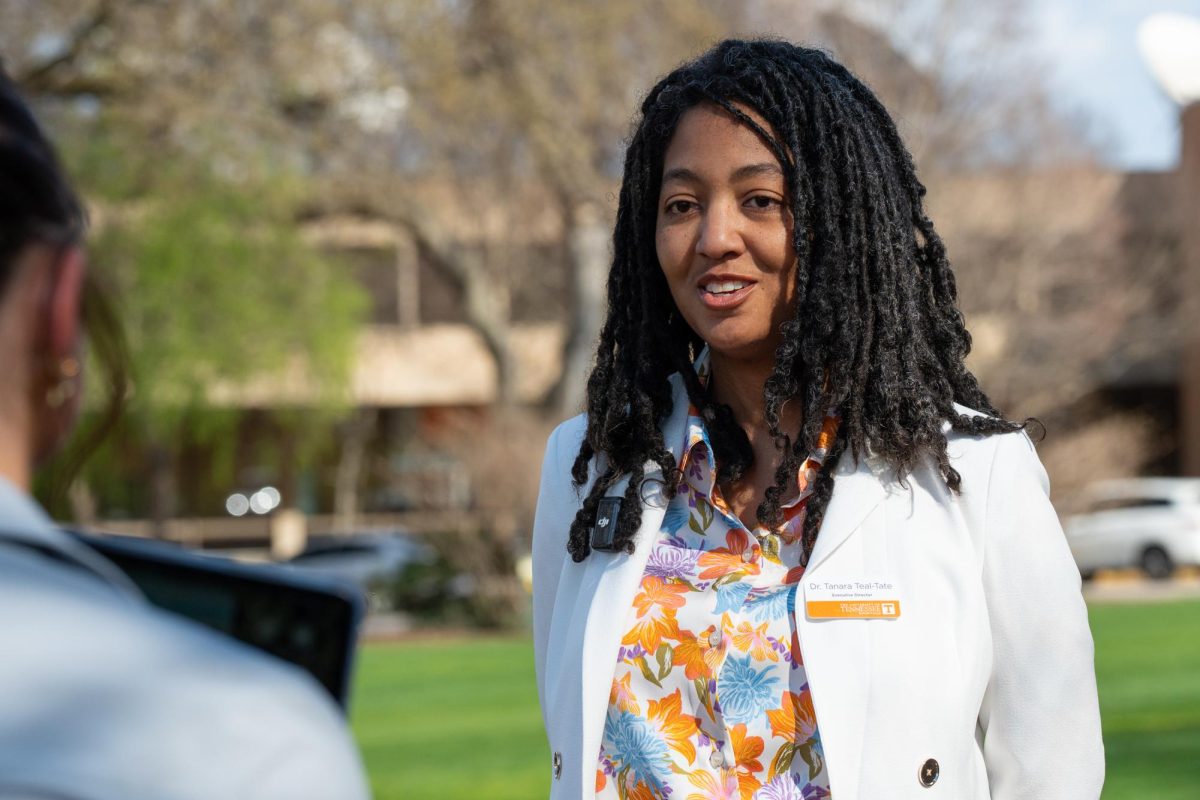
“We did not want to disallow students the ability to be able to get to or from certain places … so we felt like we needed to enlist some car share (and/or) ride share opportunities as part of that process,” Tamara Teal-Tate, the executive director of Parking and Transportation, said.
First-year student Kami Glover is one of many freshmen who did not receive a parking pass and has resorted to services like Uber as a result.
“These costs have definitely added up,” Glover said. “Especially since the price set on these websites are by demand or limited by the number of drivers available — it can make using these methods of transport an unreliable and ridiculous cost.”
Glover, who entered this program and received the vouchers, said that she has used four vouchers within the first two weeks.
“Having these vouchers is definitely making using these ride-share programs like Uber or Lyft more feasible for students who don’t have a parking pass,” Glover said.
UT announced that the program is being utilized as a research study in partnership with the Boyd Center for Business and Economic Research and the Center for Transportation Research.
By providing students with this opportunity, researchers aim to discover what students hope to gain from participating and will be analyzing academic outcomes to evaluate a potential relationship.
This study will be the first of its kind among universities, and UT aims to use resulting data to further improve transportation accessibility for students.
“We’re definitely hoping to expand it to other user groups, but right now we want to focus on first year students,” Teal-Tate said.
Student parking accessibility remains a primary issue on campus. According to Teal-Tate, Parking and Transportation has been “trying to reduce the number of single occupancy vehicles on campus.”
Parking and Transportation has noticed that most of the current non-commuter parking spaces on campus given to first-year residents are being used primarily as car storage.
“Because of that, we realized that there’s not a necessary need to take up adequate space for other students who may have needs,” Teal-Tate said.
Through initiatives like the upcoming Uber rideshare program, Parking and Transportation is continually working to reduce parking needs for the first-year student population. Alternate programs have already successfully reduced campus parking occupancy from as high as 99% to 80%.
“We are just trying to allow for ride share as an option to be able to allow for students to have another means to be able to get around to various places that the T-Bus or the KAT bus may not allow for,” Teal-Tate said.