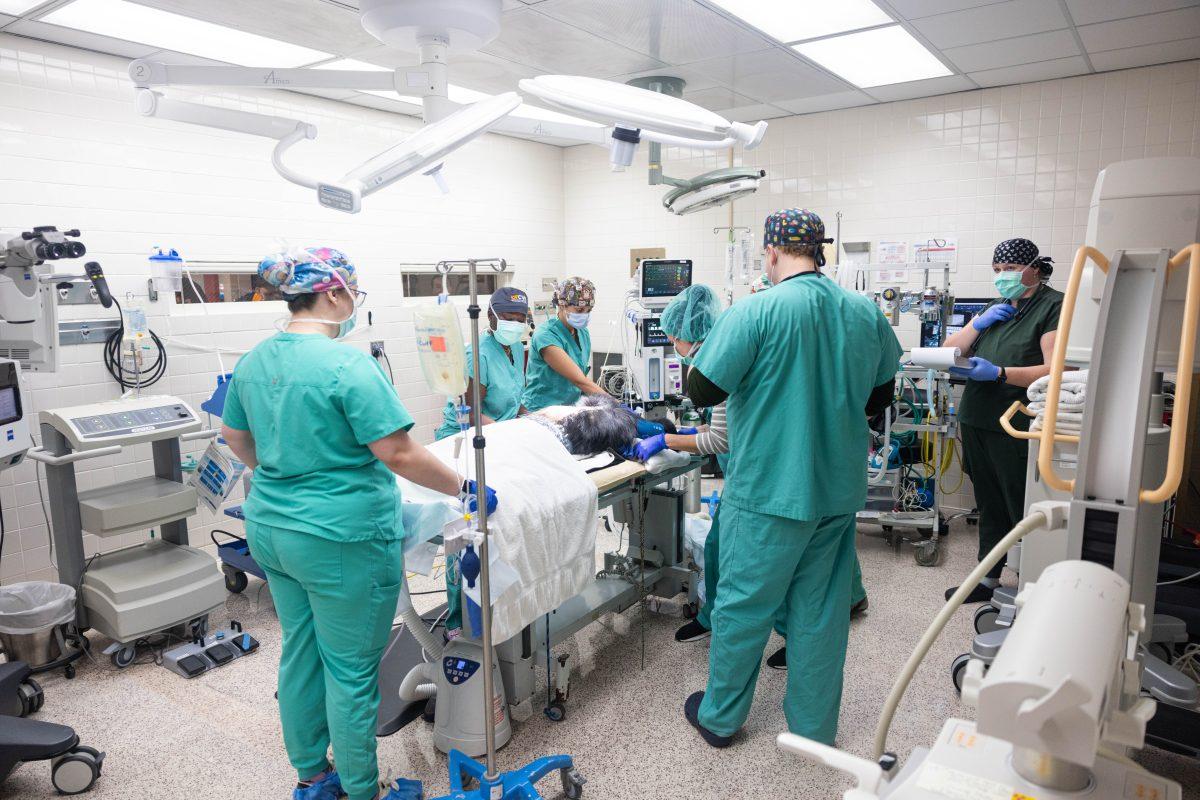
UT College of Veterinary Medicine and UT Medical Center collaborated to perform a groundbreaking spinal surgery on a 34-year-old chimpanzee on Sept. 19, 2025. This marked the very first recorded spinal surgery performed on a chimpanzee.
Problems with the male chimpanzee, named Mwelu “Lu,” were first noticed when he was seen having difficulty walking. The Zoo Knoxville vets notified the neurology team of the case. Talisha Moore, a clinical assistant professor of neurosurgery and neurology, was one of the vets who examined the results from the MRI.
“We saw that he had a large mass like lesion that was between his T8,” Moore said. “The thoracic vertebrae eight through his thoracic vertebrae 10. Basically in the area of his mid back.”
Moore even got James A. Killeffer, a human neurologist at the University of Tennessee Medical Center, on the case. Killeffer was able to bring his opinion from the human neurological side, thus giving Lu a better chance at recovery.
“Not only have I not heard of this procedure being done in a chimpanzee,” Killeffer said, “I couldn’t find any record of it in the literature.”
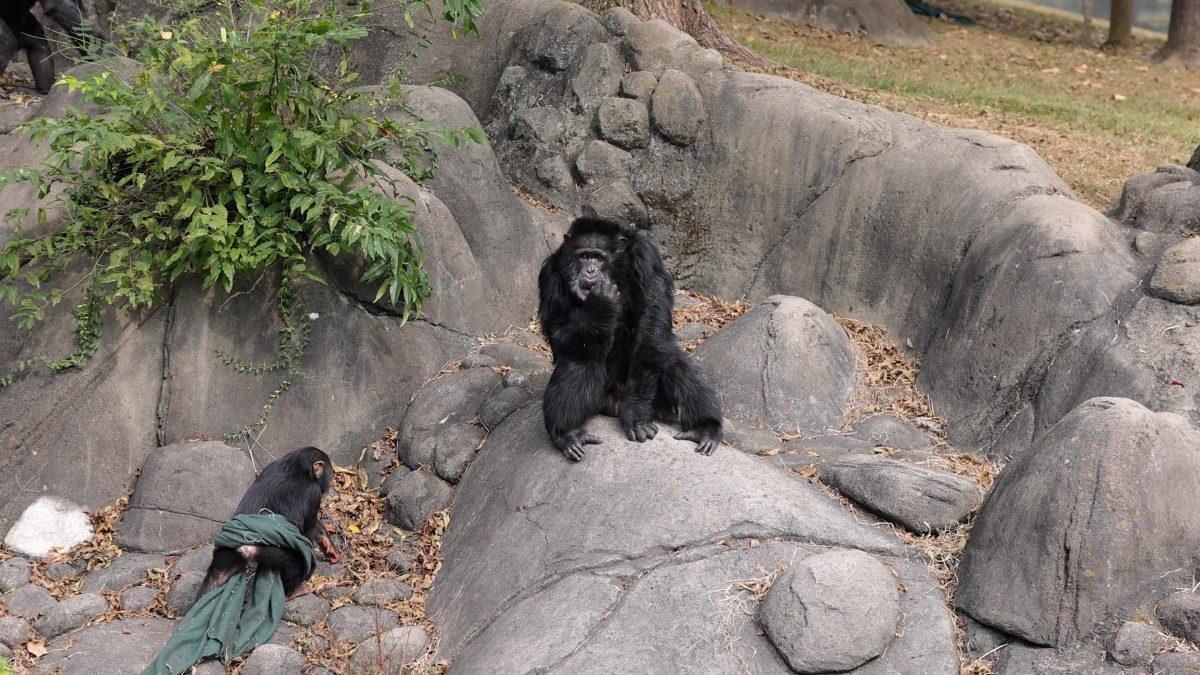
Chimpanzee Mwelu "Lu" at Zoo Knoxville.
Moore and Killeffer were not the only ones involved in the groundbreaking surgery. A whole team of neurologists, pathology, anthropologists, radiologists, zoo vets and more were involved in this surgery. Among the staff involved were many UT vet students. Most of them were involved from the very beginning, and it was their first time working with a chimpanzee.
“We always have students on the service,” Moore said. “The students were absolutely involved, in the sense that they were able to listen in on the conversations and be a part of the conversations. The students were also involved in terms of watching.”
Alexis Tolbert, a 3rd year veterinary neurology resident, was among one of the students who got to be a part of the surgery on Lu. Since she started vet school, Tolbert has known that she wanted to be in neurology.
“I did help with the initial approach in terms of like the skin incision,” Tolbert said. “I helped pass instruments if they needed certain things. I was scrubbed in and made the first incision.”
Another student that was involved was Ivan Cardona, a second year radiology resident, who got to read the CT scans for Lu. His role was to examine scans to confirm the lesions. Cardona also made sure the tumor was not spreading anywhere else on the day of the surgery.
“I was looking closely at the thorax, making sure that there was no pulmonary metastasis. I was looking at the liver and the spline. All those big organs that sometimes the tumor likes to metastasize,” Cardona said. “Luckily, I did not see anything abnormal in either of those. With all that information we came together as a group and moved forward with the surgery.”
The surgery was a success, and the surgeons were able to remove around 95-98% of the tumor. According to zoo staff, Lu is doing well in his recovery and is slowly being reintroduced to the other chimpanzees.
“He is doing fantastic,” Moore said. “Last Friday, when I went to see him, I gave him the all clear. He was completely back to his normal, chimp-like behavior. He was trying to climb, jump and play. He was walking fantastic.”
This story’s headline has been modified from its original version, published on Oct. 31, 2025. The original version stated that UT students performed the first recorded chimp spinal surgery. It has been changed to state that UT students assisted in the first recorded chimp spinal surgery. Surgeons from UT Medical Center and the College led the procedure with some assistance from students in the room.