Autism Spectrum Disorder rates have increased in Tennessee — in 2014, about 1.5% of children had ASD, which doubled to 3.4% a decade later.
ASD disproportionately impacts children and minority groups have higher rates of the disorder compared to white children in Tennessee.
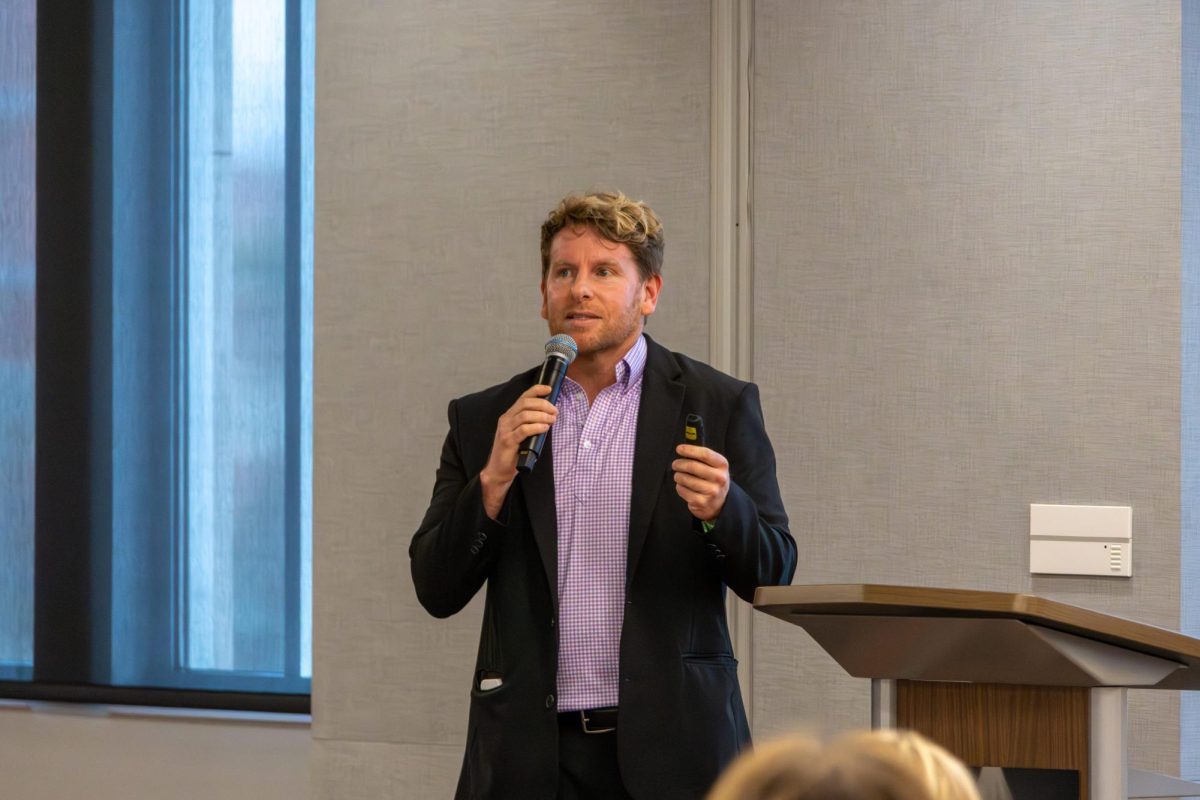
To address ASD and its complications, Il Hwan Kim, a researcher with the University of Tennessee Health Science Center, took the initiative to create a study on the development of ASD along with his other researchers, Yong-Eun Kim, Sunwhi Kim and Yusuke Ujihara.
ASD is a complicated mental disorder that impacts how people socialize and interpret the world. Specialists presumed that factors such as the environment and genetics are key contributors to ASD.
Kim’s work aims to understand ASD at a deep level by analyzing the brain’s gatekeeper — the blood-brain barrier. According to Kim, the BBB decides what can enter the brain and is affected by various environmental factors like pollution, infections and stress.
“This growing body of evidence suggests that ASD-associated genetic and environmental risks may disrupt the BBB independently of their direct influence on neurons,” Kim said. “Thus, I have hypothesized that BBB dysfunction and neuronal abnormality synergistically impair brain function, contributing to ASD-like behaviors.”
In addition to BBB, Kim and his team also studied the combination of the gene SHANK3, which provides instructions for constructing proteins in the brain. Mutations in SHANK3 are known for their connections to ASD, but their function with BBB was unknown.
The study’s overall goal is to examine if SHANK3 compromises BBB and if that connection contributes to ASD.
To test this hypothesis, the researchers used mice to see what would happen if the SHANK3 gene were “knocked out.” Male mice had a more “leaky barrier” in the brain, as stated by Kim.
According to Kim, to reestablish BBB’s function in male mice and improve neuronal functions, the team altered β-Catenin, a protein that maintains the tight junctions in BBB.
“Although BBB permeability is restored during adult age, the male mutant mice display reduced neuronal excitability and impaired sociability,” Kim said. “Further analysis reveals that the BBB-hyperpermeability is attributed to the β-Catenin imbalance triggered by eShank3-KO. These findings highlight a pathogenic mechanism stemming from the ASD-risk Shank3, emphasizing the significance of neonatal BECs in the BBB as a potential therapeutic target for ASD.”
As ASD is a complicated process requiring much attention to detail, Kim expressed his challenges concerning Brain Endothelial Cells — the building blocks for BBBs.
“Since focusing on BECs and the BBB in ASD research represents a new direction in the field, our team had to create innovative experimental concepts and develop a range of new methodologies to explore novel pathogenic mechanisms that may originate from the BBB,” Kim said.
This crucial research study allows therapists to potentially use this information on the role of BBB in the early stages of ASD.
“Our unpublished data revealed that more than 50 ASD-risk genes are highly expressed in the primary BECs of the BBB in both humans and mice,” Kim said. “I believe these ASD-risk genes may play their distinctive roles (different from their function in neurons) in maintaining normal BEC/BBB function.”
The research teams’ work is far from complete — the BBB groundwork and its impacts on ASD have the potential to unlock more discoveries.
“Future studies that concentrate on these ASD-associated genes within the context of BECs have the potential to broaden the ASD research landscape,” Kim said. “This expansion could significantly contribute to unraveling the mechanisms underlying the pathogenesis of ASD, particularly those stemming from neonatal BBB dysfunction.”
“It is exciting to see foundational research from our investigators here at UT Health Sciences that is helping advance our understanding of the human brain,” Jessica Snowden, vice chancellor for research at UT Health Science Center, said. “Every day across Tennessee, high-quality science like this is helping us change the lives of families across the world.”