Environmental sustainability is a more prevalent topic than ever as companies and establishments work to create more sustainable initiatives. With the state of climate change worsening, it is no surprise that people want to see more change in the fight against climate change.
The university has made efforts to enforce more sustainable practices through the Make Orange Green Campaign. This campaign promotes more recycling, composting, student ideas on sustainability projects and “No Waste Game Days” for football games.
While there is an abundance of initiatives the university is taking to promote sustainability, it begs the question if they are doing enough in order to be as sustainable as possible. Many students have their own ideas about the university’s sustainability practices.
Tickle College of Engineering student Thomas Peplow gave his perspective on the university’s approach to sustainability. Peplow is a junior majoring in civil engineering. He appreciates the recycling initiatives, however, he believes there are still more efforts that could be made by the university.
“The university is a large producer of waste, so we should try to reduce it when we can in terms of recycling,” Peplow said. “Initiatives like recycling and sustainable infrastructure exist here on campus, so they’re doing a little bit. I’m not sure if it’s that effective because not everything is up to the standards it should be.”
Peplow was also vocal about the constant building of new infrastructure at the university. The university often builds new facilities, rather than renovating old buildings that are out of use or soon to be out of use.
“One thing we could do is stop tearing down old buildings to build new ones and try to renovate existing buildings to improve facilities,” Peplow said.
Another student gave his insight on the university’s environmental impact. College of Information and Communication student Evan Hooper was passionate about things the university could do to improve its environmental footprint. Hooper is a senior majoring in journalism and electronic media.
“UT themselves, as an organization, needs to work towards more sustainability, whether using renewable energy or whatever,” Hooper said. “It’s also important that UT teaches and educates its staff and students about being sustainable because the more awareness there is for helping the planet and becoming more sustainable, the better.”
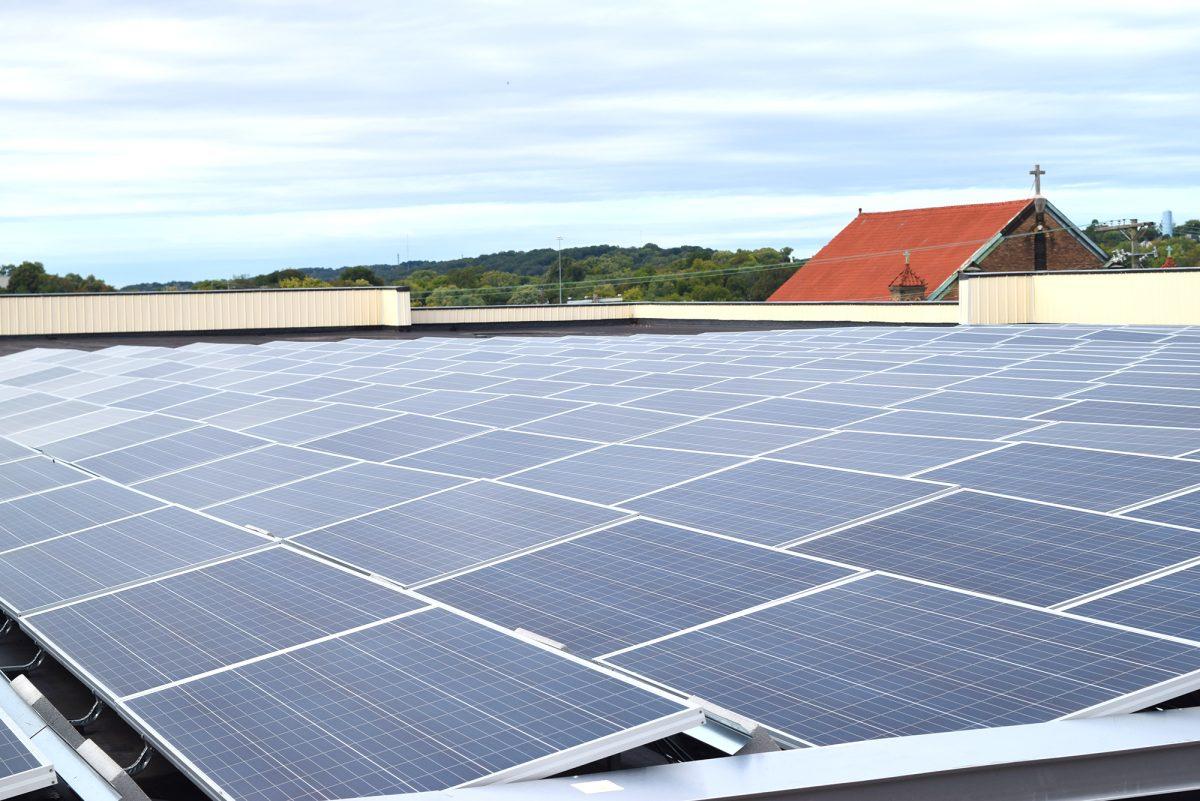
Hooper acknowledges the efforts already implemented at the university but believes there is more that could be done. The minimal solar panels and encouragement to recycle may not be enough in the long run.
“I’ve seen solar panels on a few buildings, and there are specialized places for recycling, and recycling is encouraged, but I’m not sure of what else,” Hooper said. “Obviously, every little bit helps, and something is better than nothing. But the more, the better. And I think UT could do better. It’s not fully possible to run off of pure renewable energy currently, and it’s impossible to get everyone to recycle, but more effort could be put in.”
Hooper also talked about what he would like to see more of at the university in regards to sustainable practices. This includes more solar panel use and more accessibility to public transportation for students.
“For UT to be more sustainable, I think there should be more effort into using renewable energy and limiting as much harmful consumption as possible,” Hooper said. “I would love to see solar panels on every building, less cars and more public transportation and more outlets for electric vehicles.”
These perspectives from students shed some light on ways the university can enhance its practices. These are not changes that will happen overnight, but eventually, the university could work towards a variety of different initiatives to increase its sustainability efforts. There is still a long way to go, but there are options available to the university to contribute further in the fight to save the planet.