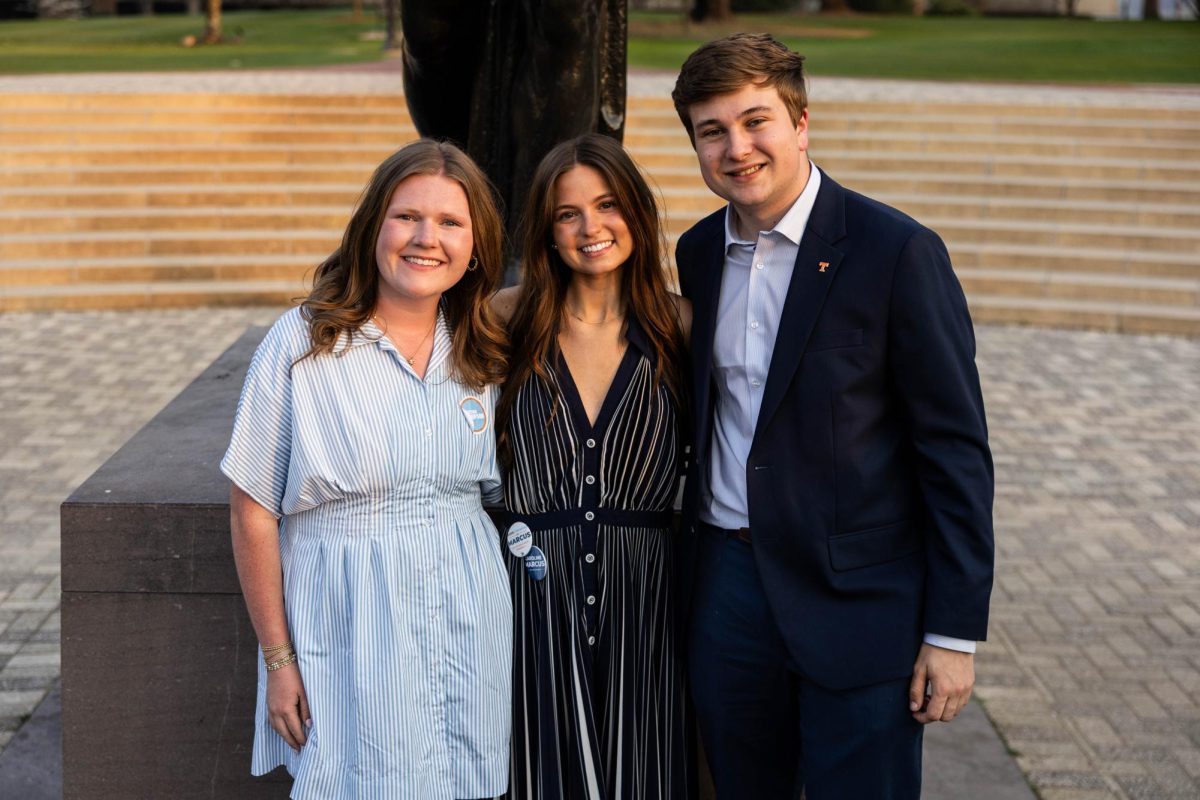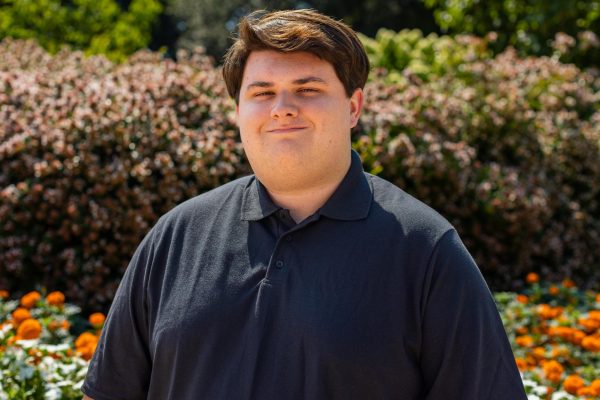
Cade Simmons is a sophomore public affairs and agricultural business major. Simmons is running unopposed for the SGA speaker of the senate position. He has previously served as the chair of SGA’s first-year council and is now the head lobbyist representing the undergraduate student senate. The following is a question-and-answer format interview between Beacon contributor Cassidy Gaspard and Simmons.
This interview has been edited lightly for clarity.
Q: What do you believe that you will do better than your opponents, and what evidence from your past experience supports that?
A: What makes this race unique for me is that I’m actually running unopposed, which is a little unfortunate from the student engagement perspective, because I think that it would have been awesome to engage with other campaigns’ ideas and initiatives, but it also gives me the really unique opportunity to really focus on engaging with the student body this week. What I think makes this campaign special is that I’ve been working with a wonderful group of individuals who have really broadened my ideas and my perspectives on what we can do with this position, and what I can do if elected.
I think that there are a lot of great ideas, and in particular, what sets me apart is my advocacy experience. With government relations, with first year council and being this year’s head lobbyist, all three of those positions have required me to work with others, and usually with administration, to really focus in on, “Hey, this is what we’re seeing from the student perspective, this is what needs to be done.”
Of course, government relations is more with the state capitol, but I feel like that I’ve had experience in understanding and translating what the student perspective needs, and I want to continue to do that work in this position, so that way we’re truly representing our students.
Q: How will you work with university administration when students’ interests conflict with administrative priorities?
A: First off, I just want to say that in my two years of experience within student government, we’ve always had such an incredible working relationship with administration. I think about nine times out of 10 that we have the same vision. It really just comes down to communication. Making sure that we’re understanding the administration’s perspective, and that the administration understands where students are coming from, because that’s where a lot of that disconnect comes from.
We may have the same vision, but we’re not really seeing how we’re gonna get there. We might have a little bit of a different path. So I think emphasizing that upfront communication from day one, meeting with all the administration possible, (is important) to really get a grasp on where we are as a university.
Because I think that I know as a student, but until I get in those rooms and make sure that I’m really engaging, it’s really important that I come with an open mind. And that goes around the other way as well. I think that I really want to emphasize that administration is also open to student perspectives, because at the end of the day, that’s what student government is all about: we’re advocating for students. We’re bringing new issues to the table. And that if needed, we are willing to go and fight for students as necessary.
Q: What are a few high-priority issues for students that you’ve identified, and what will you do to address them in the first 60 days?
A: One of the most unique things about the speaker of the senate position is that my role is really to facilitate and support the operations of the senate. So while I do, of course, have my own policy ideas and things that I’ve considered, it’s really important for me to try and support the senate to create those initiatives. My job is to focus on giving them all the resources they need to succeed.
That being said, within the senate and within SGA as a whole, there’s a lot that this position can do to really help facilitate those projects and make sure we’re implementing positive policy. Some of those important things, I think, are to broaden social media strategies, specifically for our student senate in particular, so that way students have access to know when meetings are going on, maybe what the agenda is gonna look like beforehand, and, just in general, getting more frequent updates on social media about what’s actually going on in the senate.
The second thing is expanding our SGA statutory law and record keeping, that’s kind of a two-fold thing there, because I feel like a lot of students hear about all these great ideas that candidates have each year, and then something will get implemented and it’ll make an impact, but then things will get changed the next year or they may not be carried over. It’s really important that we have some sort of statutory law that makes sure we’re preserving those initiatives year after year, and that we’re having the record keeping so that we can see what’s worked and what hasn’t. Specifically, from a senate perspective, so we have those resources, and we can just keep going.
Positive change takes a long time. It’s like planting a seed. If you’re gonna get a tree, you gotta be willing to go out every single day and water that tree. And you know, you might have to rely on others. We might create some sort of initiative that we may not see the end of when we’re on campus, but we have to be willing to put in the time and effort it needs to make it happen.
Q: What do you believe sets you apart from other candidates?
A: As a Baker student, I was part of the first admitted class of students into the Baker School. So from day one on this campus, I’ve had the opportunity to engage with so many students with so many different perspectives and really learn what it means to engage with others on this campus. I think it really comes down to I feel confident in my ability to process the thoughts of others, incorporate them and incorporate new ideas, and have my mind change on things.
There are so many things that I believed when I got to this campus that I feel like I’ve added new perspectives to, and I think that’s the great thing about going to a university of this scale. I think that being willing to have open dialogue constantly, always keeping a positive attitude and truly recognizing the efforts that our student senators or any student leader on campus has, you know, those skill sets that they have, is really important, and it’s something I’m going to try to do every single day.
Q: What organizations, administrators or leaders will you need to work with to accomplish your goals?
A: First and foremost, a great working relationship with the Dean of Students Office and with the Division of Student Life is really important. I feel confident that I already have a great working relationship, through my previous SGA experience, with our leaders such as Mr. Todd Cox, Dean (Byron) Hughes and Vice Chancellor (Frank) Cuevas. Those are all very important people to have a great working relationship with.
On top of that, I want to expand our sensibility to engage and cooperate specifically with the constituencies that our centers represent. That would come through academic staff and academic deans, the folks who are working for those specific departments and then the deans themselves. I would also include, because some of our constituencies are about housing locations, residence hall leaders, and making sure our senators are engaging with those people on day one so they’re seeing their faces.
That way, the first time they see us isn’t when we want to bring a new idea to the table, it’s because we’ve already made that connection and we are already on those positive working terms, so that way we are already ready to go, we’re ready to make that impact on day one.
From the student leader perspective, I think that there are so many student leaders that I’ve met on campus already through this campaign, whether it be our Greek life leaders or our multicultural life leaders of our different organizations.
Any organization on VolLink is important to reach out to. I’ve already had a few folks reach out with some excellent ideas, so I think it’s important to get every single perspective, because that’s how we broaden our net and that’s how we get the best ideas possible.
Q: Where can voters go to learn more about your campaign?
A: Instagram. I’m very thankful for the campaign team for all of the work that they’ve done on that. I am also working to design a potential website or a LinkTree. Come meet me in person. We’re going to be tabling on (Pedestrian Walkway) most days. Hours are a little bit flexible on that, but we’re trying to kind of hit all parts of Ped., trying to get some different parts of campus so that students have the opportunity to come meet us. I think that in person is my favorite way, but people can feel free to send me a message on Instagram, email, text or whatever is the best way. I just want to be an available resource.