Homecoming is a special time when alumni return to their alma mater, and current students revel in the spirit of Rocky Top. It’s an occasion for Volunteers from all corners of the world to journey back to their beloved Rocky Top and celebrate the rich history, cherished traditions and unwavering passion for UT.
However, waving an orange and white pom-pom while cheering on the Vols can be quite a challenge when your fingers are aching from pomping one too many pomps.
The Greek community takes Homecoming week as seriously as a nation hosting the Olympics. As a member of a Panhellenic sorority, I can attest that each day of the week is jam-packed with events, from Smokey’s Howl, a spirited competition, to the Tower of Cans, a contest centered around constructing the tallest tower of cans. Did I mention that Homecoming is, in essence, a massive competition?
Typically, a fraternity asks a sorority to Homecoming during the spring semester, and these “proposals” are grand affairs, involving songs, dances and the presentation of flowers or sweet treats. Once this elaborate ritual is complete, it’s time to prepare for the week ahead.
Throughout the week, there are numerous events to boost your Homecoming prospects, but to “win” Homecoming week, you must excel in two key areas: the yard display and parade float. We’re not talking about simple signs in the front yard or basic floats; we’re talking about magnificent yard displays and majestic floats that embody the Homecoming theme.
When I was a freshman, Homecoming was relatively small and resources were limited due to the global pandemic. Yet, I still had to pomp. You might be wondering, “What is pomping, and how is it done?” I asked myself the same question.
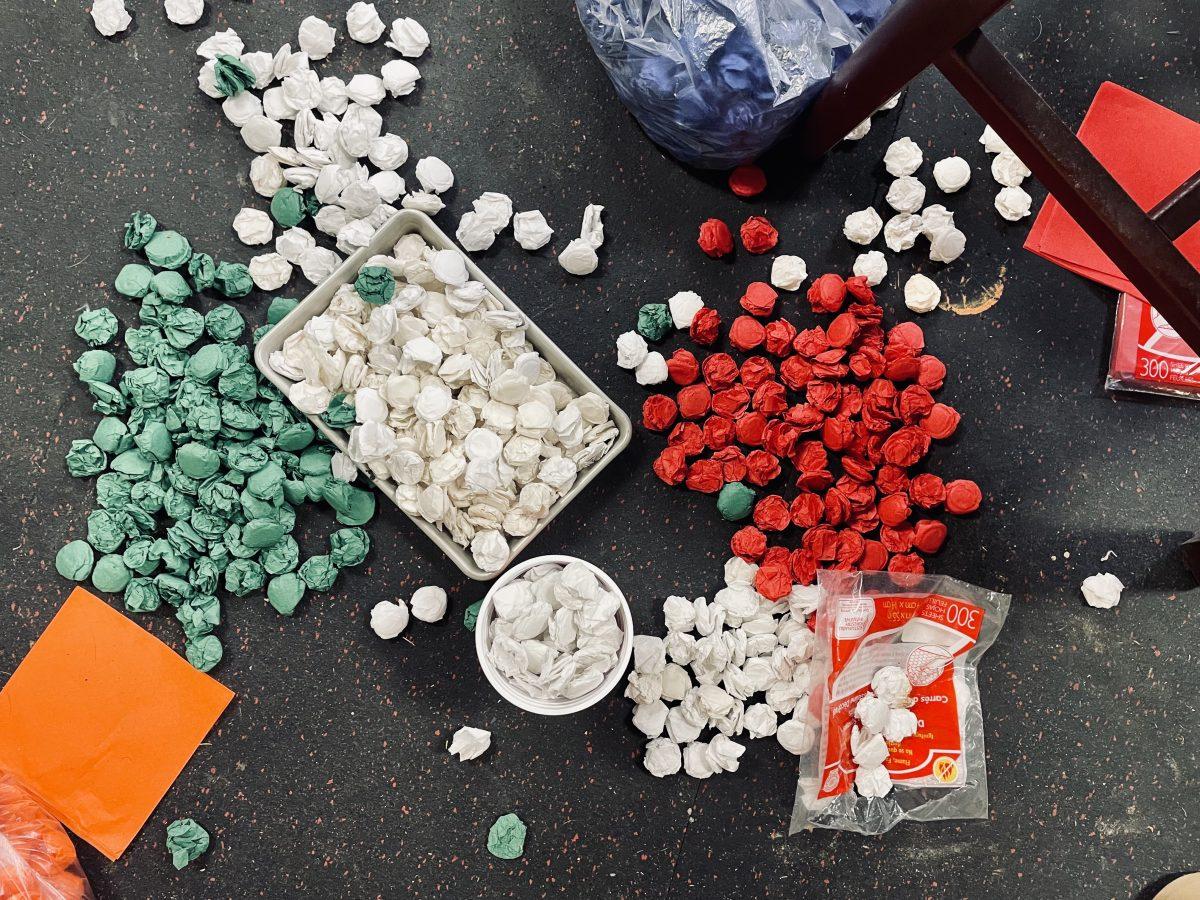
In simple terms, a pomp is a square piece of tissue paper intricately folded to create a flat paper ball. Pomping is, you guessed it, the art of crafting these pomps. So, during my freshman year, I had to walk to Fraternity Park to pick up a pack of tissue paper, which I would then take back to my dorm and pomp for hours. In the end, I made them completely wrong because I had no clue what I was doing, and they were never even used.
Over the next two years, I can proudly — and somewhat sadly — say that I became quite proficient at pomping. Although, there were a few occasions when my pomps ended up on the “Pomp of Shame” board. But I learned that practice makes perfect, and I now have over forty, soon to be fifty, hours of pomping under my belt.
You might be wondering, “What are these pomps used for?” These small paper balls are the building blocks of the yard display and parade float. In other words, there needs to be a massive quantity of pomps ready when the wood is cut and the glue is prepared.
How and why pomping became a tradition in the twenty-first century are questions I can’t answer. After hours upon hours of pomping, the pomps then need to be glued onto the display and float foundation made of wood. Inhaling the fumes from the glue couldn’t have been good for me.
While most Greek life members are required to participate for a set number of hours, many choose to stay after fulfilling their requirements to ensure the final product doesn’t resemble a preschool craft project. I’ve pulled many all-nighters during Homecoming weeks, busy pomping and gluing, only to walk to class from Fraternity Park the next morning. It was a humbling experience.
However, Homecoming week isn’t just about labor and sleepless nights. Alongside the challenging aspects, I’ve had the opportunity to meet people and forge connections that would never have been possible otherwise, and I’ve truly absorbed the essence of the college experience. Even though I didn’t get the full freshman experience, I embraced the chance to be part of a genuine Tennessee Homecoming, even if it meant I had to pomp.
Seeing the finished product almost always makes the hectic week worth it. Watching the admiration of your lawn display during a tailgate and witnessing your float as it approaches Neyland Stadium is a truly gratifying experience.
Homecoming week culminates during the Homecoming game. Instead of a traditional halftime show at Neyland Stadium, an announcer reveals the Homecoming runner-ups and winners. As a naturally competitive person, not winning in the three years I’ve participated has been a tough pill to swallow. I remember thinking we had a sure win during my sophomore year. Nevertheless, the chaos of the week comes to a halt, and you get to enjoy watching the Vols hopefully secure an impressive victory against their opponent.
As I prepare to graduate next semester, I know I won’t miss the meticulous pomping process, but I will forever cherish the bonds formed during those late-night endeavors. Homecoming is about more than just winning — it’s about celebrating the shared love for our home sweet home.
The memories and experiences gained during Homecoming week are truly worth the effort, and they will remain with me long after I’ve waved my last orange and white pom-pom.