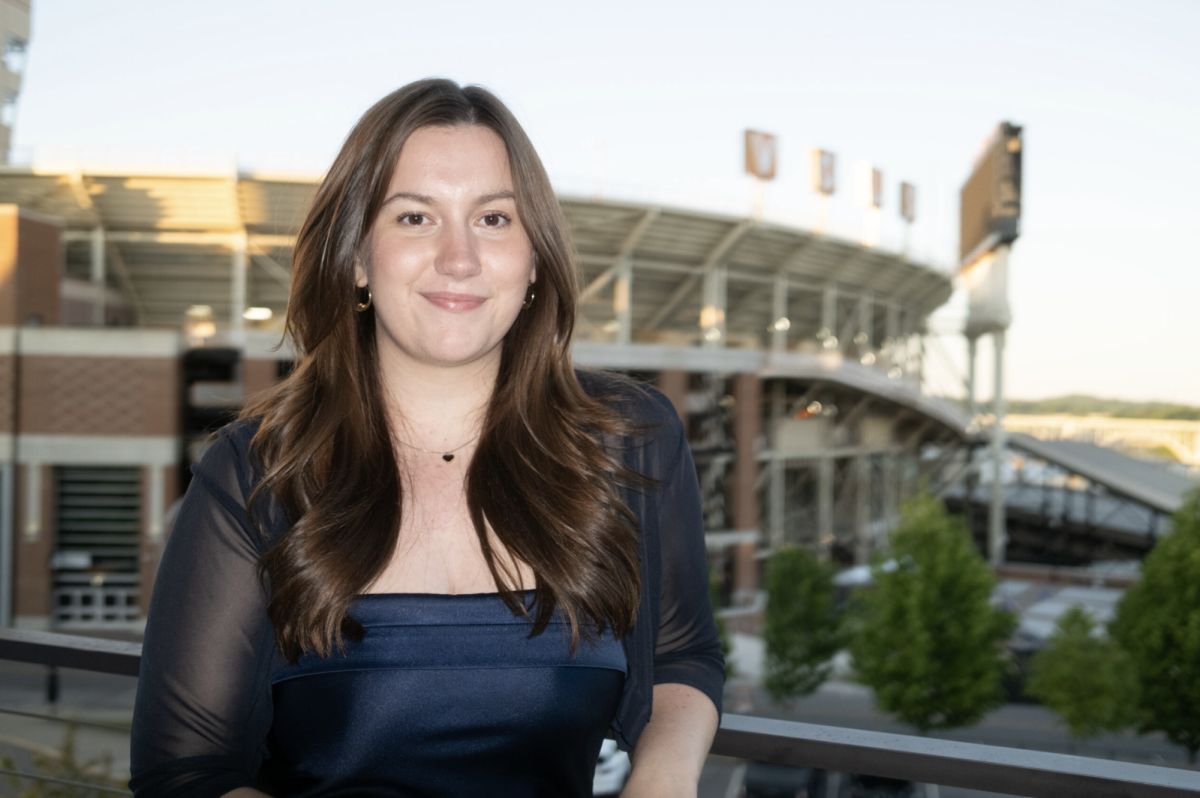
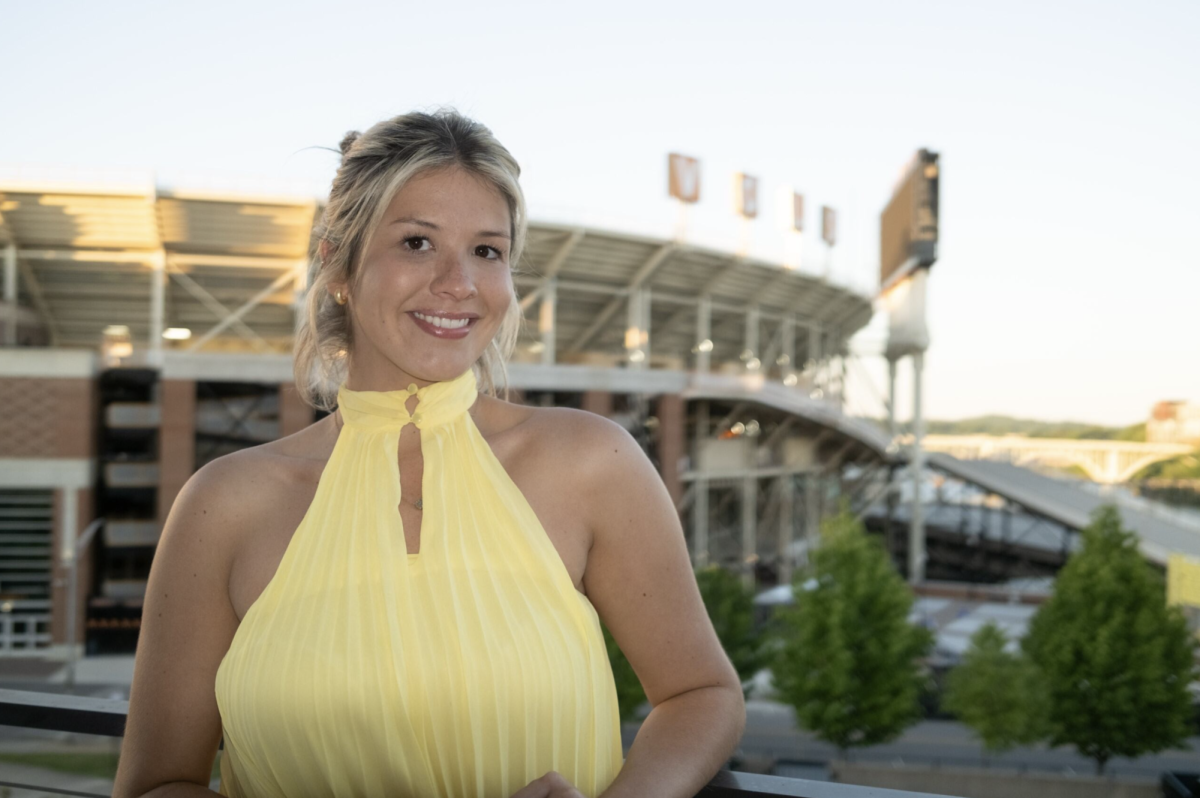
This job often takes me to journalism classes, where I stand at the front of the room and describe to students what The Daily Beacon can offer them.
Once last year, a student raised her hand to ask a question. She introduced herself as a fifth-year senior in the school of journalism and then said, “Where do you even get copies of the Beacon?”
When students ask this question – and they do with some regularity – I do two things. First, I send them the list of over 40 locations across campus where new copies of the Beacon are placed every Wednesday. Second, I descend into a familiar thought crisis about whether the Beacon should be printing physical papers at all.
Let me back up a few years. When I was a junior in high school and editor-in-chief of my high school’s newspaper, my managing editor and I slogged through a laborious process of designing and printing a paper each week using the printer in the school library. Our funds were non-existent and we could barely pay for the paper. The photos never turned out great and each week, I’d find papers all over the hallways which I would pick up and throw away.
My senior year, I decided the paper would stop printing and go fully online. We purchased a domain name and a membership with a website builder. It took me a long time to lay out the website, but it finally went live and we stopped printing for good. The future of digital news was before us and we were out of the dark age of paper!
It was one of the least popular leadership decisions I’ve ever made.
Immediately, students felt like their work wasn’t being read. We had problems getting users on the site, and I did not have the wherewithal to track the analytics or anything like that. The paper lost energy and its presence on campus, so it didn’t really matter what the website looked like.
Worst of all, I got grief every week from the kid who used to pass out the papers, since I had made him obsolete. He had loved that job, he told me. He got to pass the paper out to everyone as they came into school. I would counter by telling him it was me who went around and recycled all the copies that ended up on the floor, all bent out of shape and mottled with footprints. It wasn’t much use: I had pulled the plug on a tradition because I hadn’t realized it mattered so much to people.
If I could go back, I would have worked harder to improve our content so that the school might consider funding off-campus printing. I would have strengthened our social media presence and advertised the website more. But it’s easy to see these things now.
The paper as I knew it did not survive the pandemic. A girl who was our features editor my senior year told me so over coffee a couple years ago. The school made all clubs meet outside to slow the spread of the virus and at some point, they just lost energy and stopped meeting. (Happily, they are now building back with a new advisor and a new website, but still no paper.)
When I got to UT, I met Kylie Hubbard, then editor-in-chief of The Daily Beacon, at a welcome week event and told her resolutely that I wasn’t going to work for the paper. Student media was like improv, choir and theater – something stressful I subjected myself to in high school that I was now releasing myself from in the semi-retirement period they called college. Kylie was nice though, so I said I might write for her. My first article was published a week later.
Here’s what I want to say about the paper editions of the Beacon. I did not pick them up every week during the two years that I was a staff writer, but I can remember so clearly the first time I saw my story on the front page.
I had gone to Dunford Hall to interview a historian of medicine named Susan Lawrence, now the head of the department. It was early February 2020 and I wanted to get her thoughts on what some people were saying could become a pandemic (she would say, presciently I believe, that trust is a “fragile commodity”).
I was about the get on the elevator when I saw it. There, sitting low in a rack by the doors was my story, the first feature about COVID-19 published in the Beacon, printed on the front page. When you are a staff writer, you don’t know which stories will make it in the paper and where, so it was a great surprise.
That surprise meant to me that the work I was doing mattered, that it was good enough to be on the front page and that it would be seen, if not read, by hundreds of people as they went about their days on campus.
This is why college papers have a period of mourning when they go out of print. Going out of print means losing a good deal of your physical presence on campus and the chance to reach people in a tactile way. It means that all your work becomes a piece of analytic data on a screen, like numbers in a bank account.
So when I’m asked by students where one can find a copy of the Beacon and I’m tempted to ask myself why we print, I think back on all these things and I come to the answer. We still print because we are lucky to be able to print.
Other editors-in-chief of the Beacon have written letters announcing a reduction in print. In January 2015, Claire Dodson, now entertainment editor at Teen Vogue, oversaw a transition from broadsheet to tabloid, and decided to experiment with a series of special issues, including a “Sex, Drugs and Rock n’ Roll” issue that included wildly personal pieces called “Ode to the penis” and “Ode to the vagina” (definitely not written by GenZs).
In 2017, Bradi Musil and her successor Alex Holcomb co-wrote a letter announcing that the paper would print on Mondays and Thursdays instead of five days a week, and would focus more attention on digital content. In 2019, Kylie Hubbard announced that the Beacon would cut down to printing once a week on Wednesdays, a schedule we still follow.
In 2020, Aly DeMarco announced that the Beacon would temporarily print once a month during the pandemic, as campus cleared out and ad revenue dried up.
I have not had to make any announcement like these in my time as editor-in-chief, but I do not think The Daily Beacon will always be in print.
It is dumbfounding to consider now, but the Beacon used to print 10,000 full-sized newspapers every weekday with the help of a large staff, ample advertising sales and wire services. Now, we print 2,700 copies a week. Ad revenue continues to be very low. But the physical papers are still very important to me.
When I remember that first time I saw my name in print at Dunford Hall and stuffed copies in my backpack to give my family, I think it might have been the first time I wanted to be a writer in a professional sense. When I see editors and writers feeling proud of their printed work and hanging it up around the office, my heart fills with the same feeling.
All I can think now is that printed copies of The Daily Beacon have been a constant during so much turmoil and change, and I am grateful not to be the editor who announces we can no longer make them.
As we publish this special edition on the state of the media, I know that the day is coming when the Beacon will print its final edition. And when that happens, there will be a marked absence on campus.