If you didn’t grow up bleeding orange, some traditions can seem a bit overwhelming. Whether you are a new student or a family member, sibling or friend of a Volunteer, here is a list of some of the most famous and unique UT traditions guaranteed to make you a Vol through and through.
1. The Vol Walk
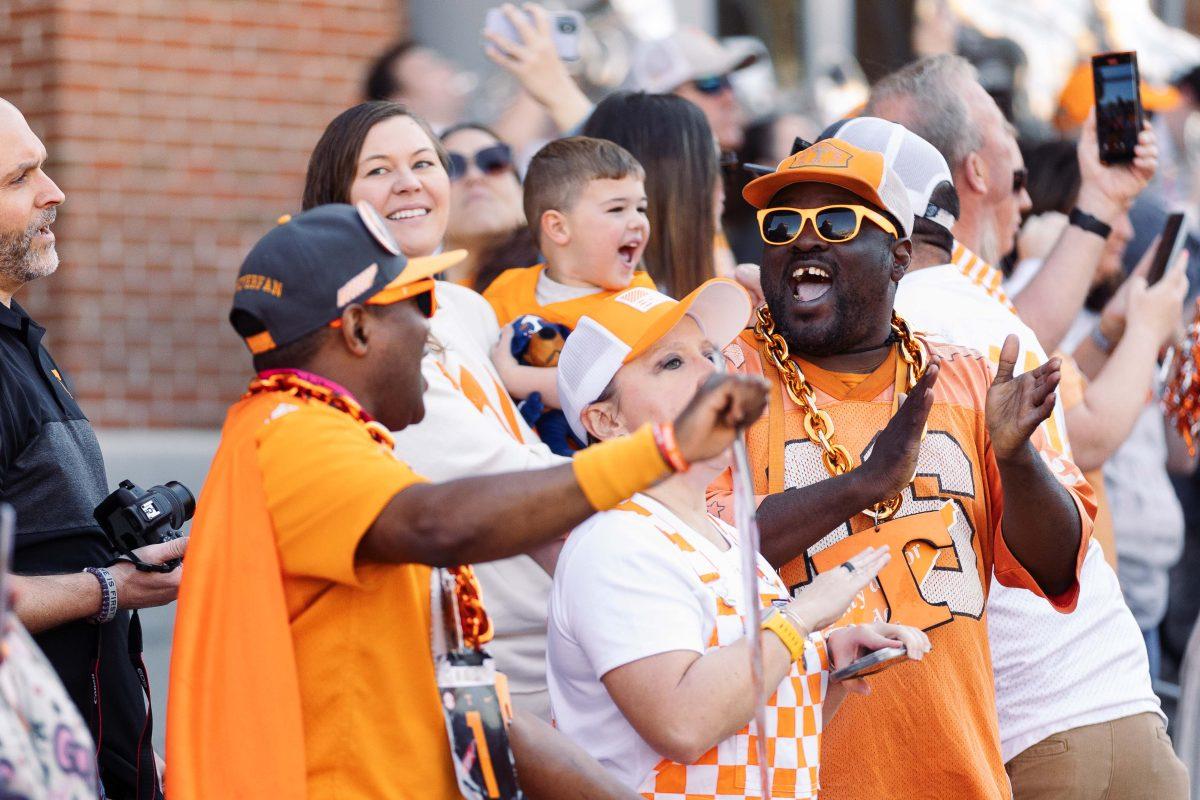
Perhaps one of UT’s biggest and most recognizable traditions, among Vol and rival fan bases alike, is the Vol Walk — the football team’s march to Neyland Stadium. This has been a long-standing and ever-evolving tradition since 1990, varying in paths and lengths. Today, the Vol Walk is led by the Pride of the Southland Marching Band two hours and 15 minutes prior to kickoff. Beginning at the Torchbearer Statue in Circle Park, the band snakes down Peyton Manning Pass before turning onto Phillip Fulmer Way to cross the walking bridge to enter Neyland Stadium. Shortly after, the football team moves down Peyton Manning Pass to Phillip Fulmer Way in the opposite direction.
There’s nothing like your first game day where you look out into a vista of orange covering campus. Not only does this tradition give the band members and players a unique experience to interact with fans, but it allows multiple generations of fans to share and make spirited memories.
2. The Vol Navy
While a sea of orange is being painted across campus, there is a river of orange spreading across the Tennessee River — known as the Vol Navy. This tradition began when Vol Network radio broadcaster George Mooney traveled the Tennessee River to a Vol football game via boat. Six decades later, what was one boat is now a fleet of nearly 200 traveling to Neyland bearing Power T flags and hosting tailgates.
3. History of the Checkerboard
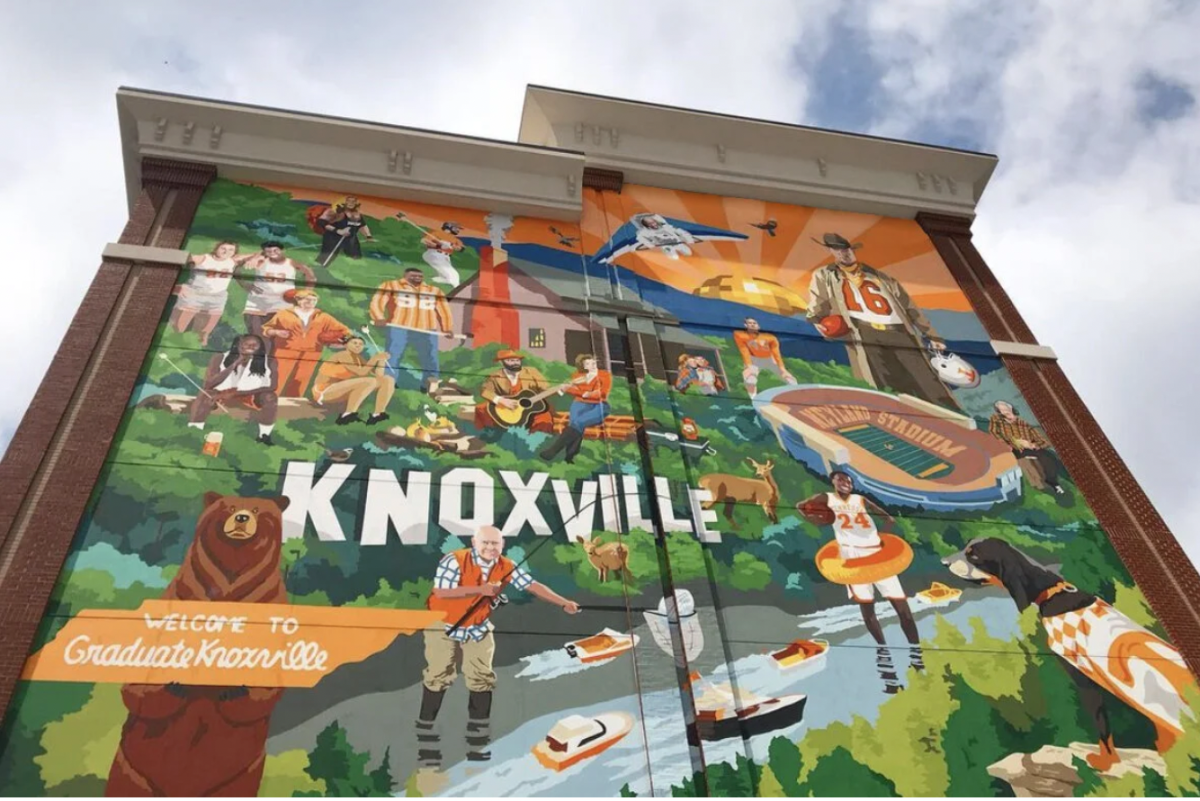
The orange and white checkerboard pattern is one of the most recognizable symbols of UT, including the iconic checkerboard end zones of Neyland Stadium. Dating back to 1921 with the completion of the campus’s most recognizable building, Ayres Hall, whose clock tower depicts a brick checkerboard pattern. Standing proudly at 140 feet, the checkerboard clock tower is visible from the field of Neyland Stadium. When General Robert Neyland was head football coach, he would instruct his players to “charge the checkerboards.” In 1964, when Doug Dickey became head coach, he introduced the orange and white checkerboard that remained in the end zones until artificial turf was installed in 1968. When Dickey returned to UT in 1985 as the director of athletics, he restored the checkerboards to the tradition we know and love today.
Despite what many think, Thompson-Boling Arena — now Thompson-Boling Arena at Food City Center — was the first to extend the checkerboards to the stands and create a new tradition. The checkerboard took the bigger stage in 2014 when a Vol fan and graphic artist posted an image on X, formerly known as Twitter, of what Neyland Stadium would look like if fans were to create a checkerboard in the stands. The vision rapidly gained momentum and came to life in a game against Florida on Oct. 4, 2014. Today, fans still checker Neyland Stadium one game a year and have even created a website that allows fans to know their color by simply entering their section and seat number.
4. The Power T
Unlike many schools, UT has one logo that is recognized among athletics and academics alike — the Power T. The “T” first emerged in 1964 when head football coach Doug Dickey replaced the numbers on the sides of players’ football helmets with a “T.” The “T” was slightly modified in 1977 by former football coach and tailback Johnny Majors into the Power T we recognize today. It wasn’t until 2015 that the Power T became the primary symbol of the entire campus.
In 1965, Dickey and band director WJ Julian collaborated to create what is now noted as one of the most iconic entrances in sports — running through the Power T. This spectacle consists of over 300 members of the Pride of the Southland Marching Band led by Smokey and followed by the football team that amplifies the excitement among the crowd.
5. Big Orange Fridays
Every Friday, especially before game day, fans are encouraged to wear orange to represent UT. Some student organizations will even give out free stuff on Ped Walkway for those who wear orange. While this is one of the simplest of the many UT traditions, there are still alumni who wear orange on Fridays in unwavering loyalty.
6. ‘Summitt Blue’
Orange and white aren’t the only colors worn by Vol fans — thanks to the movements of women’s athletic programs and the legendary legacy of former Lady Vols basketball coach, Pat Summitt, who led the Lady Vols to eight national championships in her 38 years with the program.
In 1976 the department of women’s intercollegiate athletics was established as its own unit separate from men’s programs. In August of 1976, former UT Chancellor Jack Reese along with Summitt, women’s track and field coach Terry Hull and women’s basketball alum Joy Scruggs met to sketch a new logo for UT’s women’s teams. The sketch depicted the iconic logo we now know, featuring a distinct shade of blue that came to be recognized as “Summitt Blue” in 2022 to honor the late Summitt. Summitt Blue now remains an integral part of Lady Vol athletes’ uniforms to pay homage to a legacy unlike no other.
7. Singing Rocky Top
Despite what most people think, Rocky Top is not actually UT’s official fight song. However, it has become a monumental part of Tennessee athletics. The song — written by Felice and Boudleaux Bryant and recorded by the Osborne Brothers — was first performed by the Pride of the Southland Marching Band as a tribute to country music in the halftime show during a game in 1972. It is safe to say it caught on and is now played multiple times in a singular game.
In case you were wondering, the official fight song lyrics go:
“Here’s to old Tennessee
Never we’ll sever
We pledge our loyalty
Forever and ever
Backing our football team
Faltering never
Cheer and fight with all of your might
For Tennessee!”
8. Painting The Rock
At the corner of Volunteer Boulevard and Pat Head Summitt Street stands an always-colorful campus symbol known as the Rock. Made of 97.5 tons of Knox dolomite stone, the Rock was first painted in 1980 and has become a tradition ever since, becoming a campus hub for club announcements, athletic spirit, political endorsements, birthdays and even proposals. Many campus activities center around this iconic site such as the annual “Slap the Rock” event hosted by SGA.
9. Torch Night
Torch Night is one of UT’s oldest traditions, marking a beginning and an end to one’s time at UT. At the beginning of their collegiate journeys, freshmen commit to embodying the Volunteer spirit by raising symbolic torches. Four years later, graduating seniors will hold symbolic torches at Torch Night: A Farewell to Thee as a pledge of loyalty and goodbye to UT. The graduating class then passes down their torches to the incoming senior class as a symbol of inspiration to continue lighting the way.