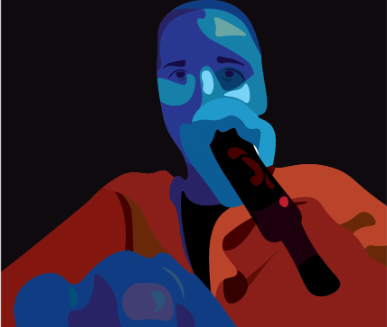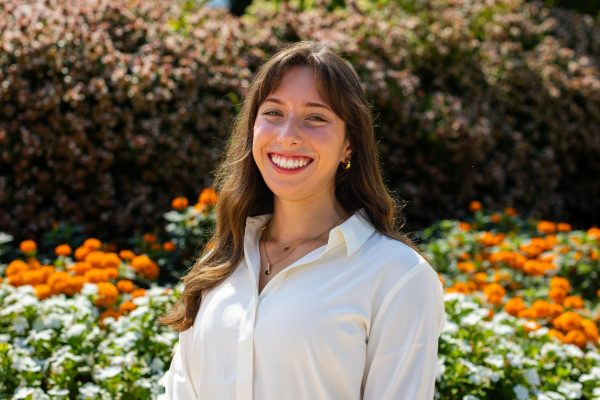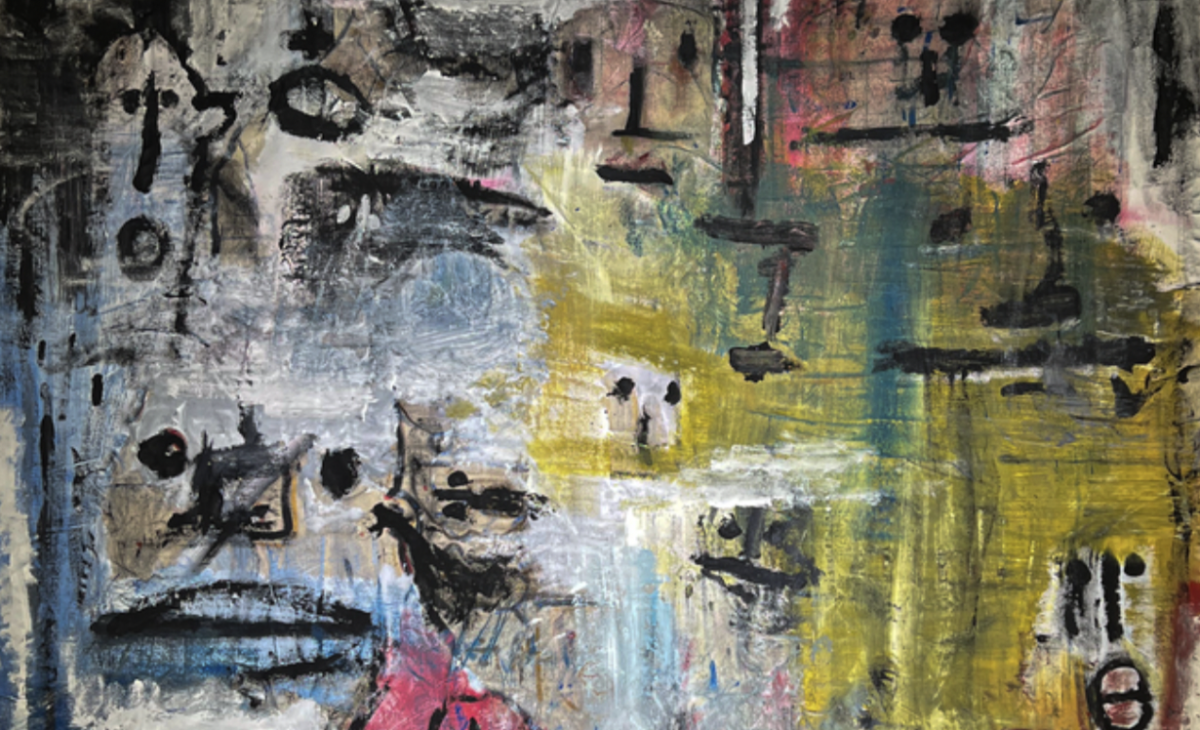
Fourth-year architecture student Roarke Lanning is sharing his collection, SOME FACES, featuring paintings and drawings of faces, portraits and abstractions of persona on Friday, Feb. 23 at Gallery 1010 downtown. Friday’s opening reception will take place from 5-7 p.m. and the exhibit will have open hours from 10 a.m. – 1 p.m. on Saturday, Feb. 24.
Aiming to meet the gaze of all that circulate the space, this collection of SOME FACES reflects on the enigmatic aura of each portrait. Vibrant colors and radiant outlines define these figures’ striking appearances, urging onlookers to stop for a moment and meet the gaze of each subject. The collection focuses on themes of perception and persona, reiterating that something is not always what it appears at first glance.
“The inspiration behind it is really interesting to me because it’s been something I’ve had to navigate starting this,” Lanning said.
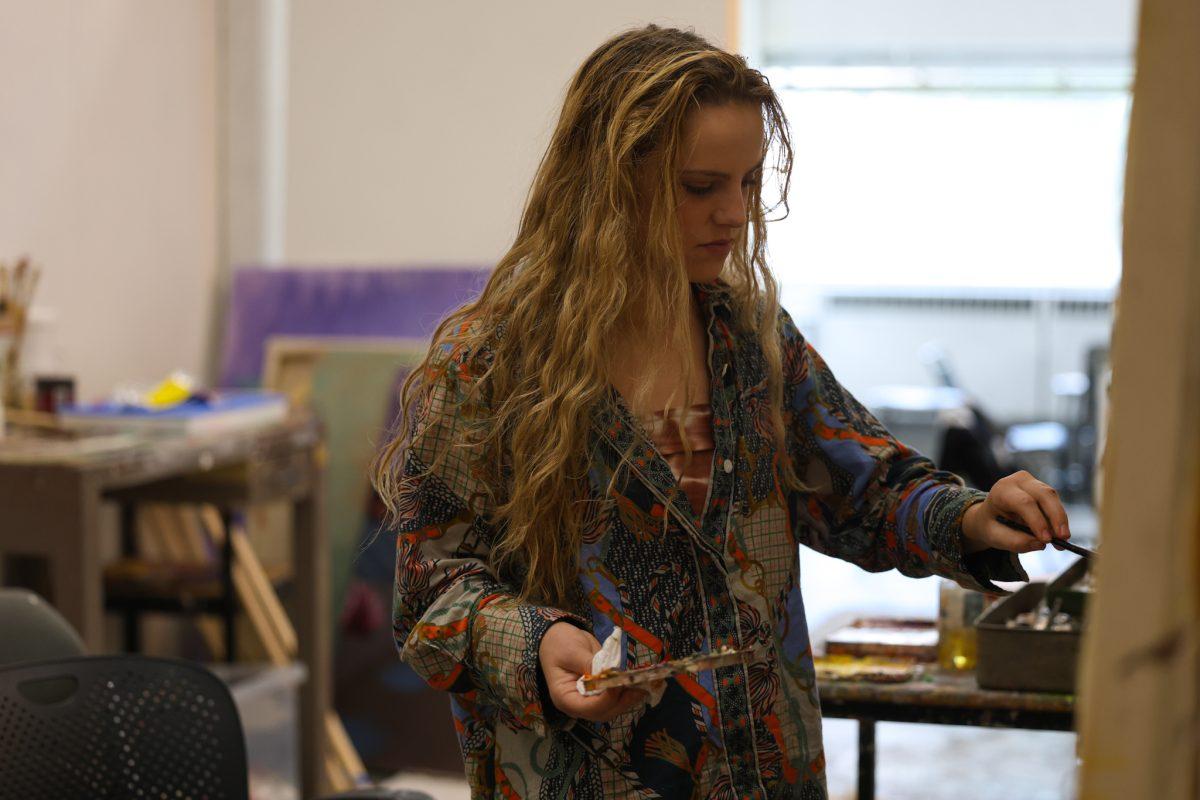
With only beginning to experiment with paint as a medium in August, Lanning has been able to create a vast collection of pieces within a rarely narrow time frame.
“One day I was like, ‘I feel like I’m so bound to an 8.5 by 5 inches sketchbook paper,’ so I changed the medium I was using,” Lanning said. “I switched from, like, pen to pastels, and then from there I was like, ‘OK, I’m still restricted to a 6 by 9,’ so I jumped up to 22 by 30, and that process was really interesting because I had never painted before, so it was like I was going at all of it with just intuition. Everything that I’m doing is a consequence of the first, like, drop of ink.”
This effortless liberation and transition from sketchbook paper to canvas was striking to Lanning and faculty alike. Mary Campbell is an associate professor of American art history. After only teaching Lanning for a semester, Campbell was instantly amazed that he was able to pick up the medium so quickly.
“To see someone move that fluidly with that sort of mark-making and then be like, ‘Yeah, this is new to me,’ I was really struck,” Campbell said.
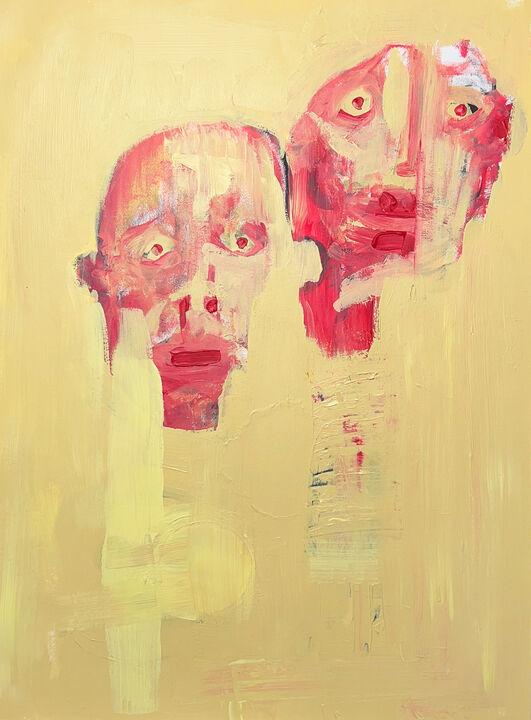
While some artists semantically create with a meaning in mind, Lanning took a backward approach to his artistic process, beginning with creating and ending with reflection to discover the message.
“I worked through like a modality of, like, ‘I’m going to create a bunch of stuff and then figure out what it means to me afterward,’” Lanning said.
“I think there’s, like, an immediacy to his work and a sort of rawness to it, especially for somebody who’s still so young, is really really powerful,” Campbell said. “Even just having him in office hours and talking to him about how he works and just, he just seems to always be working. There’s this sort of incessant quality to it in the best way that, you know, it feels somewhere between play and a compulsion that just strikes me.”
Lanning decided that the meaning would be moot as the ultimate perception is up to the viewer. This contemporary artistic idea of self-determined meaning became a theme in itself.
“I have my own set of values and beliefs that I’m trying to get across through my work, but, you know, ultimately it’s not up to me what it means to people,” Lanning said. “I think Cloud Gate is a really good example of that, like The Bean in Chicago. You know, I’m totally okay with those interactions, and I love it when people are assigning their own meanings to things.”
Within this idea of perception, Lanning centered his portraits around themes of judgment and character, relating a metaphor of how people often develop their own fascinations and fantasizations through observation.
“I feel like people are very quick to judge other people, and, you know, I feel like my work is judged, and I feel like all our work is judged in some capacity,” Lanning said.
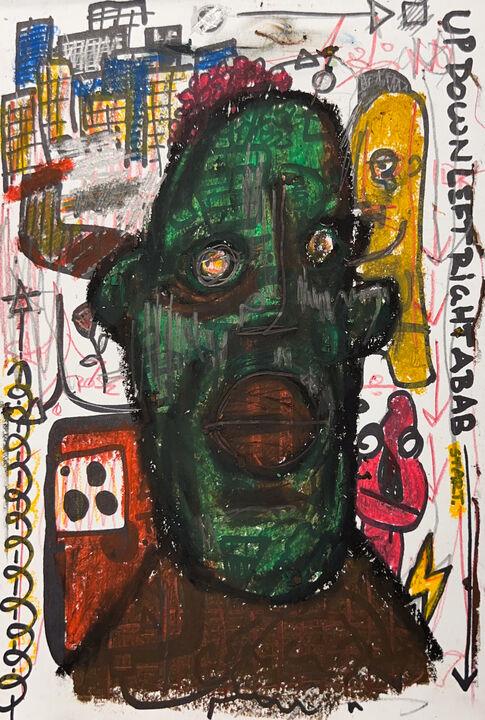
While ordinary people may find it impossible to create 175 pieces without duplication, Lanning does just the opposite.
“Not one of them is like the other,” Lanning said. “Some pieces relate to others more than, you know, some do, but I think overall, like, at each portrait and each painting and drawing I do, I’m approaching it with a different mindset.”
Growing up reading about artists, Lanning’s mindset was inspired by the practices of Jean Michel Basquiat, a famous New York City graffiti artist.
“When he worked, he would play, like, a record. He would have the news on, be surrounded in books. There would be so much going on,” Lanning said. “So, I started to incorporate that in my workflow, so, if I’m painting this one portrait, let’s say, like, classical music’s on, and I’m watching CNN, and then there’s books on contemporary architecture. But then, when I start the next one, all of a sudden, I’ve shifted all the books, we’re playing like R&B, and it’s like I’m constantly trying to shift that as I am starting new pieces.”
Lanning’s motivation and urgency to experiment and create stood out to Campbell.
“What’s so interesting, and maybe it’s a function of being this age, but he still seems to have all of that drive and enthusiasm and play and fearlessness of childhood, but then it’s combined with the kind of execution and critical thought of adulthood,” Campbell said. “To see someone at the intersection of that is just breathtaking.”
For Lanning, the interactive relationship between art and the observer is a crucial experience. The paintings are strategically hung at eye level and framed in reflective glass, prompting viewers to gaze upon the collection introspectively and “fit your face into whatever fits you.”
“I think the overall consensus that I’ve tried to get across through the paintings is that these are friendly faces,” Lanning said. “They might not seem friendly. They may not be approachable. They may not be what you’re expecting to get out of classical portraiture. I want people to have their own separate interactions with the work and be able to come away from it and say, ‘The portrait wasn’t so shrewd. It wasn’t angry at me. It wasn’t glaring at me. It was just there, happy to be present.’”
Knowing Lanning as both a student and an artist, Campbell is fascinated by the duality of his character and creation.
“When I talk to Roarke, there’s just this like kind of wonderful, kind of bubbly enthusiasm where he’s just, like, there’s this excitement that just seems to travel with him, and yet some of what he’s exploring with the work itself seems to be quite dark, so I’m interested to see how other people respond to that kind of, like, richness and tension and what they get out of the work as well,” Campbell said.
With only a singular piece in the Ewing Gallery, the Gallery 1010 show is Lanning’s first real collection.
“I’m hugely thankful to the School of Art and Gallery 1010 for being able to facilitate all of it, but I’m really looking forward to being able to share this collection as it stands right now,” Lanning said. “No one has really seen any of this work in person.”
For Campbell, witnessing the success of a student at this level comes with its own unique reward.
“This is like what we live for, right?” Campbell said. “To come back and to have been on sabbatical for two years and then to come back to a cohort of students who are so strong and to have Roarke among them, just essentially killing it, that’s the ultimate gratification.”
With SOME FACES being available for only a short window of time, viewers are encouraged to “gaze indefinitely” and share the same respect with portraits as they do with those who observe them.