After publishing an article about the lack of conversation regarding suicides on our campus and from the administration, I was taken aback by the amount of attention and concern that this particular issue gained from fellow students, faculty and alumni.
I realized that I was not alone in this issue, and that many individuals from our community wanted this to be addressed just like me. I also learned that this needed further discussion with the necessary facts and answers.
A little under a month ago, I had the opportunity to meet with Vice Chancellor Frank Cuevas and Vice Chancellor Tisha Benton to answer these questions, in hopes that the University of Tennessee’s community could get some reassurance and clarity. It only felt right to shed light on some of the behind-the-scenes work being done that we might not be aware of.
Cuevas, head of the Division of Student Life, and Benton, head of marketing and relations, graciously allowed me to interview them about my concerns. I felt confident that their willingness to meet with me on behalf of my article would be a great resource to share with our community.
I asked if they were familiar with the article I recently published, questioning the administration’s role in suicide awareness and coverage. They were.
The following questions and information were obtained via a consented, recorded interview with both vice chancellors:
Benton stated that she leads the central communications and marketing team. She shared that she has the amazing privilege of getting to tell the university’s stories. She also shared that the team creates a repository of central tools for the colleges and responds to all reporters on behalf of the institution.
Cuevas stated that his role involved working with a team of 400 dedicated folks across the division. He shared that the staff creates opportunities and experiences for students to learn.
Additionally, his team works with families when they experience a loss. They take on life outside the classroom and are working to ensure students have the programs and services they need to succeed.
“The unfortunate piece is that we are no different in what you see in the community,” Cuevas said. “We have student deaths all the time, and for a variety of reasons — it’s not always suicide. We have a dedicated postvention response team that really steps into providing support for the family and those affected. … The postvention team jumps in action with a couple of different parts.”
I was then handed a written document that stated the step-by-step protocol for the postvention team’s duties, just as Cuevas had mentioned.
“The first step is to support and stabilize the situation. The second step is to prevent any further harm. This is where we are saying, ‘How can we prevent any more risk, to self, to others?’”
Then the other part is really a focus on healing. How do we help individuals deal with grief, whether directly affected or (if they are) faculty, staff or students? Because again, our students are going to impact everyone,” Cuevas said.
It became clear that while it might not be a public resource to concerned students like myself, there are steps that are followed, a protocol in place and action that the Division of Student Life takes. Nevertheless, I wanted to know more about how this affected students who learn of a loss occurring on campus, primarily by suicide.
Just as I was going to ask them about my number one question, Benton beat me to it — “That 12 number in your piece was not accurate.”
In my previous article, I discussed that an administrator passed down information that allegedly 12 suicides occurred in the fall semester.
Expanding on this information, Cuevas stated what he says is the truth.
“We only had six student deaths since last semester, and two of them were from suicide.”
I was shocked to hear information that I had believed to be true was, in fact, not. It was also difficult to grasp that someone in power from the administration spread misinformation to students. Most importantly, however, it was a relief to hear that the number was less than I originally thought.
In the situation of student loss on campus, Cuevas explained that, “Sometimes, the families are the first people we deal with.”
Cuevas also shared that he has a difficult responsibility in his role as the head of the Division of Student Life.
“As someone who has sat across from families and provided the support that they needed at that moment, the grief and loss is at a magnitude that we might be able to imagine at that point in time.”
Cuevas stated that his team looked at how this student was connected to campus, and described it as a “web.”
“How is this student connected to campus, and who do we need to reach out to for support?” Cuevas said.
I started to see that this “web” was bigger than students might assume. Reaching out to those affected was one of the greatest responsibilities.
“This is very important as the situation may be affecting another student and lead to another loss,” Cuevas said.
Cuevas assured that the strategies he referenced above “just went through a rehaul” (as of spring 2024).
“The team really spent some time reviewing the mental health alliance, and sort of recommended strategies to deal with student deaths in general, and then drilling into that, how to respond to a student suicide on our campus,” he said.
When dealing with a high-volume situation such as a student death, Benton said, “From a communications standpoint, every situation is different.”
Benton then referred to a section in my article where I stated, “Whether it be an email or announcement, I think that our professors should at least be required to acknowledge a suicide if it happens and to offer resources. A professor acknowledging an incident like this would assure students that they didn’t just hear a rumor and that they are not being kept in the dark.”
She mentioned that in the situation I referenced and The Daily Beacon covered, there was information pushed out by student life, and her team consulted with them to find available resources. She added that it would be rare that death by suicide, or any kind of death, would have a campus-wide email announcing it.
My previous article should have clarified that this was something that I believed should be done in the unique case that the student was a part of a class, in which fellow classmates and/or administration were notified of the loss and later affected.
As Benton reiterated her claim that “different situations call for different things,” she recalled a “terrible tragedy” at Middle Tennessee State University in which many students were directly affected.
“This was a situation in which public communication would be used,” Benton said.
However, some considered the Stokely incident from the fall a public occurrence because they lived there and witnessed the aftermath.
It is a situation in which I and others felt strongly that we lacked the proper communication. I now understand that the university did respond appropriately, although not in the way that everyone found reassuring.
Benton said that complex situations like these are challenging to communicate or cover.
I do not believe that there is a right way to talk about suicide or the death of any person. However, there are guidelines to follow, which I was quickly informed of.
Benton said that not going public in a situation like this is not an effort to keep information from people.
“There are a lot of different things at play, like the people who were close to them, who is the priority,” Benton said.
Cuevas agreed.
“We want to be respectful as a team and work all the angles,” Cuevas said, “Any loss is difficult, all losses are difficult, we just try to be respectful … We are going to take the guidance from the families. I think we have gotten better through this postvention team as a process, which is a good thing.”
Cuevas also explained that the guidelines he and his team follow are grounded in the work of the Higher Education Mental Health Alliance.
He pointed out that “this is a national organization that really sets forth standards around how to deal with student deaths on a college campus. … We recently, last year, had a team that evaluated all of our processes and made recommendations and changes to the process we have now.”
I mentioned to both Benton and Cuevas some active mental health resources that I was aware of — JED, Rocky Top Recovery, Student Health Center, etc. However, I wanted to know more about on-campus resources that I, or other students, might not be aware of, and how their roles contributed to these developments.
Cuevas said that the Center for Care and Resilience and Rocky Top Recovery are fairly new. He mentioned that they are connected with the Counseling Center by relocating to the Student Health Center building. He agrees that his team has had a hand in shaping these developments.
Cuevas expressed that his team has invested resources in training everyone so they can train more faculty and staff on campus on what to look for in the classroom or on campus.
Mental health is discussed, but not nearly enough, with young adults entering or currently in college.
According to the American Foundation for Suicide Prevention, suicide is the second leading cause of death among 15-29-year-olds, and there are far more statistics available that emphasize this specific age range of young adults. Knowing the sensitivity of mental health during the early stages of one’s adulthood, specifically on a college campus, can make a greater impact than one might think.
“Any time there is a student death, regardless of how it happened, the protocols that I mentioned are how we take care of it. … We deploy this under any circumstances, because a loss is a loss.” Cuevas said. “Even if something happens to someone on break, for example, there’s still people on campus who do outreach,” Benton adds.
Both vice chancellors made it very clear that there were a plethora of resources their departments each provided in the situation of a student death at UT.
“Sometimes we don’t even hear about a student death, especially if it’s not on campus,” Cuevas said. “Most of our student deaths do not occur on campus. Oftentimes, we are learning well after. It could be a week or a day, because the family is dealing with grief … or we might hear from students because they are connected within class or a friend of theirs.”
Cuevas said, “Sometimes if a death happens on or off campus, we might not even know the circumstances. We are just there to reach out.”
The conversation I had with the vice chancellors gave me more insight into these situations. It taught me about protocols and scenarios I previously questioned, all while getting the overarching, repeatedly stated claim of the resources they have in place.
Concerning administrators’ role in the classroom where a student has died, Benton said, “I don’t think there has been any guidance that tells people that they are not allowed to talk about something … from our office, certainly.”
As an opinion writer, I have the privilege of writing about topics I feel strongly about — good and bad. I am lucky to have a platform where I can do so. However, it is not always easy.
While being told by the people who would know best that I was wrong about the number was a relief, it was, most importantly, a learning experience.
I learned that in a lot of cases, not talking about suicides is not always because it is taboo for the community, or to protect a reputation, but to prevent a snowball effect. Publishing information regarding the death of a student by suicide can sometimes influence other students to take similar extreme measures, which does not benefit anyone whatsoever.
So what now?
My most important goal is to continue to raise awareness about suicide and promote mental health resources that can be easily accessible to students on college campuses. That might look different in many ways when considering students’ safety and what can make the greatest impact.
March 29, I had the privilege of attending the “Out of the Darkness Walk” hosted by the American Foundation of Suicide Prevention. I was invited on the account of the event’s co-chair, Caleb Atkins, who came across my previous article and advocated for more coverage and attendance at their event.
The event touched my heart, as did hearing personal stories, hand-painting the rock and walking to honor those who might have lost someone, struggled or were just there for the cause. Our staff letter includes more information about our experience.
There are many ways to advocate for mental health resources and suicide prevention, and there is a lot to learn for myself and others about doing it effectively and appropriately.
In doing so, remind yourself why you are doing it. Ask how you can be a better advocate and remember the people you might help along the way.
If you or anyone you know is struggling with suicide or mental health issues, call the National Suicide hotline at 988 or consult a list of resources here.
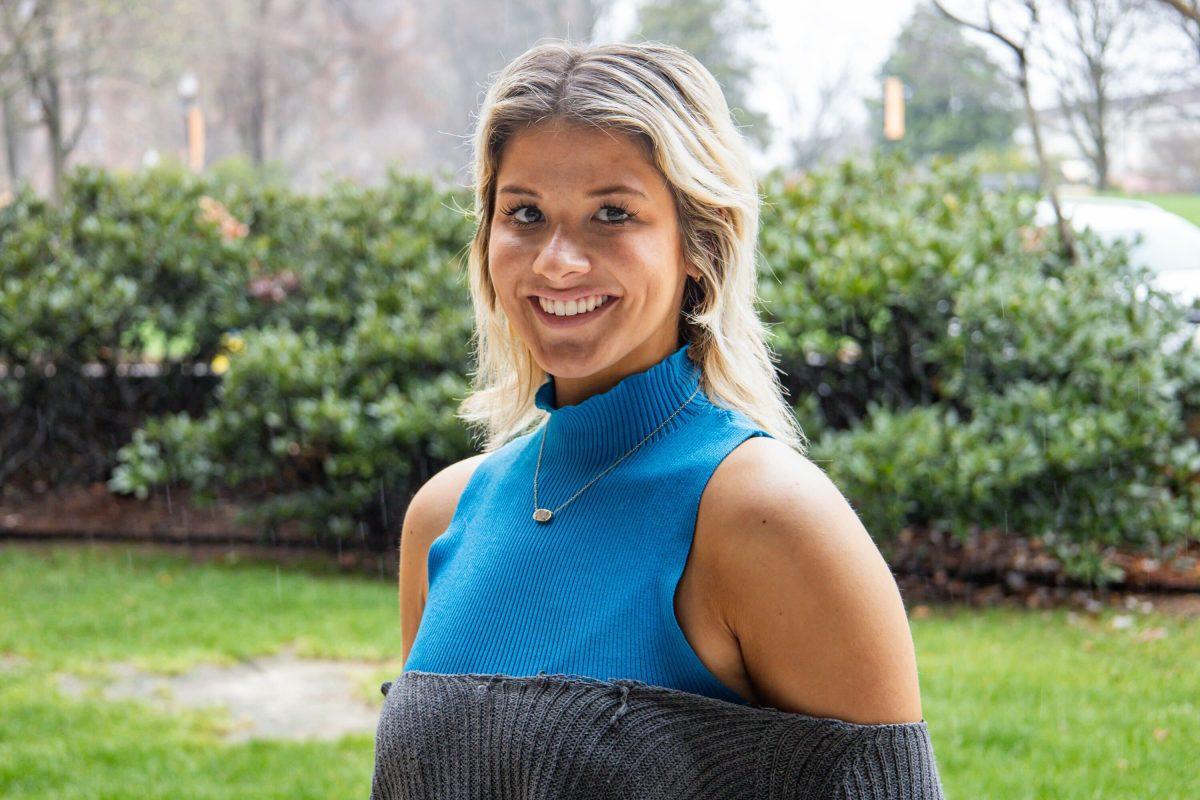
Ansley Graves is a junior at UT this year, studying journalism. She can be reached at [email protected].
Columns and letters of The Daily Beacon are the views of the individual and do not necessarily reflect the views of the Beacon or the Beacon’s editorial staff.