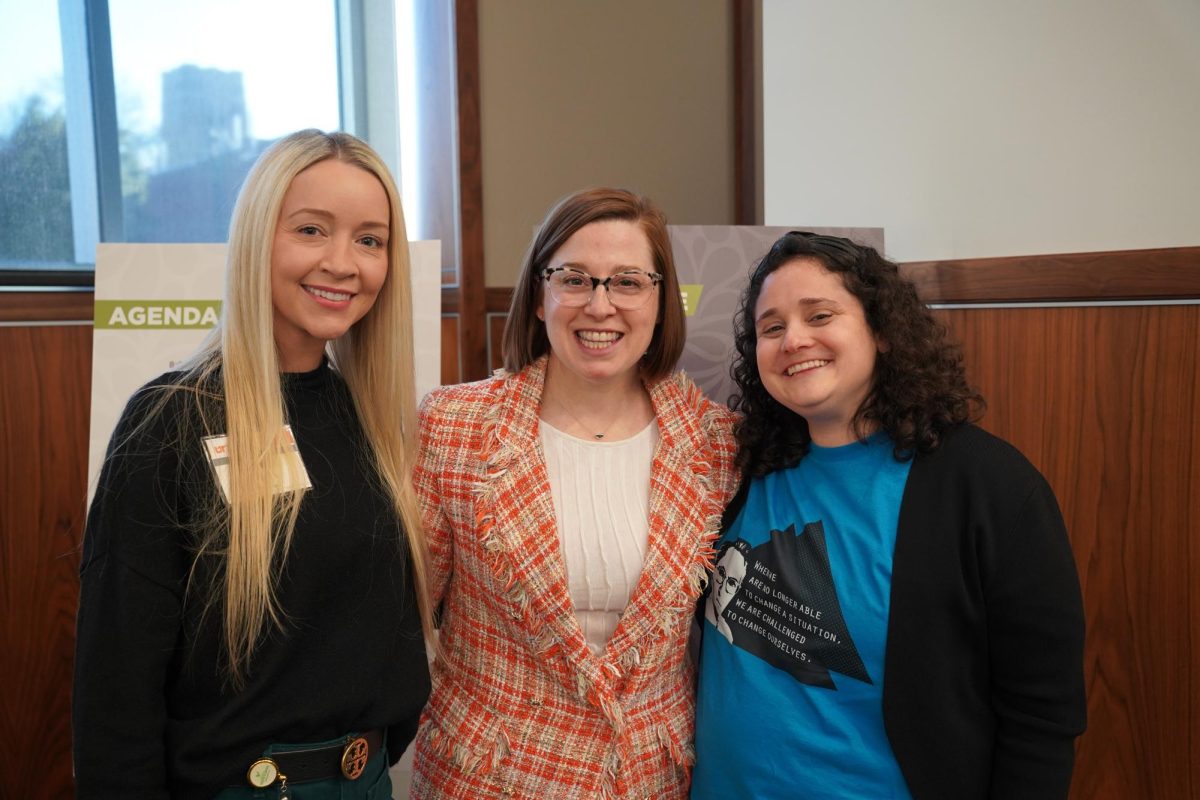
Student Government Association Sen. Campbell Butler and Senate Secretary Avery Combs authored and sponsored Bill 24-8, the CPR Bill. This bill was previously voted on and passed to provide Resident Assistants with the training to perform CPR.
Butler and Combs first wrote and passed the bill last year, but it was never successfully lobbied to administration and the changes endorsed in it never took effect. Combs explained she first became aware of the university’s existing policy on RAs providing CPR through a friend of hers.
“Last year, I actually was talking to some of my friends that were applying for the RA position and they were saying in the case that CPR was required, they were told not to touch residents and to call 911 and that’s what sparked my decision to write the bill,” Combs said.
The bill’s authors discussed with Jerry Adams, Director of Residence Life, and Professor Lucy Jewel at the College of Law about the university’s current policy on CPR — they discovered that the university was concerned about possible legal action against the RA or the university after CPR performance.
“Administration would like to protect Resident Assistants from any kind of civil suit,” Butler said. “The example we were given was in the event a student has overdosed or is in need of cardiopulmonary resuscitation and an RA performs CPR on them … sometimes CPR can be kind of intense, especially the longer that you do it … and so people who have had damages applied to their bodies can, technically, if they wanted to sue the person who administered CPR on them.”
After discussing with the administration, it became clear that fears of a tort lawsuit were the reasoning behind university policy. A tort lawsuit is a civil case that occurs when someone’s actions have resulted in another’s injury or loss.
However, both bill authors reiterated the point that no tort lawsuit had successfully found someone liable for providing CPR. According to the American Heart Association, concerns over facing civil lawsuits as a result of performing CPR — in good faith and the event of an emergency — are largely unfounded. In a review of 30 years of U.S. lawsuits, the AHA found $620 million in settlements for delayed or inadequate CPR. This is opposed to just $120,000 being paid in punitive damages for performing CPR.
Furthermore, every state, including Tennessee, has “Good Samaritan” laws on the books. These laws protect individuals who perform, in good faith, life-saving care in the event of an emergency.
A 2018 release from the Tennessee Office of the Attorney General in response to an inquiry from State Sen. Bo Watson explains how the law functions.
“The Good Samaritan Law generally provides that a person who, in good faith and under certain specified circumstances, ‘renders emergency care’ or assists in ‘rendering emergency care’ shall not be liable for civil damages resulting from any act or omission by that person, except for damages resulting from that person’s gross negligence.”
Additionally, the bill’s authors learned that the risk of lawsuits further declines when those acting in an emergency have received the proper training and certification. A key component of Bill 24-8 is providing RAs with the option to obtain CPR certification through UT’s Environmental Health and Safety office.
With training, Butler and Combs believe that the university will possibly change its policy to allow trained RAs to perform CPR in an emergency.
The Beacon reached out to the university for comment on its current policy and any intentions to change the policy as a result of Bill 24-8. The University responded with the following statement.
“Once a bill is passed and approved by SGA, the Division of Student Life connects a representative from the SGA senate with the department or organization, which may include a meeting with appropriate student leaders to determine next steps. To clarify, a Resident Assistant may perform CPR if instructed by medical personnel in the event of an emergency.”
The bill’s authors believe that because of some alterations in the bill’s second iteration, they are more likely to see a change in policy from the administration. A big difference is that this year, they published several testimonies in the bill from RAs stating they would like the ability to act and save a life in an emergency.
Bill 24-8 passed the Senate unanimously in February and is currently being lobbied with the administration, as talks on how exactly the implementation would look are ongoing.
Sen. Butler is hopeful that implementation will begin this semester so that training can be offered the next school year. Regardless, Sen. Butler says she is dedicated to making it happen no matter what, even if it takes longer than this semester.