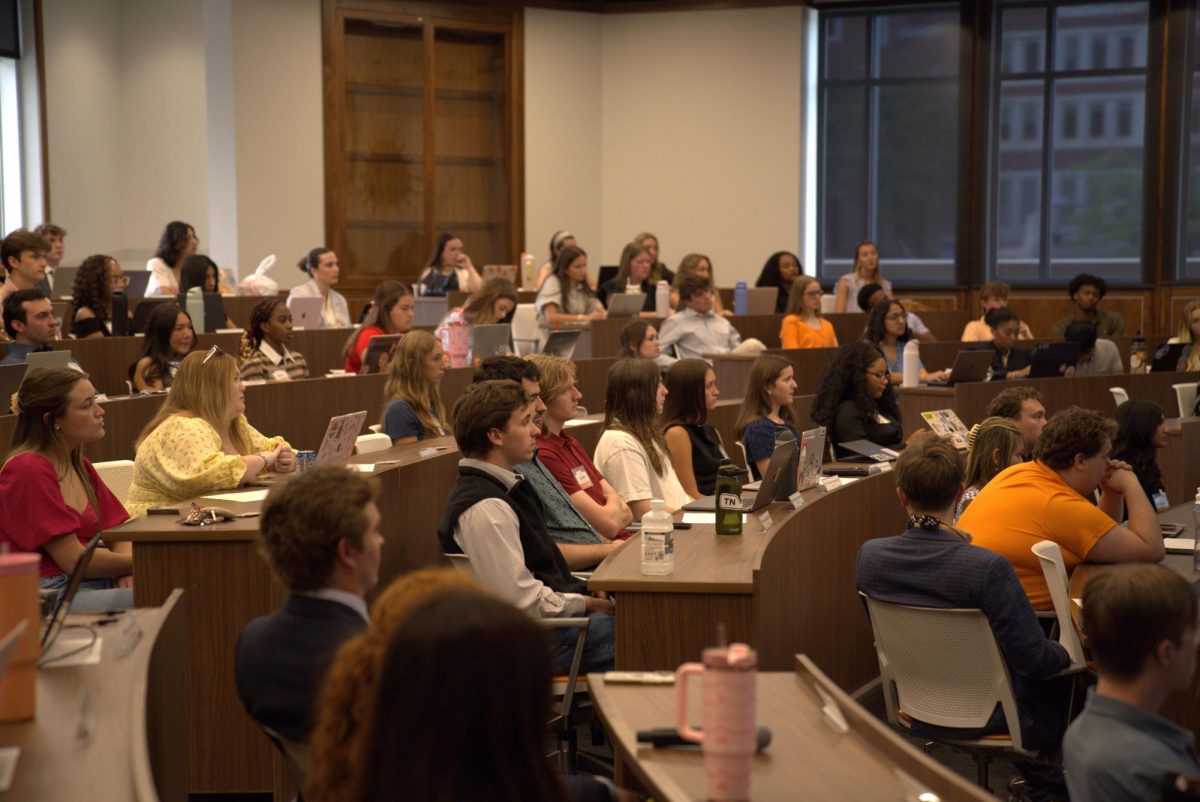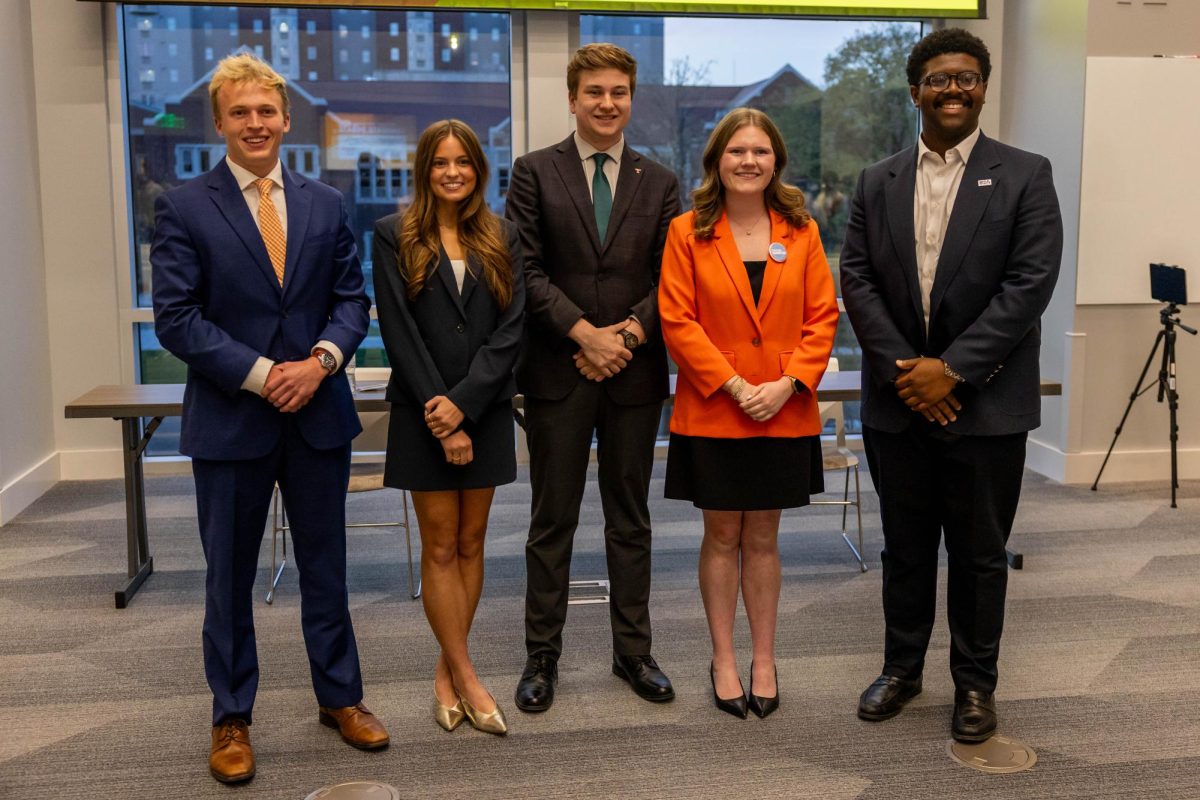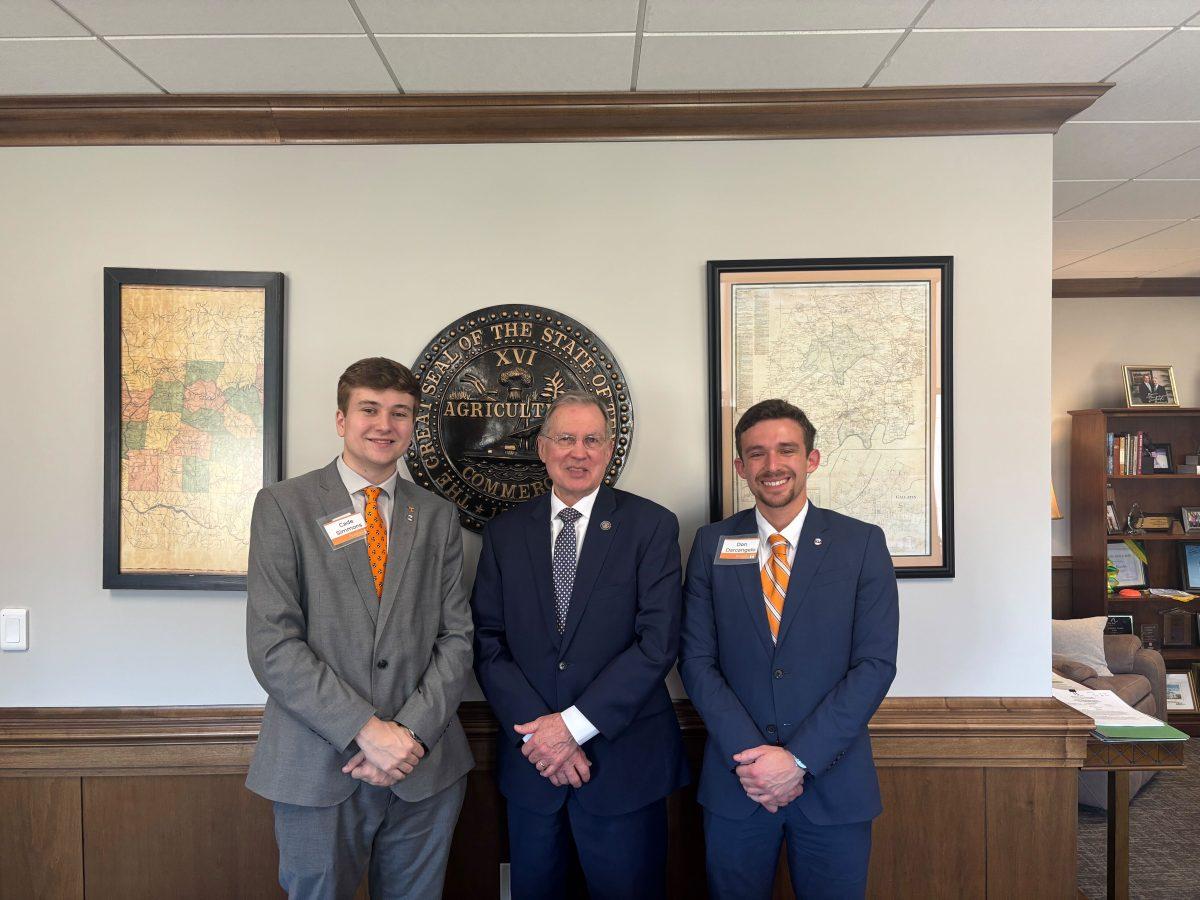
The week before spring break, the Student Government Association sent the Government Affairs Committee to Nashville to spend a day advocating for students at the University of Tennessee and higher education across the state.
The Government Affairs Committee is a special group of a dozen students from several different branches of SGA, tasked with lobbying for all UT students to the state legislature.
The first bill, SB125, debated in Congress, would mandate the Tennessee Higher Education Commission to conduct a study on whether expanding financial aid offerings for workforce credentials would be beneficial. Lucia Saez, a freshman and member of the First-Year Council, explained the state’s demand for more blue-collar workers.
“The first was a bill to mandate a study to research the influence of financial aid for workforce credentials,” Saez said. “That was a big one, especially since Tennessee has had a shortage of blue workers. We also thought that could help motivate them to research financial aid for universities.”
Saez explained that the committee began meeting every Monday in February and decided what bills to advocate for through a discussion as a team and hearing from the UT Advocacy group.
The committee identified that the UT’s Big Orange Pantry was underfunded and consistently running out of food — SB172 would provide grants for all public higher education institutions in the state to provide more free food options.
The bill is part of an initiative known as the Hunger-Free Campus Program. Cade Simmons, a member of the First-Year Council and the committee, spoke to the importance of this bill.
“This was actually probably our biggest bill,” Simmons said. “This would help provide block grants for campus free hunger programs. We have the Big Orange Pantry here on campus and that is a very utilized resource. Looking at the statistics it’s in the tens of thousands of students already this semester that’ve utilized that. Many times they run out of resources, so we know that there’s a need for students to have that.”
SB588, the Tennessee for Tampons Act, would mandate that all higher education institutions provide free tampons in female restrooms. Simmons discussed the effects the bill would have on Tennessee.
“That would be putting feminine hygiene products in university centers, not only at the University of Tennessee but across the state,” Simmons said.
The committee also advocated for an overhaul of UT’s FUTURE program, as the program helps young adults with intellectual and developmental disabilities receive a college education.
The program provides students with special classes, augments others, and offers an internship. Its goal is to support students with disabilities and allow them to get jobs after graduation. Simmons shared the progress they made with legislators regarding the program.
“We were trying to work on upgrading that programming and providing more opportunities for students with disabilities,” Simmons said. “We had quite a bit of receptiveness to that … We’re hoping to have some legislators potentially come up to the university and tour that facility to kind of understand the perspective that we’re coming from.”
The committee students agreed they saw big success from their day at the capitol as they reported general receptiveness by legislators, with some agreeing to vote yes or co-signing some of the bills.
Their time in the capitol was not only an opportunity to advocate for UT but also to learn for themselves what lawmaking looks like. As the committee spent several months preparing for the capitol, Jack Scott, a senator and member of the committee, appreciated what his legislature looked like in action.
“It just really was a very eye-opening experience in a short period of time as to what a day in the state legislature looks like,” Scott said. “I highly recommend that any student wanting to have that perspective or see what this looks like, or advocate for issues on behalf of UT, sign up for this next year and get involved with SGA. It’s really remarkable what you get to experience and see with the policy-making process.”
Despite the controversy surrounding the new Government Affairs Committee at the beginning of the semester, it seems they have made progress and accomplished the original intention of the first committee.