A bill to streamline termination policy awaits Gov. Bill Lee’s signature after being passed by the Tennessee legislature.
HB 2194, introduced by Sen. Adam Lowe (R-Calhoun) and Rep. Jason Zachary (R-Knoxville), gives the chief academic officer and chief executive officer of Tennessee universities unilateral power to terminate both tenure and non-tenure faculty members, eliminating current policies that require faculty input.
“The problem with this bill is it’s taking away any shared governance in the faculty termination process,” Charles Noble, president of the faculty senate, said. “It really just puts all the power to terminate a tenured faculty member in the hands of one of two people.”
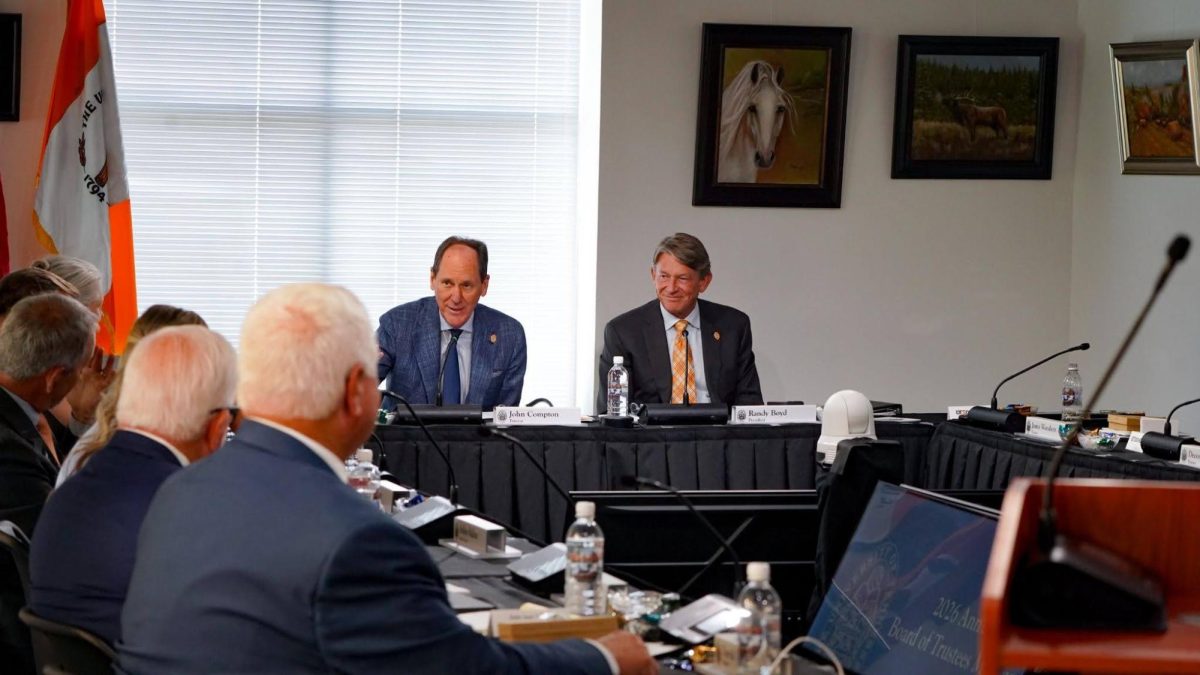
In the Senate’s March 23 floor session, Sen. Lowe clarified the termination is often carried out in conjunction with the UT board of trustees. The board comprises 14 members, 12 of which state politicians appointed.
“This legislation codifies the importance of tenure in state law while requiring higher education governing boards to adopt streamlined disciplinary policies in cases of misconduct by tenured or non-tenured faculty members,” Melissa Tindell, vice president of communications for the university, said.
Current policy gives the chief academic officer and chief executive officer the majority of the power in termination cases, but it also enumerates specific opportunities for faculty input leading up to the final termination decision.
“At the end of the day, the administration can do whatever they want,” Noble said. “The chancellor could always overrule anything the senate said, but at least we had a voice and could express an opinion.”
Tindell said the bill changes termination policies without sacrificing due process.
“As we understand it, the bill would require governing boards to establish disciplinary policies for misconduct that are separate from existing tenure-related policies,” Tindell said. “It does not eliminate due process rights nor does it modify faculty input in tenure-related decisions.”
Legislators in favor of the bill defended it by pointing out the difference between termination policies in higher education versus other industries.
“A university is not a corporation,” Noble said. “There are some institutions that are unique to a university.”
One of these institutions, Noble said, is tenure, which protects professors conducting research from the threat of termination.
“It’s important for faculty, but it’s also a competitive issue,” Noble said. “Every major university in the U.S. grants tenure, as far as I know, to their best faculty, their best research faculty. So, if we don’t do that, then it becomes really hard to hire good people.”
Noble and other faculty senate leaders have been public about their concerns over the bill, addressing the legislation in the faculty senate’s March meeting and in an email sent to faculty after the House passed the bill.
UT administrators at the campus and system level have not yet officially addressed the legislation. At the March faculty senate meeting, Provost John Zomchick said administrators were “doing their best to protect tenure in what is a very difficult environment.”
“I wish they would comment a little more on these things, frankly,” Noble said.
This bill is not the first piece of legislation introduced in the current legislative session that targets tenure. Lawmakers previously introduced a bill to completely end UT’s ability to grant tenure after summer 2026. The lawmakers dropped the bill after pushback from the UT community, including the UT faculty senate.
“We appreciate the General Assembly’s recognition of the importance of tenure,” Tindell said. “The University of Tennessee has consistently underscored the value of tenure and has worked to ensure that measures to eliminate it do not advance.”
The new bill was introduced 12 days after the initial tenure bill.
“I personally didn’t hear about it until the other bill was put aside,” Noble said. “So after that went away, then all of a sudden this came on my radar.”
Noble said the bill might be receiving less attention than the initial tenure bill because of how it is written.
“That first bill was kind of a blunt-force instrument,” Noble said. “This new bill that we’re talking about, (HB) 2194, it’s written in a very muddied kind of way. It’s kind of wrapped in things that look good.”
The bill begins by endorsing academic freedom, a topic that has been widely discussed at universities across the nation after a surge of professor terminations following the death of political influencer Charlie Kirk.
Chancellor Donde Plowman terminated anthropology professor Tamar Shirinian in September after Shirinian commented online about Kirk’s assassination, saying “the world is better off without him in it.”
Shirinian has since filed a complaint against Chancellor Plowman and President Randy Boyd in both their personal and official capacities. Although Shirinian initially included Noble in the lawsuit, she recently filed an order dropping him, along with several members of the UT board of trustees, from the lawsuit.
In the same amendment, Shirinian added Rep. Tim Burchett (R-Knoxville) and State Rep. Chris Todd (R-Madison County) as defendants in the lawsuit, claiming they influenced the university’s decision to fire her.
“While I find what the state legislature is doing through their policy work for higher education dangerous, … the adding of elected politicians as defendants is solely because they violated their positions by pressuring a public institution to terminate a faculty member, forcing the university to breach their own policies as well as their business agreement with me,” Shirinian said.
Shirinian also added an anonymous donor under John Doe #1, who allegedly threatened to withhold a $10 million donation from the university if it did not terminate Shirinian.
Shirinian is moving forward with the lawsuit, despite being officially terminated by Plowman in February.
In terms of adopting the new termination process required by the legislation, Noble said UT leadership will attempt to adjust the university bylaws with feedback from faculty in mind.
“They’re going to have to have the parameters that are in the legislation in terms of decision making,” Noble said. “But I think there are some things that we can have some input on, and the provost has expressed that he’s hopeful that that will happen.”
The bill must be signed by Speaker of the House Cameron Sexton (R-Crossville) and Speaker of the Senate Randy McNally (R-Oak Ridge) before it is presented to Gov. Lee.