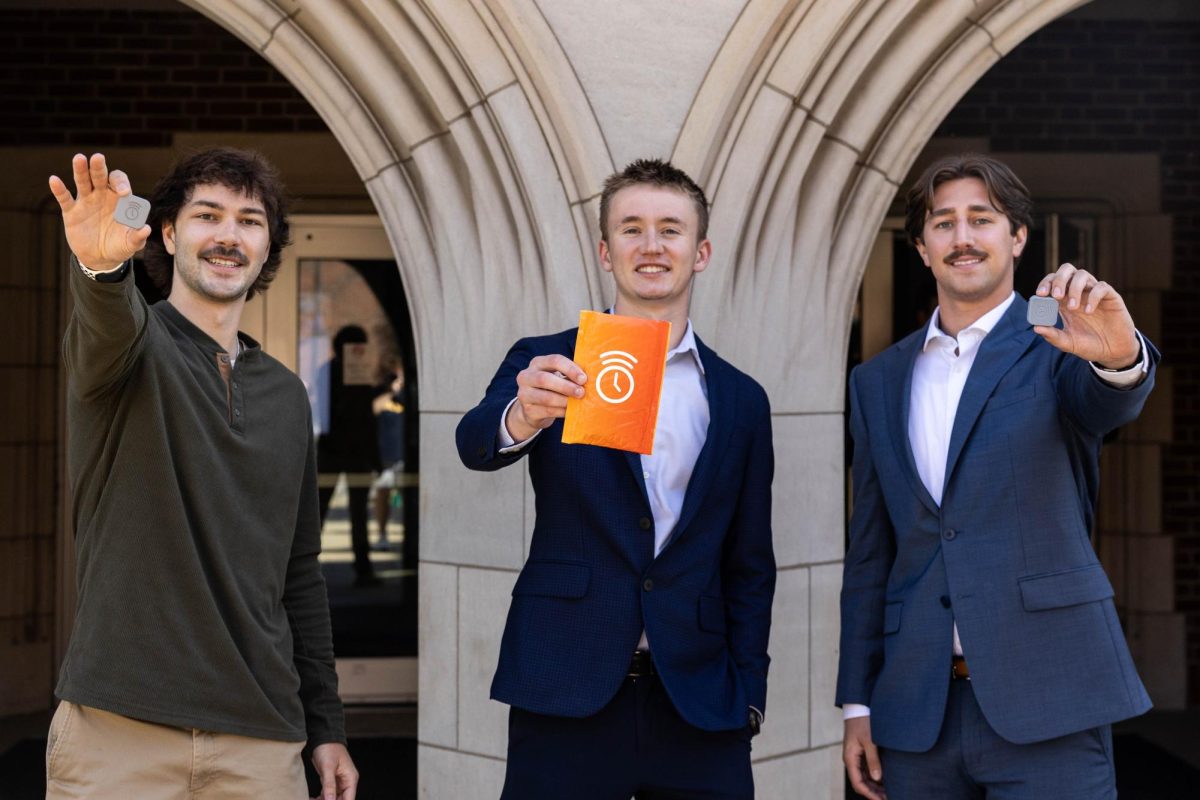
Two University of Tennessee students created a unique alarm clock with the mission of breaking bad habits for young adults.
The Rise Alarm’s design requires users to get fully out of bed and tap their phone on a physical “pod” to turn it off — no snoozing and no way around taking the first step out of bed.
“It’s an alarm clock app, very similar to your traditional iPhone alarm clock app,” Max Gallinek, a UT sophomore and Rise founder, said. “But the only caveat is – there’s no snooze button, and you cannot disable the alarm until you stand up out of bed.”
After hacking the Chick-fil-A mobile check-in system, the supply-chain management major saw the same technology as a potential solution to his pattern of alarm snoozing.
“I was having trouble waking up in the morning … A friend of mine was like, ‘You should code a way that will help you get up in the morning,’” Gallinek said.
Gallinek had already been using near-field communication technology to get to the front of the queue when mobile-ordering Chick-fil-A.
“I built my own little Chick-fil-A tag so that I could check in to Chick-fil-A from my backpack,” Gallinek said. “So I was cheating the system, skipping the line. I realized, like, that technology is very cool. We can use that technology to verify location. Why don’t we use it for the same alarm clock wake up app?”
It was shortly after this idea that the intricate design process began.
Once he started to experiment with different prototypes, Gallinek joined forces with his partner, UT senior and supply chain management major Dan Fishman.
The pair saw great potential in their alarm, motivating them to dedicate immense time, energy and resources towards the creation of a quality product that could fulfill their mission.
“We’re young adults, college students, who both have struggled with waking up in the morning. It’s a problem that a lot of people have, and we’re just trying to find a solution for them,” Fishman said.
They started utilizing the university’s 3D printing lab to create variations of the NFC pod that corresponds with the alarm app.
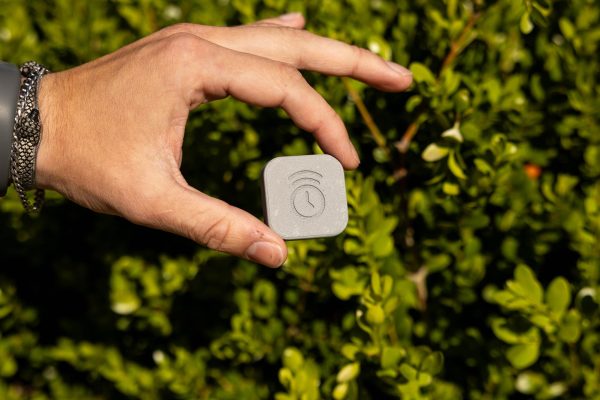
“It’s just been design, iteration, prototype, repeat, continue, work out the kinks,” Gallinek said.
They eventually invested in their own filament 3D printer and have continued producing their product from Gallinek’s apartment.
The duo has gone through a trial-and-error process while designing the pods and forming their startup in general.
While creating their business, Gallinek and Fishman found guidance in yet another UT resource: the Anderson Center for Entrepreneurship and Innovation’s startup coaching program.
“They offered a bunch of different resources for us,” Gallinek said, having gained insight from the center’s legal specialists, finance startup coaches and branding specialists.
As for marketing, the pair brought in another aspiring student entrepreneur. Collin Tornstrom is a senior marketing major with a collateral in entrepreneurship and is also the student behind the SixPackVols Instagram account.
“He is a marketing genius,” Fishman said. “He knows everything there is to know about, like, social media and content going viral. He has been great for us, and he’s responsible for a lot of our sales and has really helped us grow.”
The account, which has over 40,000 followers, has been crucial to the growth of Rise and their sales.
According to Gallinek, approximately 99% of the company’s sales are initiated through Instagram.
While Rise is still fairly new, there are approximately 300 of the products in use nationwide.
“We had some pre-sales early on, mostly from, like, family and friends, but then we started seeing orders come in from people that we have no idea who they are,” Gallinek said. “We have orders from Texas, South Carolina, California — all over the place. We have no idea who these people are, they just see the products, they like it enough, they purchase, and we send it out to them.”
With the early successes of Rise, the startup creators have big dreams for their company’s future.
“Eventually, when we ramp up demand, we’re going to get a couple more printers so we can just keep mass-producing,” Gallinek said. “And then, if and only the demand keeps increasing, then we’re going to outsource it to an injection molding company.”
Gallinek and Fishman also hope to create more variations of the product with different colors, customizations and options available to consumers. According to the pair, these goals take priority over getting their products into stores for the time being.
As for Gallinek and Fishman themselves, their experience creating Rise has been meaningful in itself.
“It’s fantastic. Like, I love being able to be a supply chain student, but then also learning how to code and 3D model and stuff, stuff that you wouldn’t expect a business student to be learning,” Gallinek said.
Fishman added to this.
“It’s like we’re getting two educations, one from the school and the other from just doing the work ourselves,” Fishman said.