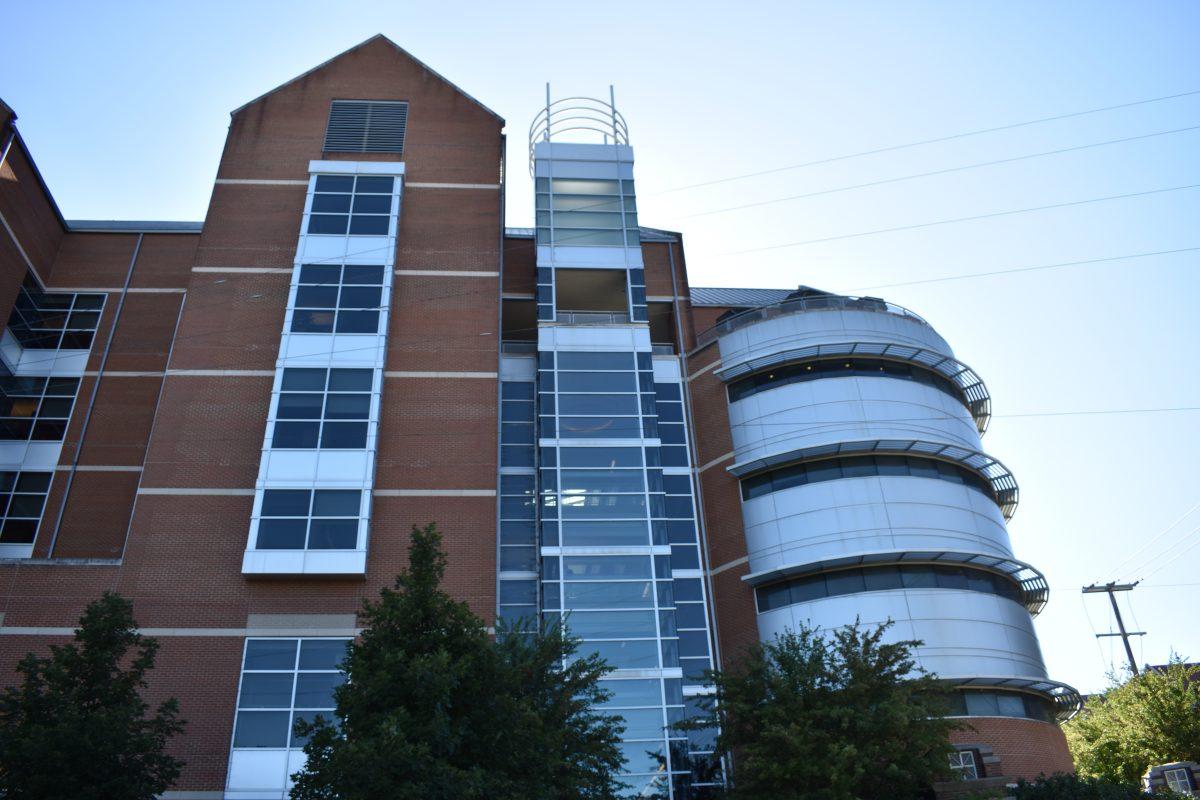
Documents released by the Department of Justice Friday, Jan. 30, include emails between Jeffrey Epstein and former University of Tennessee associate professor of computer science Itamar Arel.
The emails show Arel presenting Epstein with research about artificial general intelligence. The first correspondence between the two was in 2009, a year after Epstein pleaded guilty to sexual offense charges.
Arel began working at UT in 2003 in the Min H. Kao Department of Electrical Engineering and Computer Science. A UT spokesperson said Arel left UT in 2021. Since leaving, Arel has continued to work in the AI field, according to his LinkedIn profile.
“I’m ready to change the world, given a chance to do so,” Arel said in an email to Epstein.
The research he shared with Epstein revolved around a facial recognition system, which Arel displayed to Epstein through a video of the system classifying images of dogs and cats.
“The system achieves human-level classification rates where, obviously, the images shown are ones that were not presented during the training phase,” Arel said. “Although this is a small-scale demo, it emphasizes the core competencies of the approach: robust information representation of complex patterns, based on examples alone.”
Arel reached out to Epstein again in 2011 asking for funding as he continued his research into training artificial intelligence, which was in part funded by UT.
“My home institution (University of Tennessee) has offered to fund part of my time and I’m exploring ways in which I can support myself during that period. The amount I would need is $50k,” Arel said in the email. “Given your interest in AGI research, I thought of writing to you in the hope that you may be interested in supporting my research work.”
An additional 2013 research proposal for the Epstein Foundation by AI researcher Ben Goertzel, who Arel mentioned working with throughout his correspondence with Epstein, explains the creation of robots with artificial intelligence levels of a 3- to 4-year-old toddler. Arel is cited multiple times throughout the proposal.