This past week, I had the chance to attend the Communication and Information Job Fair. If you are not familiar with the job fair provided by the university, you should be. It is an incredible opportunity provided by the school to network with career developments and explore a potential path for yourself — all you have to do is show up.
However, after talking to many different people that day, there was one interaction that stuck with me, and I wish to share it with anybody who may need to hear it.
As the job fair is filled with potential employers, to say that it is nerve-wracking is an understatement. Students are all trying to get the chance to talk with these tables and have the most interesting work or off-campus experiences, all while remaining calm, collected and professional. When you arrive at each table, you essentially give a quick spiel of who you are, what you do and how you wish to potentially become involved with whatever organization you are speaking to. After picking out my business casual clothes and anxiously approaching the ballroom with my resumes in hand, I began to feel out which table I should talk to first.
I approached the first table, which happened to be a news station, a future career dream of mine. I was visibly nervous but very eager to speak to the women on the other side of the table. I could tell that I caught their eye as other students were also gathered around, and they began to shake my hand and focus their attention towards me. All for the wrong reasons.
After beginning my spiel, “Hello, I’m Ansley, a journalism student … blah blah blah,” I immediately felt like my words were practically sinking into the women I was speaking with and being spit right out. I continued on and expressed my love of writing and how I work as a student publications assistant, all while I watched the smile on their faces begin to feel degrading.
After taking a deep breath, I humbly waited for a response to the information I had practiced in my mirror just 30 minutes ago. The response from the first woman was not what I expected. In fact, it was the last response I would’ve expected from a woman pursuing a career in media and journalism.
“Let me just tell you, you are too pretty to write!”
Whether this light-hearted compliment was meant to be a joke or not, I happily took it, still standing there waiting to hear more about their opportunities. “You don’t need to be doing all this stuff — you need to be on TV, on a screen.” She pointed her finger in another direction to a very familiar news station that primarily focused on reporting and broadcasting and told me that “that’s where I needed to go,” and “it would be a better fit.” I was shut down.
Following the awkward silence, I used my context clues and realized that this conversation was over. I smiled back, said thank you and went on my way to the next table.
There are many reasons why I feel the need to share this story.
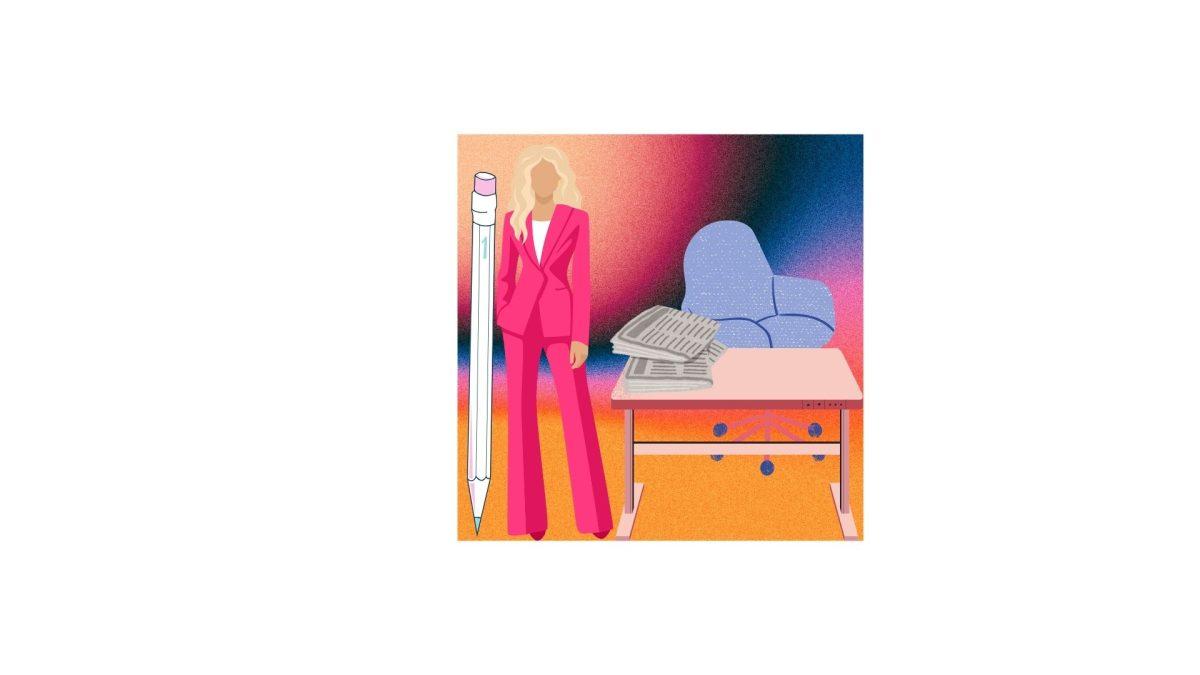
First of all, this story is not just about a foolish compliment I received, but rather a life lesson. Being told that I shouldn’t be writing, and that I should stick to television because I was “too pretty” was offensive! As a woman in this field, I wish more people could see that the journalism world is one in which women can often be overlooked. For a woman herself to say this to me, I felt as though my intelligence was questioned, and I was not taken seriously. Let me rephrase that — I was not taken seriously.
Unfortunately, some of the old stigmas within society — even in a career within news and journalism — still remain true today. The opinion of a man can be viewed as more credible, serious or believable within a professional setting, and this is simply not the case. Women are just as equal, intelligent and valuable as a man would be — in any job for that matter. I laugh to myself, thinking that if I were a man, this would have never been said to me. It is not out of the ordinary to have an attractive woman be in the spotlight on your morning news, or be the face of an interview you see. This is the face of the information that is being reported to the world, but I am not that woman!
And let me be clear, if a man had said this to me, you better believe this would have been a totally different story.
Second of all, I love when women support women! Truthfully, I was ecstatic that the seemingly powerful woman standing in front of me had something nice to say. However, it was the fact that after this interaction, I was practically shooed away to go find something that she believed fit my style. Not only did she make me look dumb, she made herself look dumb. I was looking up to this person to give me professional information about a career dream of mine to write for the news, yet my only takeaway was that I was “too pretty” for writing. This was not an educated answer.
Lastly, while this moment was incredibly irritating, it only fueled my fire to succeed in a professional world of writing, and I hope to inspire others with the same ambition. Being told you cannot or should not do something, however you may look or present yourself, is meaningless. It is only meaningless as long as you give it no meaning. As young adults and individuals, we are constantly trying to figure out what we want to do or be in the world, and small-minded comments like that are not going to get anyone anywhere.
As someone in the early stages of her career, to be told I am “too pretty” for a job by someone who is older than me and supposedly more experienced than me will only make me work harder.
So yes, I am going to continue to write, and I’ll look pretty doing it.
Ansley Graves is a junior at UT this year studying journalism. She can be reached at [email protected].
Columns and letters of The Daily Beacon are the views of the individual and do not necessarily reflect the views of the Beacon or the Beacon’s editorial staff.