As the heated election approaches next month, candidates former President Donald Trump and current Vice President Kamala Harris stand divided on several controversial issues. These include the economy, human rights, climate change and more.
One topic that receives less attention from both parties is the use of artificial intelligence.
AI is a form of high technology that allows machines to mimic human learning and understanding, according to IMB.
Both candidates seem to have different viewpoints on AI. For instance, an article from Fortune suggests that former President Trump wanted to end Biden’s executive order on AI because it put more restrictions on creativity.
Regarding the upcoming presidential election, VOA News suggests this may be the first time candidates present contrasting visions for rapidly developing technology.
A recent policy that tries to take away the negative connotation of AI is the EducateAI Initiative, founded by the United States National Science Foundation in December 2023.
The U.S. NSF was founded by Congress in the mid-1990s to “promote the progress of science, advance the national health, prosperity and welfare, and secure the national defense.”
This policy aligns with Biden’s Executive Order on AI regarding managing the safety of the tool. The EducateAI Initiative aims to equip teachers and people pursuing AI training to create exceptional quality for students around the globe.
In other words, this policy provides a deeper understanding of using AI effectively through various tools.
There is a lot of new information about AI that remains unknown. Therefore, if teachers and professors are going to use it in educational settings, it is vital for them to know how to use AI to enhance students’ learning experiences.
It is also critical to consider this policy because it will have a big impact on the U.S. economy, which is a key subject for the 2024 election.
For instance, AIPRM states, “The global AI in education market … is expected to reach $6 billion by 2025.”
Additionally, numerous schools are on their way to incorporating AI daily in the classroom. In fact, approximately 60% of educators have already done so.
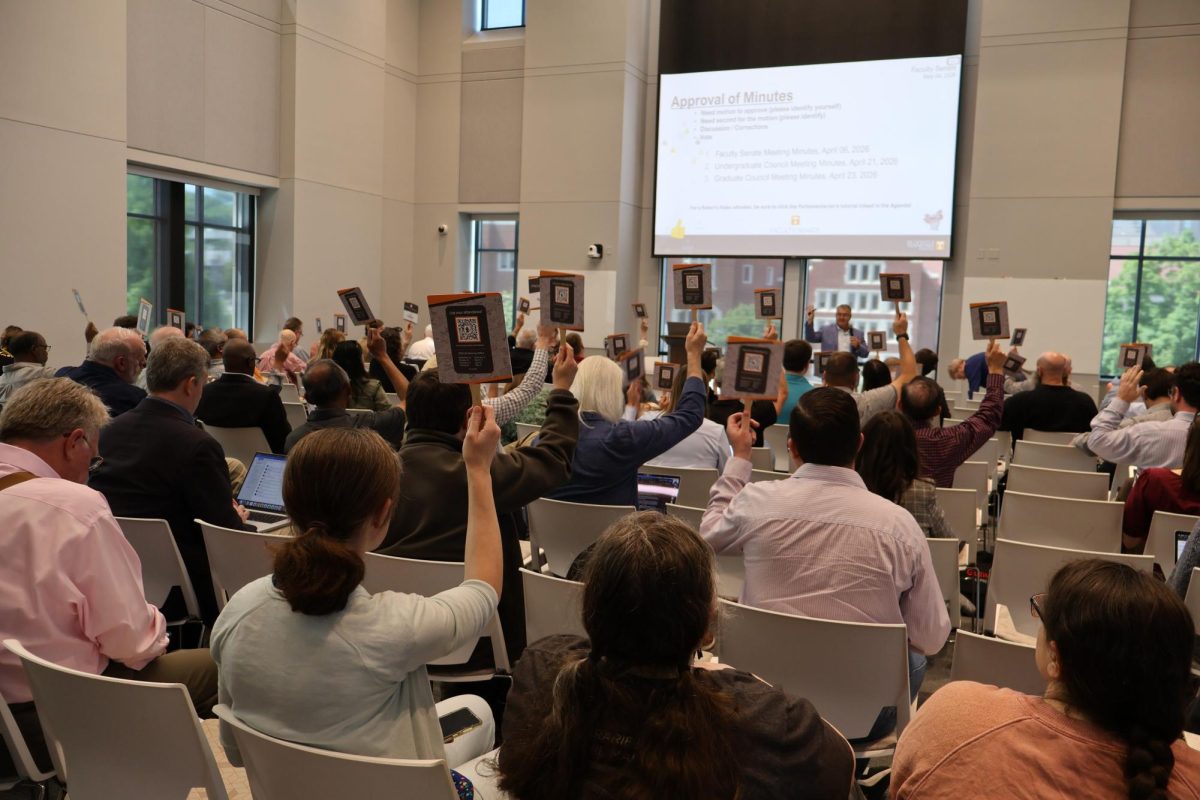
Looking into the future with AI, Tennessee passed Senate Bill 1711 in February of this year, and it requires the UT System to adopt an AI policy no later than July 1, 2025, and will be considered before the Board of Trustees.
The bill mandates “the Board of Trustees of the University of Tennessee, the Board of Regents, each local governing board of trustees of a state university, each local board of education, and the governing body of each public charter school to adopt a policy regarding the use of artificial intelligence.”
Melissa Tindell, the assistant vice president of communications at UT, spoke about UT’s future AI policy.
“In connection with regular meetings of the Board, an agenda and the meeting materials are made available to the public prior to the meeting, and public comment is allowed on action items before the Board,” Tindell said. “Consistent with the statute and our practice, the Board policy will be published on our policy website once adopted.”
Professor Michael Martinez is the assistant professor of practice at the School of Journalism and Media with a primary focus on communications laws and ethics.
He explained that at the University of Tennessee, AI policies are open to each faculty member, with three main options — the professor can ban the use of AI completely, AI can be used with restrictions — perhaps as a research tool only —or there is no policy at all for the classroom.
One of the challenges of incorporating AI in the classroom is how students properly use AI.
“I think there needs to be human intervention in there to make sure that the tools are used properly,” Martinez said. “The more that people could educate me or any professor on how to use this responsibly, I think it’s a good thing.”
It’s uncertain what UT’s decision will be on AI in the classroom, but whether it is allowed or not, it will still continue to impact students and teachers nationwide. Either way, the EducateAI Initiative will further enhance professional skills in the classroom by offering educators and professors with the knowledge and skills required to use AI.