Snapchat scores, Instagram followings and TikTok reposts — the holy trinity of argument starters for today’s couples. In the digital age, we have a plethora of information at our fingertips. While this accessibility enables communication and learning in ways that were previously unimaginable, it has also become a point of contention in conversations about modern romance.
From a young age, new generations are cautioned that digital footprints are forever. All comments, likes and posts will eternally float in the abyss of forgotten social media scraps. Warnings of future employers and universities browsing social media pages are at the forefront of these lessons, but they failed to mention how our tracks might stain future romantic pursuits.
Social media has become something akin to a war zone in today’s relationships. The ability to monitor your partner’s online presence has created entirely new challenges concerning trust and security — we are left to mentally fill in the gaps with old posts, ex-partners’ social media accounts, likes and reposts of good-looking people we have never met. Sometimes this information is discovered on accident, other times because of hours of digging and internet stalking. We are in voluntary pursuit of information that we know might hurt us, as if we are obsessed with curating our own misery. Somewhere between the creation of Myspace and the banning of TikTok, it seems we have become masochistic in our pursuit of romance.
If the historically aberrant access to a partner’s every move isn’t enough, an endless slew of posts offering their two cents on relationships circles the internet, generating what is often unnecessary conflict and doubt. Influencers scold, “if he wanted to, he would,” “that’s the bare minimum,” “the bar is in Hell,” among other disheartening mantras. Although it is undoubtedly important to recognize unhealthy patterns in relationships, the obsession with over-analyzing every word and micro-expression makes it hard to decipher between red flags and slip-ups that are not malicious in nature. Essentially, there is no attainable level of satisfaction when taking advice from so-called relationship experts on social media.
Alternatively, there are numerous influencers who gain a following from making content as a couple. Between the staged grand gestures and picture-perfect couples’ photoshoots, there is enough evidence for even the most secure person to question the validity of their own relationship. Social media is unique in its ability to sell a fabricated version of reality so convincingly. In movies and TV shows, it is understood that you are consuming media that is make-believe and for entertainment purposes — on social media, the line between fiction and reality is blurred.
Another beast existing within the realm of parasocial internet exchanges includes the unnerving “trad-wife” movement. There has been a recent uptick in influencers portraying an idealistic lifestyle as a traditional homemaker, romanticizing and upholding a horde of outdated gender stereotypes. While there is no consensus on the tangible harm done by this content, it is yet another piece in the conversation about romance and social media — when groups of both men and women consume media that glorifies traditional gender roles, it further separates and clouds our definitions of love.
Similarly, young men are at risk of falling down internet rabbit holes that preach ideologies emphasizing hierarchies like “alpha” and “beta” males, further cementing harmful gender stereotypes in a generation that was thought to be moving away from them. Alpha males allegedly champion qualities of nonchalance, self-assurance and assertiveness, while beta males are timid and submissive. Influencers like Andrew Tate and Joe Rogan are notable voices in these spaces, curating large followings of men who have something to prove. The positive reinforcement that accompanies the title of alpha male, while often satirical, is a notable parallel to the tradwives’ romanticism of traditional female roles.
Men are urged to act indifferent and detached in romantic encounters, either hindering or ignoring their emotional processing capabilities. Social media makes it exceedingly difficult to stay ignorant of these growing sentiments and encourages many to avoid the dating scene altogether. The rising black-and-white views on relationship dynamics heighten anxieties and lower the likelihood of finding a partner with values that mirror your own, specifically in heterosexual relationships.
Nonchalance, trad-wives and man-hating slogans aside, there are upsides to experiencing romance in our time. Social media allows for connection on a deeper level through shared humor, public displays of affection and endurance across considerable distances. Thanks to modern technology, it is possible to continue relationships with hundreds of miles of physical separation. Video calls and texting are large components, but the ability to send posts that make one another laugh or remind you of each other allows for a higher degree of intimacy to be maintained. Shared humor and interests are integral components of fulfilling relationships, components that can be lost when partners are hindered by distance. Long-distance relationships are becoming increasingly common and are successful in many cases. I have met several couples who, for years, have had to spend more time apart than together, and they are all adamant that it is worth the struggle in their cases.
An even more recent development in romance is a modern form of courtship known as online dating — countless apps and websites exist that are entirely dedicated to the pursuit of romantic relationships. Although some traditionalists are reluctant to accept online dating to meet potential partners, a sizable portion of the population has come to accept the idea and may have tried it themselves. Online dating offers its own set of mortifying trials and tribulations, though — curating a carousel of photos, answering cringe-inducing icebreaker prompts, risking getting ghosted or worse, catfished. Despite these caveats, it is yet another example of social media’s intriguing role in modern romance; instead of meet-cutes and blind dates, there are right swipes and painful pick-up lines. This may not be everyone’s definition of romance, but it nonetheless creates an opportunity for it down the line.
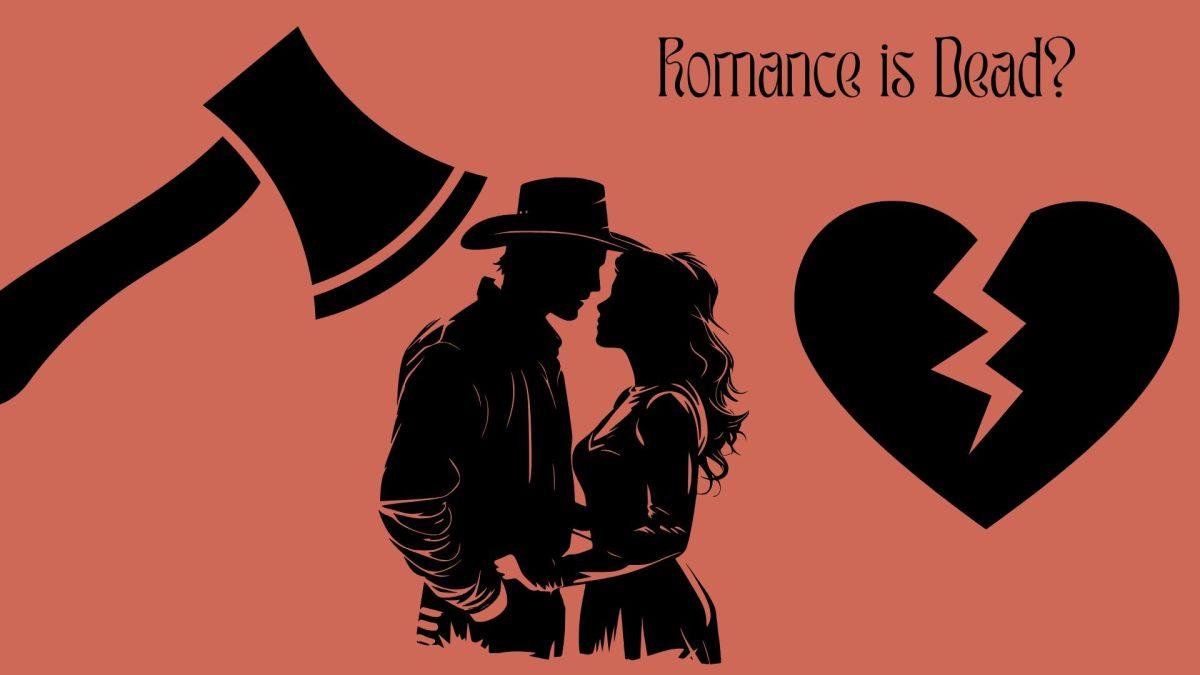
Still, the burning question remains: Has social media killed romance?
Ultimately, I think romance has taken a few nasty blows, but it survives when kept close and handled with care. The way we express love is subjective and evolves, with technological advancements allowing for different dynamics and signs of affection to be explored. Though the outlook may appear bleak at times, I am a romantic at heart. I am inclined to believe that a great number of people are quietly experiencing the flower-buying, love-letter-writing, enduring type of love.
Social media is both a picturesque and deceitful source, tricking us into an endless cycle of losing hope, struggling to trust, and comparing ourselves to others. On these platforms, sometimes it is those who are aching the worst that boast the loudest, muffling the voices of those in rewarding relationships. When considering romance, cynicism wields a sharper blade than social media. As individuals, we are just as capable of profound love as we always have been — we only must get out of our heads.
Sydney Cummins is a Junior at UT this year, studying English on the Pre-Law track. She can be reached at [email protected]
Columns and letters of The Daily Beacon are the views of the individual and do not necessarily reflect the views of the Beacon or the Beacon’s editorial staff.