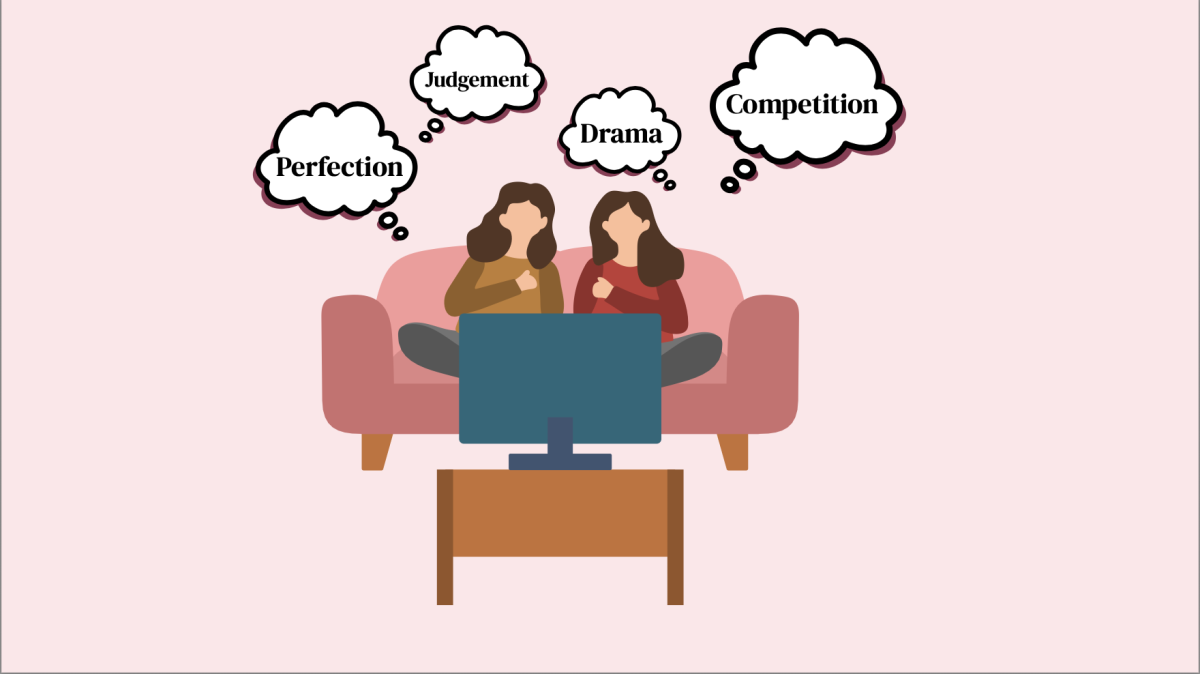
One could argue that all digital entertainment is a form of escapism — disappearing into a hand-crafted universe especially designed to make you feel good.
As children, we did it with “Harry Potter” and the “Hunger Games” and “Barbie,” pretending we had magical powers and spending hours coming up with our own characters and plot lines. As children, content like this bred creativity, made us hopeful for the future, and stoked curiosity about what magic awaited on the other side of childhood.
As Gen Z has evolved, so has our digital entertainment. New forms of entertainment have taken center stage — haven’t you heard? Reality TV is all the rage!
Ushered in by the prevalence of short-form social media content, reality TV has filled the void that TikTok leaves when it’s time to put the phone down. It’s stimulating, authentic and a large contributor to cultural discourse. Say goodbye to “Gossip Girl” and “Vampire Diaries.” We are putting away childish things. We crave reality.
But there is something dark about modern digital entertainment that makes its consumer feel inherently guilty about consuming.
That’s what I’ll explore today with you: What is it? Why isn’t it fun anymore? To entertain myself and disappear into someone else’s life — why does it make me feel so shameful?
It’s no secret that most teenagers and young adults have an unhealthy relationship with technology. A 2025 study reveals that Gen Z averages over nine hours of screen time a day. Nine hours is no longer a jaw-dropping number — it’s pretty normal.
Streaming services have brought forth this new wave, making digital entertainment infinitely more accessible. For a low monthly fee, you can have unlimited access to countless movies and television series, so you no longer have to wait for broadcast television to air your favorite show, one night a week. Now you can binge every episode of “Gilmore Girls,” over and over and over. It’s impossible to say no.
The reality TV production market capitalizes on the addictive relationship the modern consumer has with television. A study done examining the rapid growth of the industry explains how “competition-based reality shows, dating shows, and transformation content thrive due to their episodic nature, cliffhanger endings, and high viewer retention rates.”
The corporate suits that manufacture these shows know that “Dance Moms,” “Real Housewives,” “Vanderpump Rules,” “90-day Fiancé,” and “Love Island” have the power to pull you in and keep you hooked. Every episode is like its own mini car crash — so bad, but so good.
Watching Abby Lee Miller throw a chair across the room at a 9-year-old girl, watching Ariana Madix confront her cheating boyfriend of 10 years and his mistress on live television, watching Chrisean Rock do literally anything on “Bad Girls Club” — these are people’s lowest moments, and also my Friday night?
Despite the questionable, exploitative nature of these shows, they have had massive success. In 2024, the reality TV industry made $38.6 billion. Scandal clearly pays.
Major networks can count on the fact that you will click “next episode,” not only because you’re addicted to screens, but because the content in these shows is designed to keep you hooked.
Binge-watching anything can have disastrous effects. The National Library of Medicine describes how an addiction to television could lead to worsened depression and anxiety. And everyone knows that if there is one thing Gen Z has a problem with, it’s using technology as a coping mechanism. The inescapable impulse to watch TV and doomscroll as a stress reliever. Addictively formatted media content has become a coping mechanism that’s unknowingly making us all feel worse.
The format and delivery of the content are just one issue. The content is a whole other problem.
Sex and hookup culture are at the heart of many of these shows. Love Island, the hit dating show broke viewership records with season 6 — NBC Universal reports that it was the top streamed reality TV series across all streaming services. Season 7 wasn’t far behind — NBC reports that the most recent season of “Love Island USA” racked up over 18 billion minutes streamed.
“Love Island” is a steamy competition show where absurdly hot 20—something-year-olds travel to a remote island and “couple up,” hoping to win America’s affection and the ultimate prize of 50,000 dollars. “Bombshells” join the villa, using their wiles to tempt cast members, earning a permanent spot in the villa. Competitors partake in challenges (kissing each other blindfolded, stripteases, bikini obstacle courses) to stir up drama and keep passions high. America votes on who they want to stay, and trashes who they hate. Season 7 generated 2.2 billion social media impressions — people care.
Eighteen billion minutes is a lot of minutes. But it leads me to wonder – what was being promoted during those 18 billion minutes? What was CBS so thoughtfully imparting upon the youth?
It turns out that reality TV does influence its viewers. TV shows revolving around sex and promiscuous behavior have negative effects on their viewers, who might, I add, be primarily women, ages 16-24.
In a National Library of Medicine study, a group of 13–17-year-olds was examined – how does their consumption of reality TV relate to their sexual presence online? Can you take a wild guess at what they found? Those who consumed reality TV were more likely to “produce and distribute sexual images of themselves on social media.” I don’t even need to explain how dangerous that is.
A 2018 study revealed that excessive consumption of reality TV could lead to “risky” sexual behaviors and dangerous drinking habits — putting consumers at a higher risk for sexual assault. But what’s the difference between “Love Island” and “50 Shades of Grey?” Or “Bridgerton?” Or any other sexually charged digital entertainment?
The study describes that there is an explicit correlation between the “perceived reality” of reality TV and the engagement in negative behaviors. While some moments may be scripted, edited to look more exaggerated, and generally made to function more as entertaining rather than authentic, that’s the secret influence reality TV holds. To the viewer, it’s real life with real people.
It’s especially effective with its target audience — countless studies show that Gen Z craves authenticity in their media — reality TV is as “authentic” as it gets.
While you may not be partaking in any negative behaviors (be honest, Victoria), there is still subconscious influence. Reality TV, assisted by social media, clearly has a huge impact on its viewers and is a massive part of culture. It is still setting trends and precedents for what’s socially acceptable.
In my humble opinion, the nail in the coffin of reality TV is that ultimately, it’s hollow. It is hollow entertainment. Content made with no other purpose but to capture its viewers and trap them for as long as possible. Fitting in as many ads in a 45-minute period as possible, you aren’t learning anything or widening your horizons. You are feeding an addiction to technology and content that promotes trashy behaviors and negative lifestyle choices.
So you want to know why you feel like crap when you finish binge-watching “Too Hot to Handle?”
Because when you were a child, you watched “Mako Mermaids,” went to the pool, and said you had the power to move water and that your tail was purple.
Now, when you watch whatever crap Netflix shovels at you, you just rot on the couch, scrolling social media and seeing what the comments are saying about Huda’s nose job.
You don’t care to imagine or create anymore — you long to be lulled into complacency, letting life pass you by as you spend 9 hours a day on a screen.
Life, along with TV, has lost its magic.
Claire Thatcher is a freshman at UT this year studying journalism and media. She can be reached at [email protected].
Columns and letters of The Daily Beacon are the views of the individual and do not necessarily reflect the views of the Beacon or the Beacon’s editorial staff.