The nearest access to fresh food is miles and miles away, and once you reach it, you can’t afford any of it. That’s what makes Knoxville a food desert.
The student-led Food Recovery Network is working to change that.
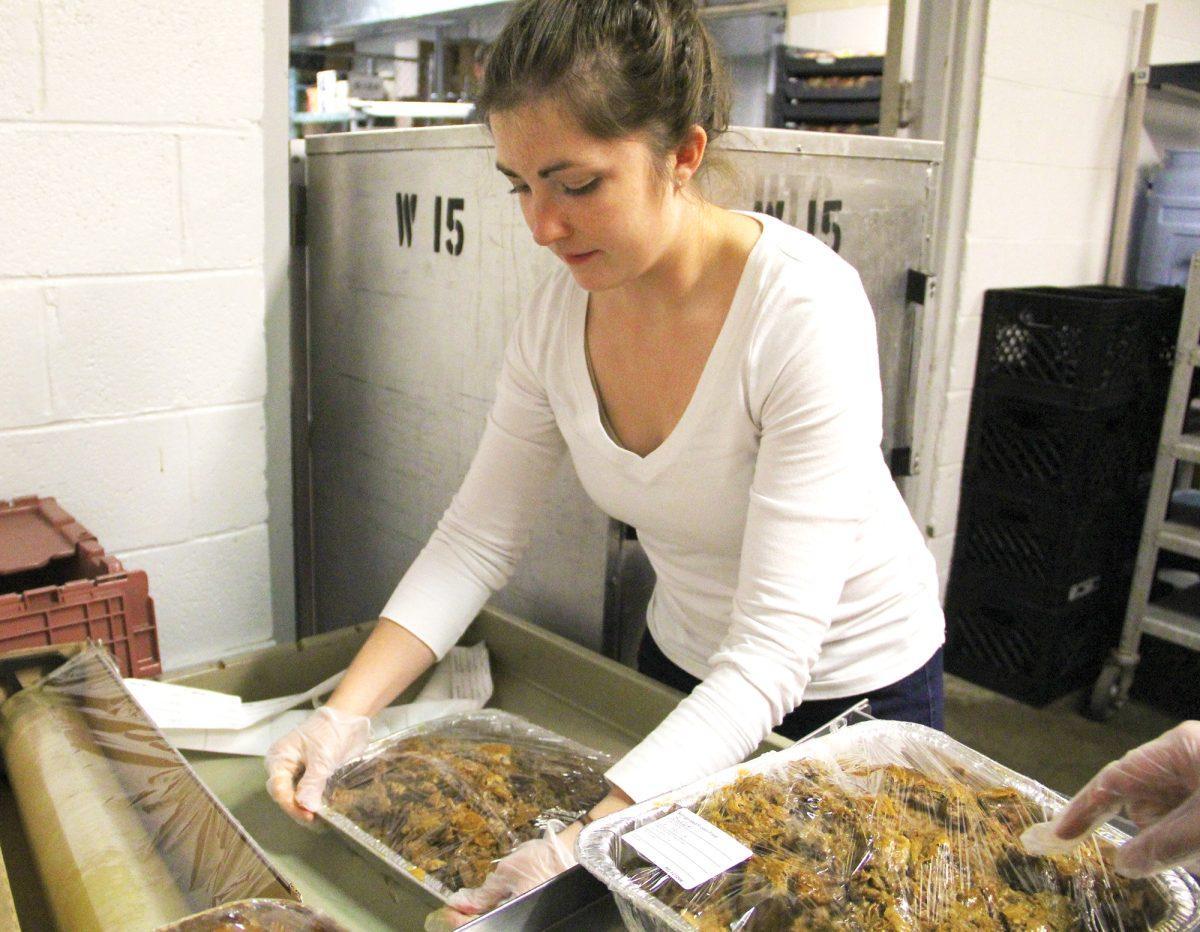
Now in its second year, the Food Recovery Network aims to reduce food waste and feed Knoxville’s hungry. The organization aspires to extend its influence to The Strip by collecting leftover food items and supplies from Cumberland Avenue’s restaurant merchants.
A small grant from UT’s reVOLve fund will be funneled into this program to help achieve the task, eliminating the organization’s need to borrow plastic bags, gloves, disposable aluminum and food thermometers from outside sources like Aramark.
But for Ryan Brown, president of FRN and senior in marketing and international business, distributing unused food only solves part of the broader problem of food insecurity.
What Knoxville needs, he said, is greater accessibility to a well-stocked market.
“For low-income families, a grocery store is a hard place to buy food, let alone healthy food,” Brown said. “You can go buy a twelve pack of Ramen for a couple of dollars, or a few apples or maybe a few spears of broccoli. Fruits and vegetables are really more expensive compared to things like that.”
A 2011 report from the Food Research and Action Center, revealed that a lack in nutritional variety may contribute to Knoxville’s status as a “food desert,” or a region where residents must travel 10 or more miles to find a grocery store or access fresh foods.
This report also states that Knoxville is ranked 17th in the top 100 metropolitan areas in the same year for “food hardship” with “nearly 21 percent of households without money to buy needed food.”
These statistics did not go unnoticed by Knoxville’s own food advocates.
The Knoxville-Knox County Food Policy Council, as part of an intensive survey of Knox County’s agricultural and economic climate, noted in a 2011 overview that 14 percent of Americans throw away the food they purchase — an amount equivalent to $600 for a family of four.
To avoid such waste, agencies like The Salvation Army, Knoxville Area Rescue Mission and Volunteer Ministry Center receive donations from Second Harvest after the Food Recovery Network’s collected food is loaded onto refrigerated trucks behind Thompson-Boling Arena.
Donated food items must be stored in the freezer within two hours, Brown said, to avoid foodborne illness or diminished quality in the food they wish to distribute.
Though Food Recovery Network aims to eliminate such waste, Brown said that a second purpose for the newly-established organization is establishing an emphasis on education and awareness.
“We’re trying to fill in the gaps, and we’re also trying to attract new members,” Brown said, “especially the ones who regularly volunteer with us.”
A high percentage of minimum wage jobs and a growing number of seniors in an “overwhelming economic crunch” also aggravates food insecurity in Knoxville, said Gail Root, programs director at Second Harvest.
This concern for the low access to healthy food for Knoxville’s seniors citizens, she said, constitutes a growing effort for Second Harvest. In response to the issue, the organization created a new produce garden that allocates fresh foods specifically for East Tennessee’s over 65 demographic.
“I firmly believe that good nutrition is a big part of being healthy and being healthy helps people to accomplish what is needed to lead a productive life,” Root said. “Along with healthy food access, nutrition education is at the core of being able to provide good nutrition for oneself and their family. If one young mother changes what she serves her children to healthier food or serves her family food cooked in a healthier manner than we have hopefully helped end a cycle of poor health due to unhealthy eating.”
It was this emphasis on education that spawned the Food Recovery Network’s Food Stamp Challenge last spring where participants were challenged to spend 30 dollars or less on food while shopping for groceries.
“I took the route where I spread out my money as much as possible,” Brown said. “I bought things like Ramen and dried rice whereas another member of our leadership team kind of focused on the more healthy route, so she bought a lot of fruits and vegetables. But it didn’t last her as long.”
While the holiday season brings colder weather, Root explained that food insecurity is an issue that affects Knoxvillians year-round.
“Our task for the holidays is just like any other time,” Root said. “Second Harvest has a comprehensive food rescue program, but without the help of Food Recovery Network, perfectly good food from the UT campus would be thrown away instead of being used by agencies who provide it to those in need.”
For more information about UT’s Food Recovery Network, contact the organization at [email protected], like the Facebook page or follow @foodrecoveryutk on Twitter for updates.
To see a map from the USDA outlining food deserts in and around Knox County, click here.