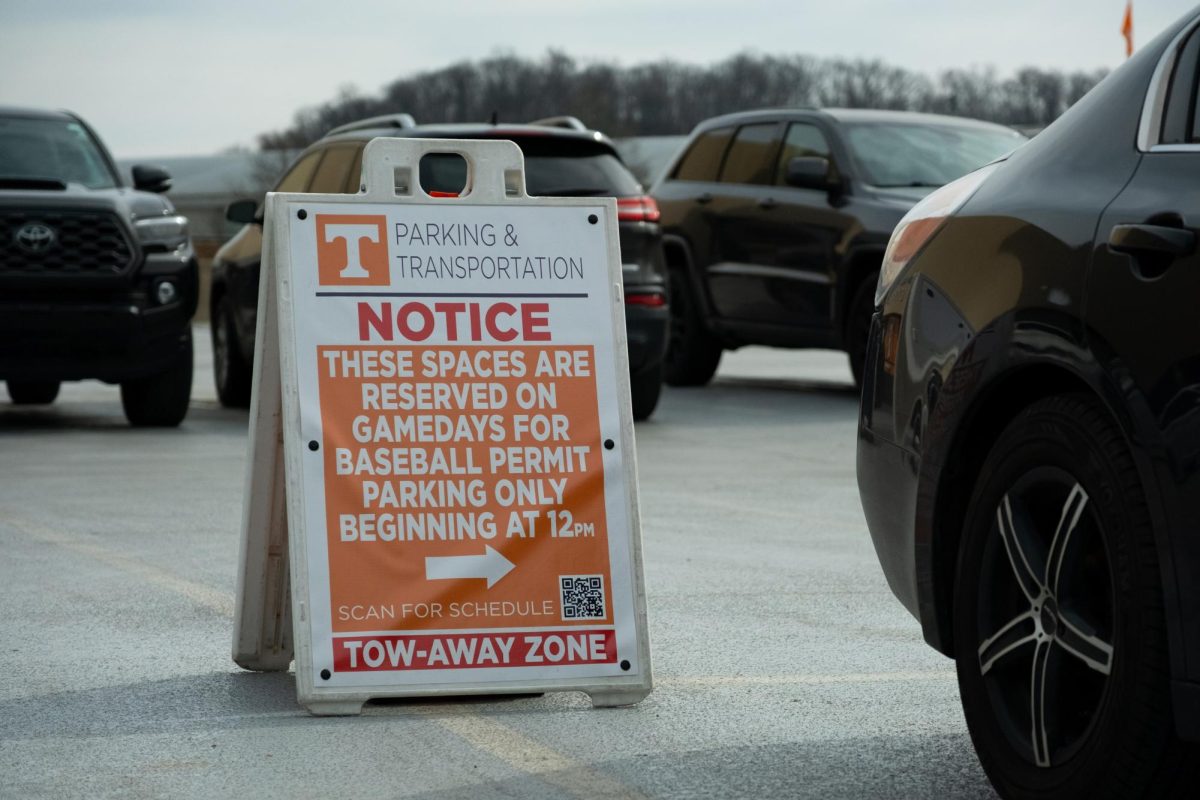
In the spring, two sports heavily increase the amount of traffic coming onto campus: baseball and basketball. Baseball, running from Feb. to May, and basketball, running from Nov. to March, complicate the afternoon and evening parking situation on campus.
Both the men’s and women’s teams of basketball draw in large crowds of students, parents and fans alike. While SEC sports bring money into the school, they also add stress for those who live and work on or around campus, as the influx of cars and traffic increases.
“When there’s home basketball games they have all of Neyland Drive shut down for cars coming into campus, especially on the back behind the stadium and getting into G10,” Allie Owens, a sports journalism senior, said.
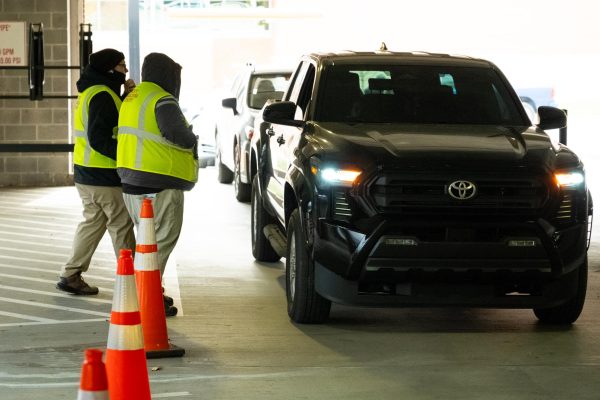
It’s not just Neyland Drive that’s affected. The agriculture campus is used as a park and ride, stoplights on campus are turned off in favor of human-directed traffic and parking lots surrounding the stadium are quickly filled in as pay-to-park options.
“As I leave I feel it, I feel the cars everywhere. Which is no one’s fault. I think I feel that traffic because I teach right next to the arena,” Shannon Scovel, an assistant professor of sports communication in the school of journalism and media, said.
This semester, Scovel is teaching in the College of Communication and Information building and parks in the lot outside, which is right by Food City Center. Scovel has been teaching here for multiple years now and understands how parking on game days works, but explained that it took adjusting to.
“It was a new thing for me to learn that, even though I pay for my parking spot, if I wanted to park there during game day I’d still have to pay game day parking,” Scovel said.
Now, if she needs to come to campus late while a game is happening, she’ll arrange for another way to commute. Faculty and staff parking rates vary, but most pay between $264.60 and $661.56 yearly to park on campus. If they want to park during gametime, their normal passes don’t work — they’re expected to pay the additional fee as well.
“As with any university campus, the University of Tennessee, Knoxville, hosts a variety of classes, programs, and events after business hours. On evenings without special events, students with valid parking permits may park on campus in commuter or unreserved staff areas from 5 p.m. until 2 a.m. On evenings with special events, several lots are reserved exclusively for student parking. Those areas can be viewed on the interactive campus map,” the University of Tennessee said in a statement.
The way many people arrive to campus is via Neyland Drive, where a two-lane road splinters into multiple entryways onto the main campus and into different parking lots.
“I understand why there’s traffic, and I do appreciate all these people coming out to support our school, but a lot of people take Neyland who aren’t going to the game,” Owens said.
Owens is a member of the VolWake wakeboarding and wakesurfing team, which meets five days a week from 4:30-7:30. The team will park at the Volunteer Landing Marina, which is right off of Neyland Drive. Both the VolWake practices and the basketball games tend to end around the same time, meaning that all of the cars are trying to take Neyland Drive to go home.
“It really slows us down cause when we leave the marina that way we all leave left toward campus, so when they’re letting everyone out they shut down both lanes so we’re stuck waiting,” Owens said.
What normally would be a short drive will take double its usual time because of the amount of cars on the road. Being stuck waiting is frustrating for anyone, but for busy college students with limited time, every moment spent in traffic is one less minute they could’ve spent on homework.
“I feel like we need a new system that’s more efficient so people who do take Neyland aren’t just stuck there,” Owens said.
Scovel adds that when she’s leaving campus at the end of her 4:05-5:20 class, it’s congested, making the experience more stressful.
“It’s overwhelming to leave at the same time as a basketball game in general,” Scovel said.
Similar to many large state-school campuses, UT is designed to be pedestrian friendly, so vehicle traffic flow came second when planning layouts. For daily life, this is fine, but for big events that draw in large influxes of people and cars the hierarchy becomes apparent.
“I don’t have this problem obviously because I don’t live on campus, but a lot of our freshmen, when they let out of the basketball games … it’s really hard for them to get back to their dorms in a timely manner,” Owens said.
Owens said that the way transportation handles these issues doesn’t take into account the people in the area who aren’t going to the basketball games, and that the decisions they make are “affecting a lot more people than just themselves.”
“They’re not the friendliest people. When you try to bring up these issues they don’t really listen,” Owens said.
Scovel acknowledged that it might not be perfect, but they’re doing the best they can with the layout of the campus and the tools they are given.
“They have a job to do and I get that, it’s a tough job and they’re out there, they’re clear, you can’t miss them, you see them and people respond to them, but they have to do their job and can’t really compromise,” Scovel said. “I think they’re doing as well as they can with the enormous challenge that is event parking.”