The glamorization of young love can stem from a number of factors, whether it be your favorite rom-com, like “To All the Boys I’ve Loved Before,” the various trends on social media platforms that you wish you could participate in or this past Valentine’s Day. In the end, the picture-perfect romance story is one that everyone wants to live, and the romanticization of relationships by popular media only fuels that desire even more.
Why do people even want to be in a relationship so young, though? Sure, the movies make it seem great, and the trends can make you feel lonely, but shouldn’t we all be excited to grow into ourselves first? No matter how many steps you take in a relationship, the truth is, you are always walking side-by-side with that person. The best part of life is that it is yours and yours alone — you should not constantly be making strides while attached to another person.
In reality, falling in love young does not help you grow up faster — it helps you stop growing entirely.
Don’t get me wrong, there are successful cases of high school sweethearts — some people truly do find their person before they are even 20. Nevertheless, these relationships that spark in the peak of your adolescence can be the reason that’s the only mountain you ever end up climbing.
The support we receive in infancy and childhood should come from our parents. Even then, sometimes people do not get the privilege of experiencing a life with their parents present, and that can cause serious impairment to their development. The same goes for teens and young adulthood. However, in these stages, individuals oftentimes look towards another source of validation and reliance: a romantic relationship.
Especially in college, people are placed into an atmosphere where romantic connections seem not only possible, but also required. Constant reminders emerge from being surrounded by couples. Plus, the new opportunities that come with beginning college and entering young adulthood can further motivate individuals to pursue romantic relationships. These can include dating apps, a more diverse surrounding population or the overall freedom that comes from living away from your parents. The pressure from those persistent reminders leaves you with (what feels like) one choice: getting into a relationship.
When you get into that relationship, you can find enjoyment in everything — this wave of idealization seems like the ultimate fairytale that people dream about. Yet, eventually, the hobbies you had become rare occurrences, the friends you cherished become strangers, and the “I”s become “we”s. Eventually, your goals become more of a possibility than a plan. And eventually, you lose your identity because you were never truly able to develop your own identity anyway.
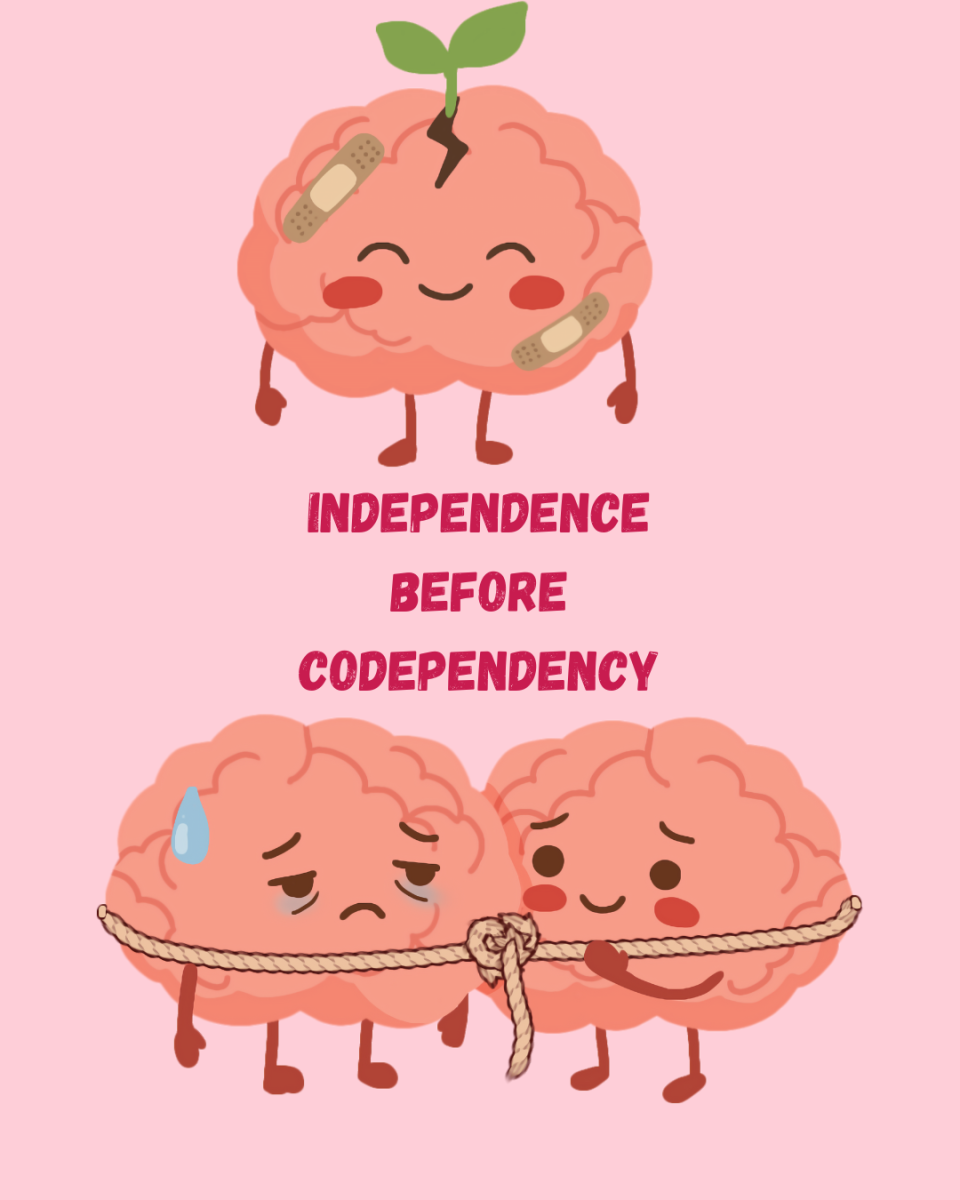
After you are unable to develop that identity yourself, you become codependent. No longer are you able to think just about yourself — you must also think about your significant other. For instance, “Where do you want to be in five years?” The question is directly asking you, but you can only envision yourself and someone else.
Reality sets in, and when people begin to ask you about yourself, you realize you have no idea who you are. After running away from your parents in search of independence, you ended up only running into another shelter. Now, loneliness seems scarier than death, and you don’t know how to live without being in your relationship.
But it isn’t too late.
Rather than relying on another person for your happiness, you can transform your shelter into a hobby, a club or even a job. Loneliness typically has a negative connotation, but it shouldn’t — finding comfort in your own company is a skill we all need to learn.
Audrey Zetta shared her personal testimony on Medium, explaining how her marriage at 19 caused a lack of independence and a negative self-image. Rather than focusing solely on the “stunted” development caused by her marriage, she also offers a positive story. Zetta is only just now learning how to live as an independent adult, but she proves that it is possible.
Additionally, popular Twitch streamers Kyedae and TenZ were known for their long-term relationship and engagement. Earlier this month, they announced their breakup. A variety of debates sparked online about who was to blame, but ultimately, both streamers mutually agreed they “had stopped growing as individuals.”
When you begin to rely on someone at such a young age, you build yourself around another person — but you need to be building your character solely around yourself.
While it is possible to discover yourself in a relationship, many need to take that difficult journey alone. Disassociating yourself with someone who makes up your entire identity is gut-wrenching, but now you can truly shape into an individual and finally live life how you are supposed to: for yourself.
Katherine Hill is a freshman at UT this year studying public affairs. She can be reached at [email protected].
Columns and letters of The Daily Beacon are the views of the individual and do not necessarily reflect the views of the Beacon or the Beacon’s editorial staff.