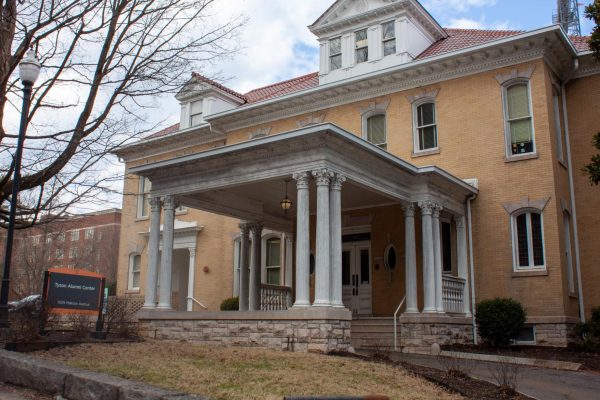
Have you ever walked by the beautiful yellow-brick house on the corner of Melrose Avenue and wondered, who uses this?
That Colonial-style house is the Tyson Alumni Center, formerly known as the Tyson Alumni House, and was listed on the National Register of Historic Places in 2012. The house serves as a hosting point for all alumni who visit, including game day tailgates, and is one of the oldest standing buildings on campus.
Originally built in 1895, the house started as a two-story Victorian-style home and was bought a year later by Bettie McGhee Tyson. Tyson’s father was Charles McClung McGhee, and her husband was Lawrence Tyson. Both were prominent Tennessee figures at the turn of the 20th century: her father was the namesake of the McGhee Tyson Airport, and Bettie Tyson herself was a successful entrepreneur.
Bettie Tyson later remodeled the house in 1907 after receiving a large inheritance from her father, and it has remained virtually the same on the outside ever since.
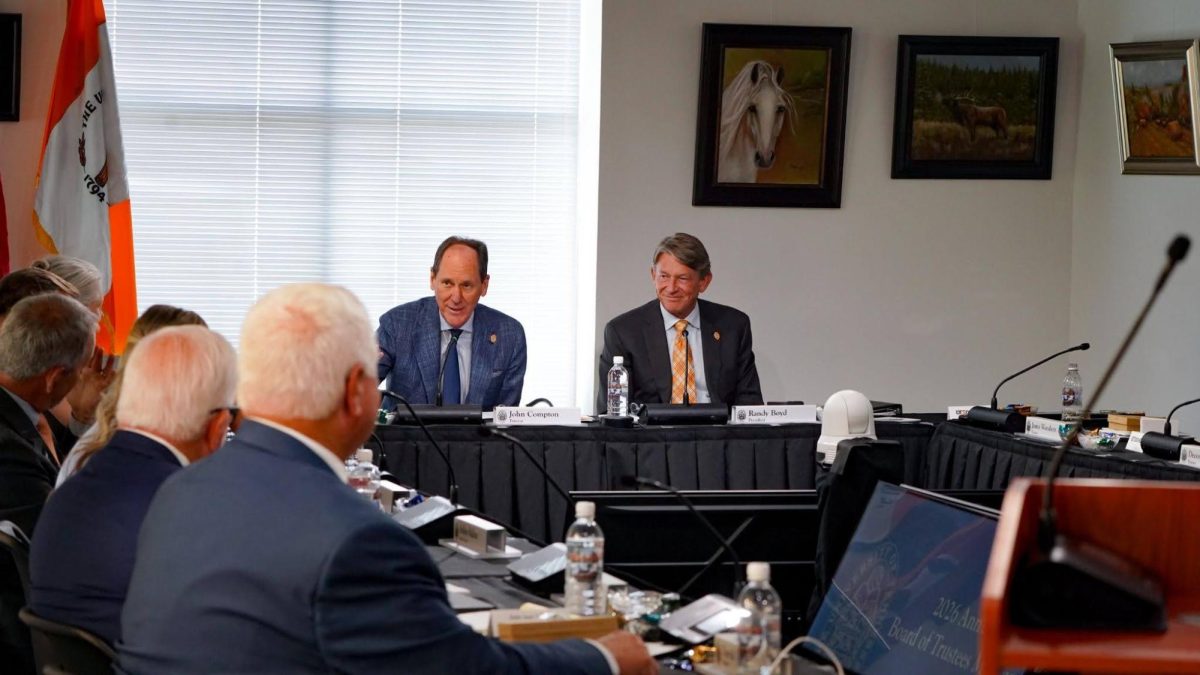
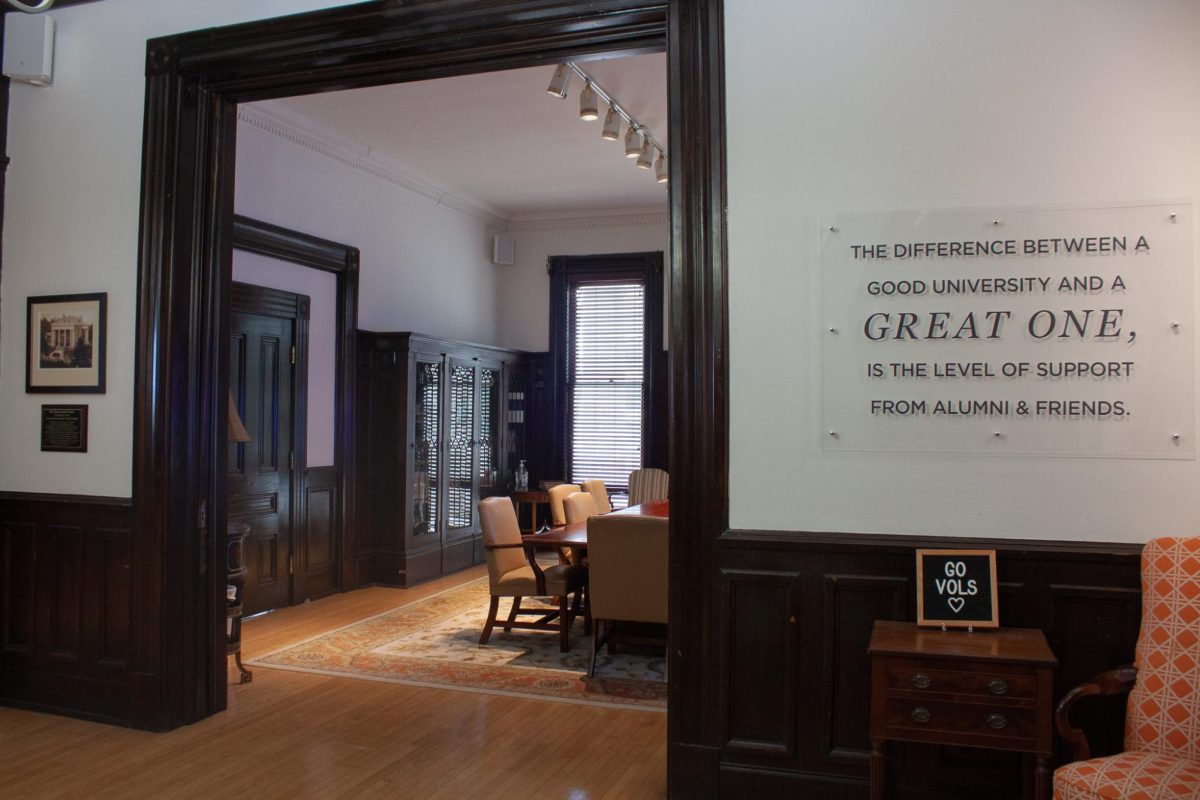
The third floor was originally built as a ballroom and banquet room, but it has since been renovated to accommodate more offices for the alumni center. The first-floor rooms are public, and still look very similar to when the Tysons lived there. These rooms are used for reunions, receptions, board meetings and other alumni events.
Although the university has updated many interior architectural features over the past few decades, the house still retains some of its original fireplaces, flooring, staircases and windows, which give it its old-fashioned charm.
“The fireplaces not only serve as architectural focal points but also reflect the craftsmanship and attention to detail characteristic of their era,” said Phyllis Moore, senior director of alumni programs at the University of Tennessee, Knoxville.
Moore said these features give the house a timeless, welcoming feel for both visitors and staff.
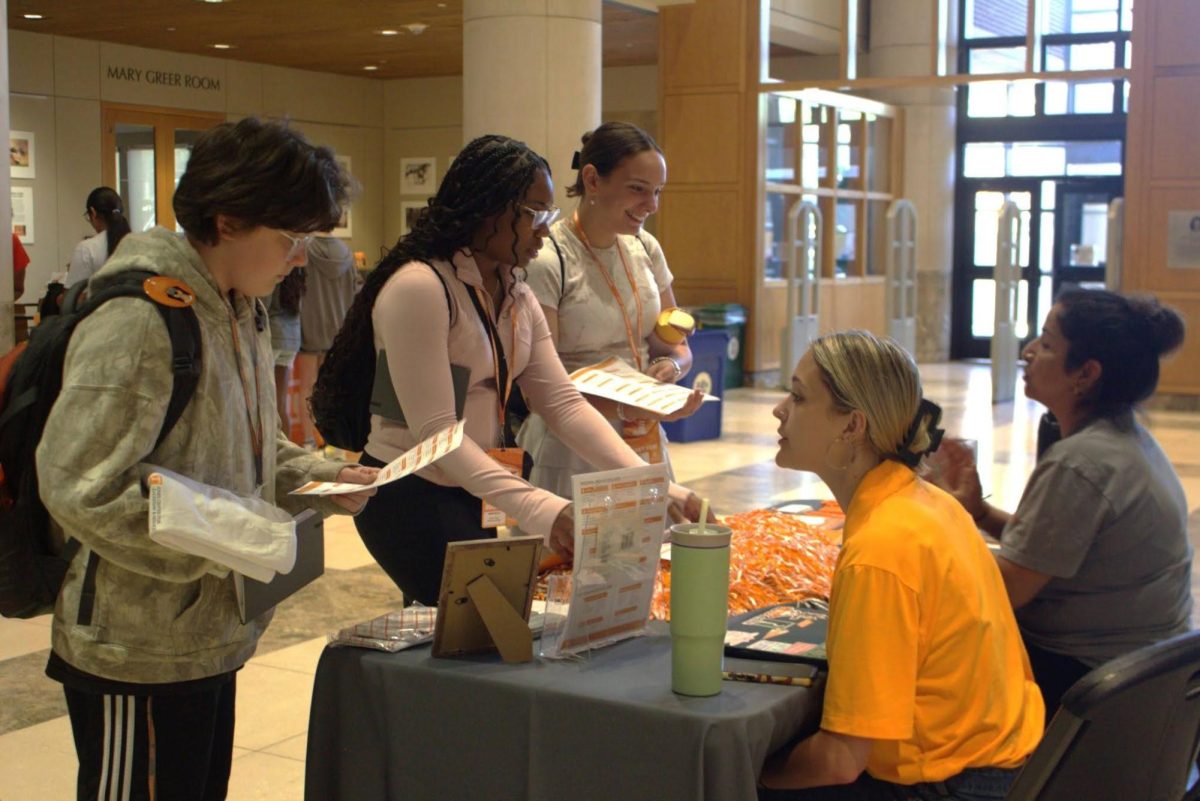
The house’s staff is well-versed in the story behind the Tyson Alumni House, and there are a few programs that allow students to get to know the house beyond its yellow-brick walls. The Student Alumni Associates program, for one, allows over 100 students to volunteer around campus and use the Tyson House as their home base.
Gina Martin, senior director of student and young alumni programs, said it is unlikely that most other students know the history behind the Alumni House, despite its visibility on campus.
“Many have never set foot inside its doors, let alone learned about its rich past,” Martin said. “For those who are familiar with the space, however, Tyson House is cherished for its warm and welcoming atmosphere, as well as the deep sense of tradition it embodies.”
Students still find ways to interact with the house next to Hodges Library, with many using the porch for graduation and Greek life formal photos.
“Each year, graduating seniors stop by the porch wearing their caps and gowns for photo opportunities, using the columns and the beautiful magnolia tree as a backdrop,” said Eric Haag, executive director of alumni relations.
Having worked inside the Tyson House since 2009, Haag has watched generations of students and alumni pass through its doors. He plays a major role in leading the alumni and student programs team and oversees daily operations inside the house.
The Tyson House is open to students and visitors alike, and the first floor is filled with tidbits of the rich history it embodies. Staff encourages students to stop by with friends and family to take a peek inside.
“Our staff knows the history of the Tyson House well, and we enjoy it when visitors, whether alumni returning to campus, current students or prospective students and their families, stop by to ask about its history,” Haag said.
If you’ve ever walked by the Tyson Alumni Center and admired its exterior, you’ll get just as much satisfaction from going inside. The building is a significant landmark on the university’s campus that emphasizes the preservation and sharing of history through community.
“I hope Tyson Alumni Center continues to represent a bridge between generations, a welcoming place where alumni return to share memories, forge new friendships and connect across generations,” Moore said. “Its historic walls can continue to tell the stories of those who came before, while inspiring those who follow.”