Earlier this summer, I attended the funeral of my paternal grandmother.
Due to a missed exit on the highway to Columbus, my brother and I arrived at the service mere minutes before her casket was closed and the service began. We hurried to the front of the church, hugged our dad and took our seats. Then, I began to look around.
For one of the first times in my life, I was a minority in the room. On a single hand, I could have counted the number of white people around me and still had the dexterity to text.
I’ve always known about my Puerto Rican and African-American heritage, but aside from correcting my friends on the correct pronunciation of my last name (PUH-GAHN), it has not impacted my life. I knew where I came from, and that was that. Our churches growing up, my Scout troop and most of my friends in high school and college have been white.
I’ve never felt left out because of how I look because for the most part I fit right in. The few times I’ve interacted with police officers were entirely uneventful, and I’ve never been seriously worried about harassment or discrimination.
So here I was, meeting for the first time my grandmother’s darker skinned siblings, cousins and other grandchildren — my extended family — and realized I was part of something I knew very little about.
College is supposed to be a time of new and different experiences, and for the most part, it has been; however, at UT, I’ve been largely surrounded by people who look like me and come from similar backgrounds. I’ve been very fortunate to have grown up under successful parents, successful siblings and good teachers to guide me along. For me, that became my sense normal.
But for many, that’s not the case. My grandmother’s funeral was one of the few times I felt like I was different and on the outside of something. I realized that there was a hurdle of understanding that I could not cross. Feeling like a minority in that room helped me realize that that hurdle existed, and that my UT experience so far has done little to expose me to the struggles real minorities face.
It’s an uncomfortable truth that the UT student body is far from diverse. In the 2014-2015 school year, about 79 percent of the undergraduate student body identified as white, just 7 percent as African-American, about 3 percent as Asian/Pacific Islander and another 3 percent as Hispanic (just over 5 percent didn’t report their background or classified themselves as two or more races).
This is an even worse problem when one realizes that nationally, minorities make up 41.7 percent of all undergraduates, with 14.7 percent being black and 16.9 percent being Hispanic, according to the National Center for Education Statistics. To say that UT has a problem with diversity would be an understatement.
All together, it is unsurprising that UT is ranked as 216 out of 275 national universities for diversity by U.S. News and World Report, behind public and private schools as the University of Idaho, Ole Miss, University of South Carolina, Vanderbilt University, Boston College, Yale University, University of Miami, University of Alabama and Texas A&M.
While one could argue that our lack of diversity stems from the fact that many of our students are from East Tennessee, which has never been as racially diverse as the western side of the state, this is merely an excuse, not a reason.
If expensive, private universities in the northeast such as Boston College and Yale University can claim a higher percentage of minority students than UT, then our geography should not be a determining factor in student demographics.
If UT was more serious about opening its doors to people of color, then our location next to Appalachia should be largely irrelevant. If we can attract world-class researchers and some of the best high school athletes in the country, then how hard can it really be to attract more minorities?
I’m not naïve enough to think this column will create a transformative spark that will remake UT overnight. But I do hope that you come away from this realizing that while we love our school, our education is incomplete if it does not include exposure to those different from ourselves.
Just as my life would be incomplete by not knowing my full heritage, true education requires that we be exposed to more points of view than those found in our comfort zone. And while these goals of diversity may seem daunting, they are not insurmountable.
Diversity will not be found at the top of a new classroom or residence hall, however tall and expensive it may be. It is an ongoing, everyday struggle over ignorance and fear, one that takes place in our words, thoughts and actions. While this fight may seem difficult, it is one that many in our country have been fighting for years. All we have to do is stop and listen.
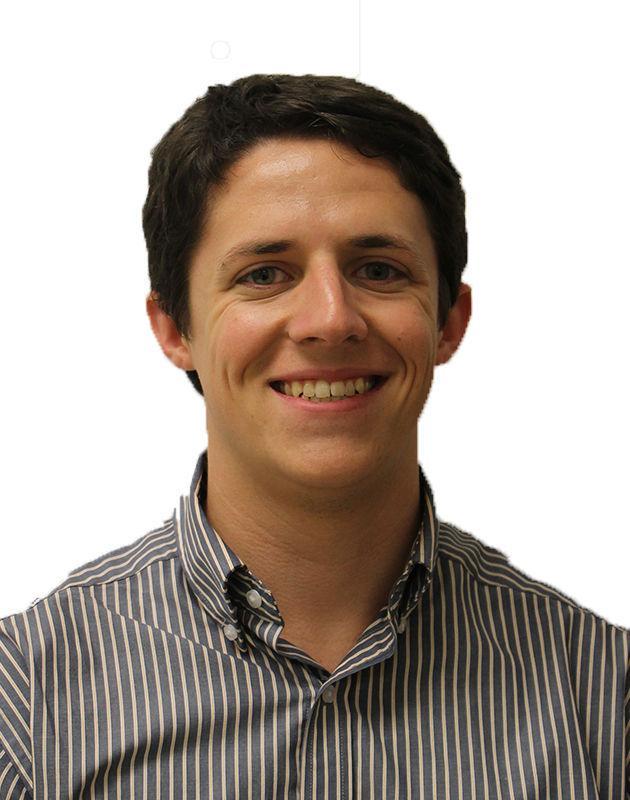
McCord Pagan is a fifth-year senior in journalism and electronic media. He can be reached at [email protected].