Just over a mile north of UT campus sits a unique looking building that raises a question or two.
It’s white brick exterior contrasts greatly with its red-bricked neighboring buildings. The contrast is amplified even more by a nostalgic looking awning outlined in vibrant color, bulb lights, with letters bearing the name JEWEL mounted above like a badge of honor.
Drive around back and be greeted by a building exterior outlined by two shades of blue paint and the name “Fab Lab” adorning the ground floor windows.
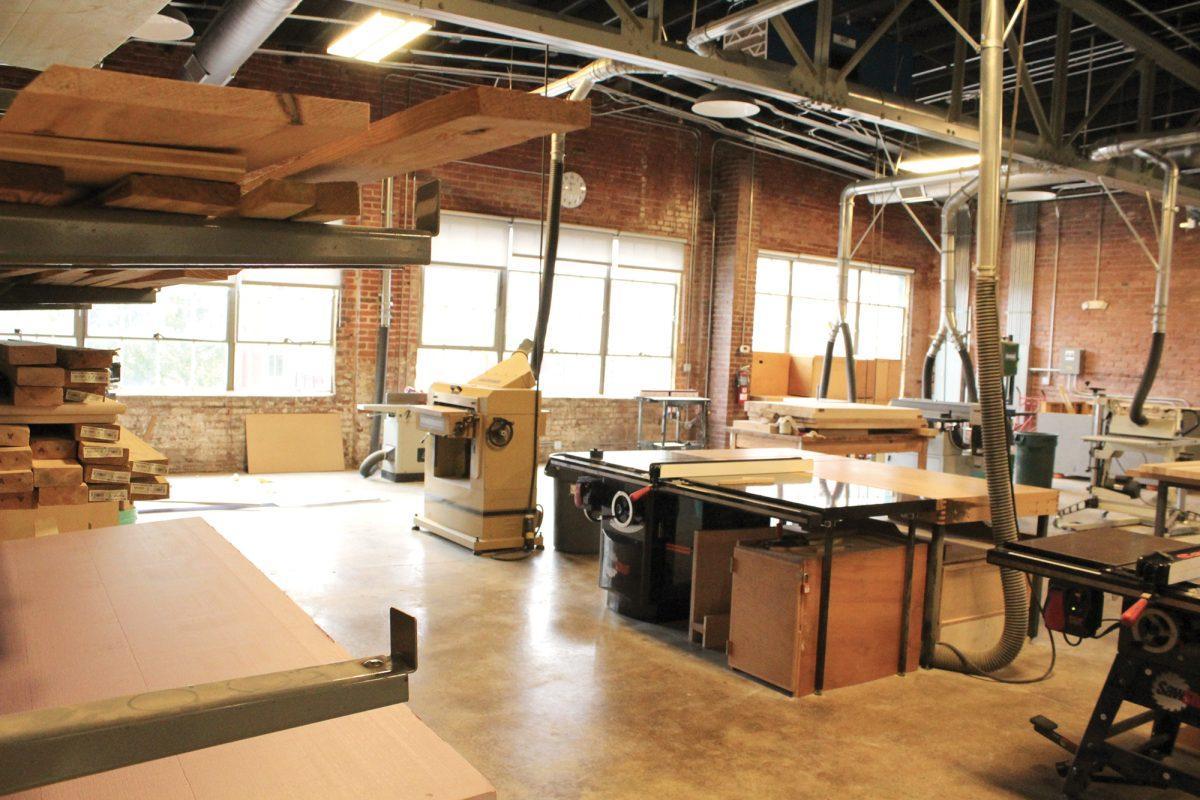
Short for fabrication lab, the unique building is a UT facility that is home to 3D printers, laser cutters, robotics and standard metal and woodworking equipment.
The University of Tennessee decided to invest in the property a little more than a year ago, giving space to multiple programs for the College of Architecture and Design. In the time since the Fab Lab’s opening, digital fabrication supervisor Craig Gillam says he has seen exponential growth in the number of students utilizing the facility.
“Student use in the last three weeks has really rapidly expanded because we had some new faculty members come on board who were really excited about the space and really pushed their students to use it,” Gillam said.
There was previously a design build facility off Middlebrook Pike, where things that were built would oftentimes have to be disassembled in order to be taken offsite. The college wanted to avoid this logistical hassle, which is why they chose to have more digital capabilities in the Fab Lab.
The new space is also very modular, so items can easily be moved around if necessary for a large-scale design build. It’s also a flex space, allowing room for lectures for up to 110 people.
Fab Lab supervisor and lecturer, Tally Locke, explained that the facility gives students exposure to the technologies they need to stay on the cutting edge of their education.
“The Fab Lab is a remarkable resource for students to pursue research into digital fabrication,” Locke said. “From furniture design to architectural construction, the industry is headed into the digital age. It’s imperative for students to have access to these technologies in order for their education to be complete.”
Recently, students have been able to help with a number of projects which utilize resources from the Fab Lab. Such projects include helping with the building of a water kiosk to provide clean water to residents of Clay County, Kentucky and building a classroom and office structure at Beardsley Community Farm here in Knoxville.
Something else that the facility is useful for is its rapid prototyping space, which includes laser cutters, self-serve 3D printers and more industrial style printers that offer higher quality work. In this space, students can quickly transform ideas into tangible prototypes.
“It’s really easy for them to do it,” Gillam said. “They can have a physical model and they can analyze it in a different sense than just on a screen, and then decide if they want to put the time and the money into going into larger scale.”
Associate professor, Ryann Aoukar, was able to utilize the rapid prototyping space after he flushed out the design for one of his products. Aoukar designed a funnel bowl with an integrated strainer, which is as aesthetically pleasing as it is functional. Since the design and prototyping processes, the bowl is now available for purchase online.
And while this associate professor has made great use of the space, Gillam says students have the same potential to do extraordinary things with a variety of equipment to which they wouldn’t ordinarily have access. And whether the project entails anything pertaining, but not limited, to woodworking, plastics, sheet metal, metal machining or welding, Gillam says, “Just the breadth of the equipment available is huge for them.”
Prior to the Fab Lab’s existence, there was not a place in this area for students to experiment with and utilize such a wide variety of equipment under one roof. Gillam recalled a student who wanted to make a sheet metal fabricated chair once for a furniture design project. At the pre-Fab Lab time, it took the student somewhere between two to three months just to get the skills and confidence necessary to use some of the manual equipment.
Comparatively, he spoke of a student last semester who designed a project in a software system, exported the file, put it on the Fab Lab’s water jet cutter and within two hours had a water jet cut chair that they could bend into shape.
“So instead of taking two to three months, it took them probably a day to create the file and a couple hours to cut it,” Gillam said. “It really gives them that option to explore.”
Since opening the Fab Lab, Gillam estimates that around three to four large colleges have come to tour the facility because they want to put in a proposal to create something similar at their institutions. And while the Fab Lab was created with architecture and design students in mind, it is not exclusively for such students. After having quite a bit of interest from students outside of the College of Architecture and Design, it was decided that the facility would be open to all students.
Even if a student is hesitant or doubtful of their abilities initially, Gillam explained that they really work to get students oriented and comfortable with using the equipment.
Then, Gillam says, “They have this sense of ownership of what they’re making. We’re definitely about getting the students using things hands on in an open, inviting, safe environment.”
Ultimately, what Gillam and the rest of the administration see the space as is a place to make stuff happen.
“(Students) come with a project, then they can work through their design with myself or the other supervisors of the shop,” Gillam said. “We can use our expertise and just give them advice, but then there’s the equipment here for them to generate their ideas. So it’s a great research facility, or it’s just even a great maker’s space for the students to conduct research.”
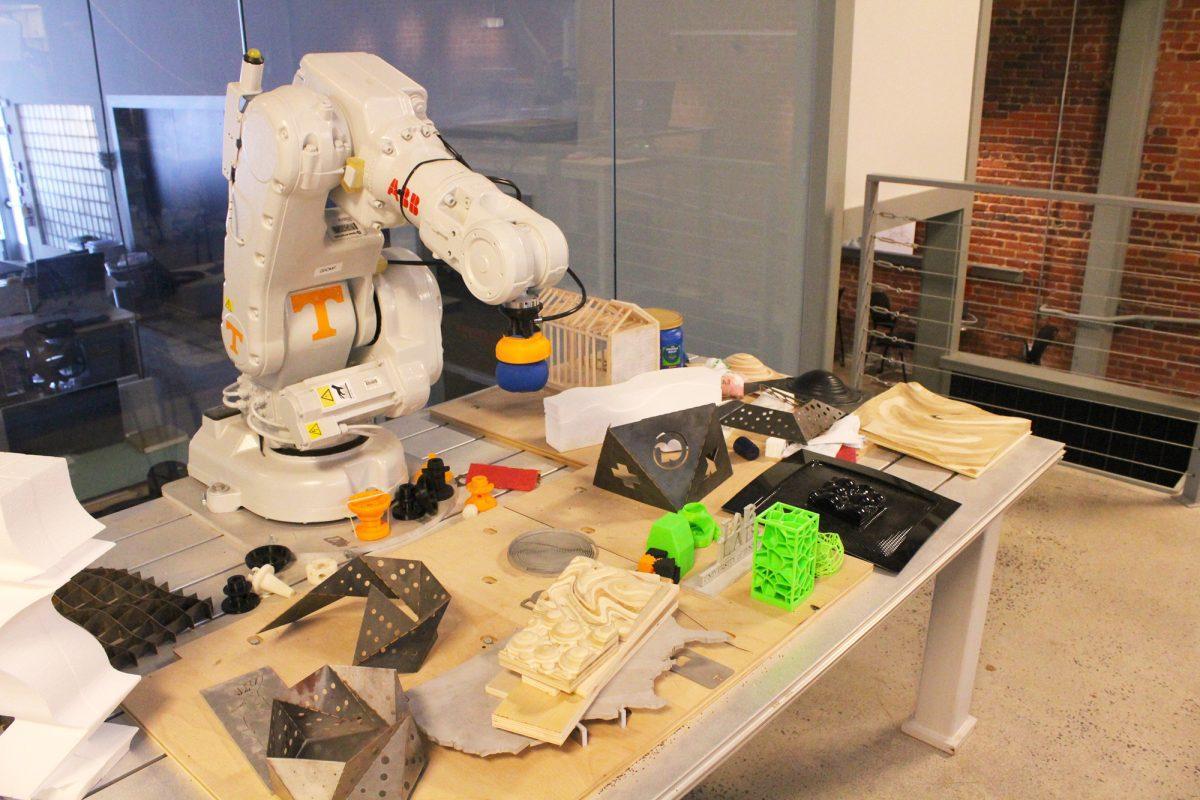
The Fab Lab, or the fabrication lab, is a UT facility that houses various technologies such as 3D printers, laser cutters and robotics.