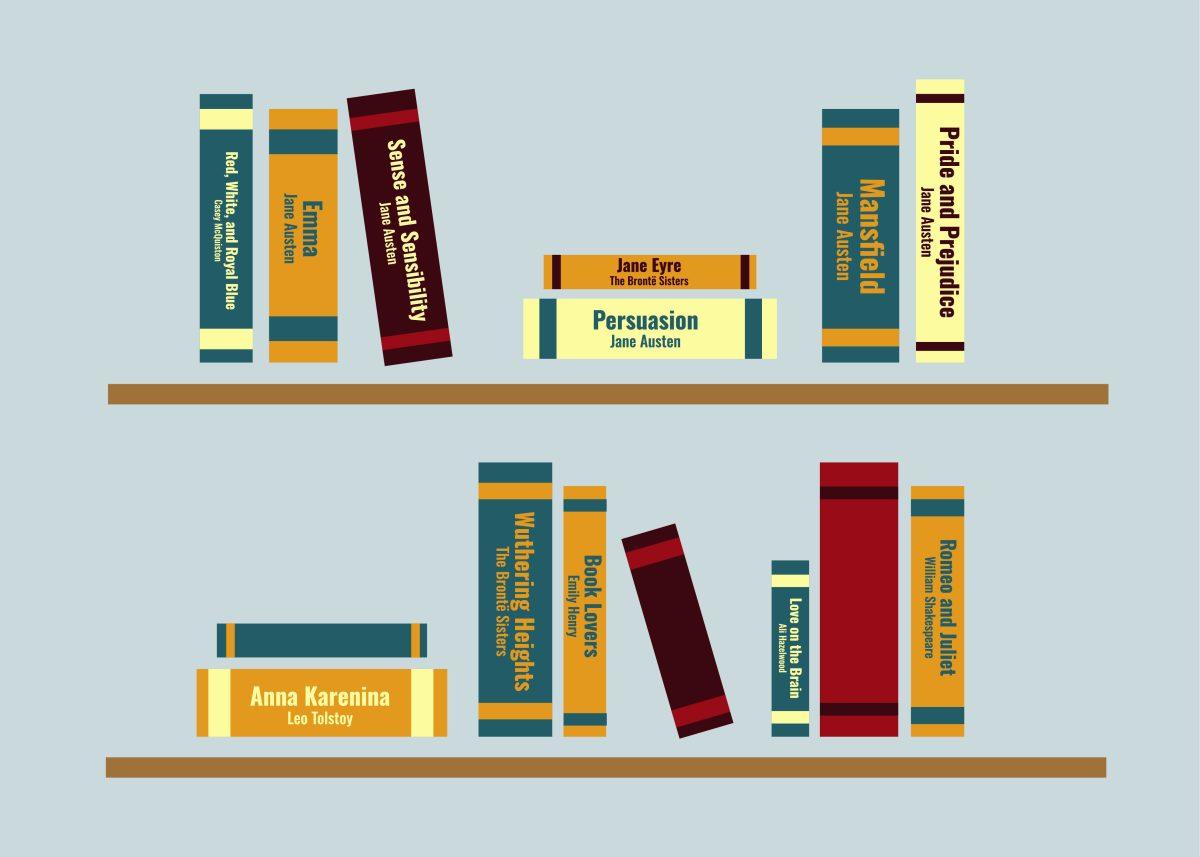

Classic literature is a widely debated topic for readers. It’s typically either loved or hated. As someone who gradually grew to love classics, I think that you just have to find something to relate to, and there’s one topic that can spark attention in any kind of novel: romance.
Not every classic includes romance, but the ones that do, whether as the main topic or as a mere subplot, introduced readers to the genre and inspired modern day romantic novels.
One of the most influential aspects of classics is tropes, which you might know about if you’ve ever participated in online book fan bases. Tropes, in the romantic literature sense, are stereotypical pairings and circumstances. Some of the most common tropes are “enemies to lovers,” “friends to lovers,” “fake dating,” etc. They’re like guidelines for a romance novel.
I would almost bet that any modern romance novel could be traced, in some way, back to a classic. There are so many novels considered part of the classic literature group that it’s unlikely for a novel to have a truly original plot line anymore. Sure, the author could add any kind of extra details they want, but the trope can’t be entirely unique.
It’s almost impossible to bring up the origins of modern romance without giving some credit to Jane Austen. Her novels almost revolve around romance, which wasn’t the most common topic at the time. She became a famous writer in the early 1800s and is still known well today. Whether from the timelessness of her novels or from their television and film adaptations, Austen’s work is as prominent as ever and is even taught in schools.
Apart from her comments on women’s society and new perspectives, Austen’s novels also gained popularity because of the genius romance she crafted in them. “Pride and Prejudice” is a prime example of the “enemies to lovers” trope mentioned before.
Protagonists Elizabeth Bennet and Mr. Darcy gain a distaste for each other upon their first meeting, but Austen twists the narrative until they realize their love for each other. Their story ends in a perfect, happy union, setting the standard for the genre.
The influence of “Pride and Prejudice” is seen in romance novels today, like “Red, White & Royal Blue” by Casey McQuiston, “Love on the Brain” by Ali Hazelwood and “The Hating Game” by Sally Thorne.
Austen introduced another popular trope, “friends to lovers,” in her novel “Emma.” Unlike Bennet and Darcy, Emma Woodhouse and George Knightley were friends from the start. As the novel goes on, their status as confidantes slowly morphs into something more fiery and passionate than Emma had ever thought it could. Classic, right?
“Emma” is almost as popular as “Pride and Prejudice” with several movie adaptations, but the novel’s biggest impact is all of the romance novels that followed in its “friends to lovers” path. To name a few: “People We Meet on Vacation” by Emily Henry, “A Good Girl’s Guide to Murder” by Holly Jackson and Jenny Han’s “The Summer I Turned Pretty” trilogy.
To seal Austen’s unofficial title as Trope Queen, her novels “Persuasion,” “Sense and Sensibility” and “Mansfield Park” also began tropes like “second chance love,” “torturous love” and “unrequited love,” respectively.
That said, Austen isn’t near being the only influential writer when it comes to romance. Love makes reading interesting for a lot of readers. Even Homer knew that when he wrote about Odysseus and Penelope all the way back in ancient Greece, so there’s a lot of classic literature that inspired modern romance.
Some other prominent books in the genre are “Jane Eyre” and “Wuthering Heights” by the Brontë sisters, “Anna Karenina” by Leo Tolstoy and, of course, William Shakespeare’s famous “Romeo and Juliet.”
So if you’re a fan of romance, maybe pick up a classic next time and see where it takes you.
Sadie Self is a freshman at UT this year studying journalism and media. She can be reached at [email protected].
Columns and letters of The Daily Beacon are the views of the individual and do not necessarily reflect the views of the Beacon or the Beacon’s editorial staff.