I have a confession: I’m a sucker for middle-grade novels, and I’m tired of calling it a guilty pleasure.
As someone who likes variety in my reading, I’m aware of many genres that are often looked down on for not being “real” books.
Middle grade isn’t exactly a genre, but it refers to a category of novels written for a younger age group. For readers over the age of 12, middle-grade books certainly fall under that umbrella of disrespect since they’re often seen as childish and silly.
Those of us readers lucky enough to discover a passion for reading as children know how formative and comforting the world of middle-grade books can be, so why do we stop reading them?
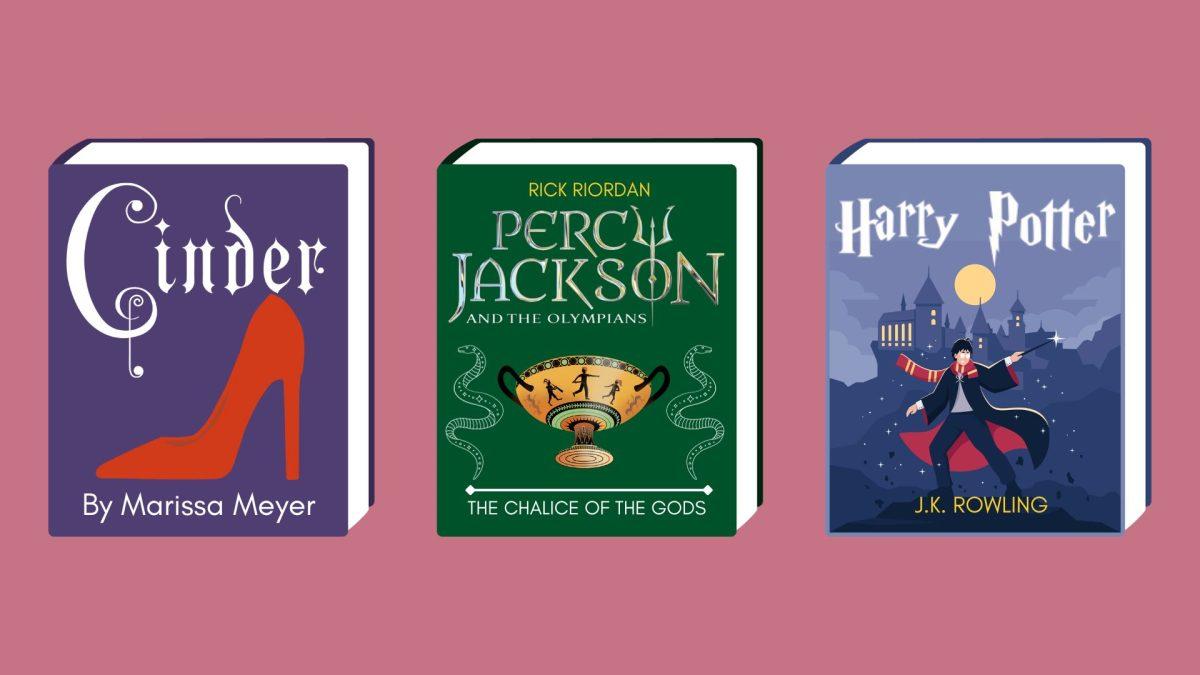
Once you hit a certain age, it seems as if everyone is reading these fancy, philosophical books. When I hit this age, I felt like I had to put J. K. Rowling’s “Harry Potter” series away and start on that long list of more “respectable” books.
Classics, nonfiction and other more mature genres are great, but sometimes it’s nice to revisit your roots. Even romance, a genre to which I am partial, can call for a break sometimes. No matter your normal reading preferences, middle-grade books are like a nostalgic breath and require nothing except a want to read.
Also, “middle grade” is very broad. You don’t have to pick up E. B. White’s “Charlotte’s Web” or Roald Dahl’s “Matilda.” There is so much more to middle grade than you might think.
That actually might be my favorite thing about this particular category of books since it’s not really “particular” at all. I get to try out new genres without putting too much effort in.
For example, I had never been a fan of the science fiction genre until “Cinder,” a middle-grade novel by Marissa Meyer and a sci-fi adaptation of “Cinderella.”
Reading “Cinder” allowed me to branch out without all of the pressure that comes with more mature books.
The complexity that comes with Ray Bradbury’s “Fahrenheit 451” and the approximate 896 pages that come with Frank Herbert’s “Dune” push me away, but the ease of “Cinder” welcomed me to science fiction.
As adamant as I am now about the importance of middle-grade books for all ages, I was once totally convinced that they were beneath me.
During my high school years, I wanted my reading to reflect what I thought was maturity, so I often flaunted the covers of many respected novels like “11/22/63” by Stephen King, “The Rose and the Yew Tree ” by Agatha Christie and “The Invisible Man” by H.G. Wells.
I enjoyed reading each of these, but sometimes my heart longed for a good, simple middle-grade novel.
At this time of my literary snob facade, I felt like I had to create a solution for this lust for what I called “kids’ books.” When you turn 16, you’re way too old for that kind of stuff, right?
Wrong.
However, I had not yet come to this epiphany, so I resorted to secrecy. I got out my best paper, scissors and markers and made a fake book cover to put over whatever middle-grade novel I was reading at the time.
If you’re thinking that this sounds ridiculous, that’s because it is. No one should have to feel the need to hide whatever book they’re reading, especially one that brings nothing but joy and relief.
Now that I’m in college, I think that picking up something light like this is even more important, and luckily, I’ve realized that real maturity is not being ashamed of what I enjoy reading. I haven’t thought to whip out one of my old homemade book covers in a long time.
Not only does this simple thing free my inner child, but it is also a coping mechanism. Middle grade is the perfect solution to anxiety-induced reading blocks.
Sandwiching books like “Percy Jackson and the Chalice of the Gods” by Rick Riordan between my assigned readings is sometimes all that keeps me turning the pages during a busy semester.
So, I recommend treating your next bout of stressful weeks — or just plain lack of intent reading time — with a good ol’ middle-grade book.
I’m all for reading for philosophical and knowledge-based purposes, but returning to the fictional worlds of my childhood is something nothing else compares to. Their inner healing properties are worth a try!
Sadie Self is a freshman at UT this year studying journalism and media. She can be reached at [email protected].
Columns and letters of The Daily Beacon are the views of the individual and do not necessarily reflect the views of the Beacon or the Beacon’s editorial staff.