If you were invited to Honduras to deliver a boat back to the United States of America, would you say yes? I did.
In February, I was invited to Utila, Honduras, to assist in delivering a 42-foot sloop to Yorktown, Virginia. The owner of the boat, named Born Free, was Captain Tyler Eden, whom I had previously worked with in the Bahamas while crewing on the Liberty Clipper. When Tyler left the Bahamas, he extended an invitation to sail with him in Honduras. The opportunity was too intriguing to decline, and the call of adventure overtook my mind. After another month of work on the Clipper, I boarded a flight to Honduras.
A few days before leaving for Honduras, my father sent me an article titled “Honduras, The Murder Capital of the World.” The article went into kidnappings, theft and murder in Honduras. As I read the article, I thought, “Am I really about to go here alone?”
Overcoming my anxiety were the descriptions of Honduras that Tyler told me in the Bahamas: sandy beaches, Caribbean blue water, lush jungles and cheap beer. Anyway, how dangerous can the place be? I was 18 and indestructible at the time. What can happen? A lot.
After a series of poor decisions, I found myself on the side of a two-way highway outside of La Ceiba with the sun setting. I originally flew into San Pedro Sula and planned to take a bus to La Ceiba and take the ferry to Utila the next morning. I was almost to Tyler, to something familiar in this foreign place. I just had to get to my hostel.
As I walked on the side of the highway, I felt extreme paranoia and fear. The article my father sent was running through my head, specifically, the phrase “Murder Capital.” As the sun continued to set, I became more paranoid. To continue my paranoia, two men began walking behind me. My mind jumped to the worst conclusions: What if they robbed me? Or worse, what if I was killed in the murder capital of the world?
My hostel was a two-hour walk away, and La Ceiba has no Uber, Lyft, taxis or local buses running at late hours. Along with the lack of transportation, I couldn’t even talk to anyone. In Honduras, you would be lucky to find anyone who speaks a speck of English, and my three years of high school Spanish did not help me much. So, all I could do was walk.
The two men continued to follow behind me, appearing to be pointing at me. With the dark now all around me and the two men still behind me, I put my thumb up. I thought the best thing to do at the time was to get off the highway as quickly as possible. My mind at the time told me that it was hitchhiking.
Within five minutes, a truck stopped. I ran to the window, relieved, but then a realization hit me: I had no idea who this man was. The man turned out to be Jose Orellana. Jose has a family of four. Jose is first and foremost a family man, but at the time I had no clue who he was. To me, he was a stranger and maybe someone with ill intentions.
I told the man I needed to get to the road V-200. He simply said “si” and gestured to the bed of his truck. As I attempted to talk with him, I saw his wife and son in the car. Their presence made me more confident to join him for a ride. I jumped into his truck bed, and he zoomed off down the now pitch-black highway. I was so relieved to get off the road.
After about 10 minutes of driving, the truck slowed at my destination and I jumped out. I now had about an hour and a half walk left till I got to my hostel. I went to thank the man, and as I began my long walk down the dark road, the man called to me, “Alto! Alto! Alto!” I did not need any high school Spanish to understand that word since every red octagonal sign in the country has it plastered on.
I retraced my steps to the truck and got shown a message on Google Translate. To my alarm, the message roughly said, “La Ceiba is extremely dangerous to walk in at night, especially for you. I suggest that you come home and stay with my family and me.” With the hostel still far away and unsure about its exact location, I decided to test my luck and go with the family.
This time, I hopped into the truck and sat next to Jose’s son, who was most likely 8 or 9 years old. He looked at me curiously with a huge smile on his face. As I sat in the car, Jose’s wife, Lilian, attempted to use Google Translate to tell me where we were going. At first, I thought we would head straight to his home, but I was extremely wrong.
Both Jose and Lilian attempted to reassure me about my decision. After driving for about 10 minutes, we arrived at a hotel. I was very confused and somewhat surprised. Jose and Lilian walked with me into the conference room of a hotel where a women’s rights meeting was taking place. Yes, a women’s rights meeting.
When I entered the room, everyone fell silent. The last thing they expected was for a white boy to walk into this meeting. After a moment of awkwardness, the meeting continued, and a woman brought me a plate of food and a drink. Everyone was extremely kind to me, and I enjoyed the meeting even with the little knowledge of Spanish I possessed.
When the meeting ended, I gestured to my phone to tell the family I was leaving to make a call. I no longer was very anxious about my situation since the Orellana family members were good people. I called my mom and told her of my situation. My parents were already nervous before I flew down, so telling them my current situation made things worse.
I should have known. I learned a long time before that moment: Ask for forgiveness, not permission. My mother and father were frantic. “What if they kidnap you? What if the little boy is part of the scam?” they said. These were worries coming directly from their perception of Honduras.
While sitting through the rant, I thought, “Who would take someone to a communal gathering and then kidnap them?” Eventually, to calm my parent’s nerves, I told them I would find another hostel and stay there. After hanging up the phone, I jumped back into the truck and off we went, hopefully to his house this time.
After driving for about 25 minutes with a conversation through Google Translate, we arrived at the Orellana home. The home was unlike anything I have seen in the states but reminded me of the homes I saw during my time in Nassau.
They lived in a community called Painted Stone when translated into English, named after a singular stone in the ocean next to their home. Their home was right next to the beach, and many people in the community were fishermen. The home consisted of three separate buildings: a guest house, the main house and a cinder block shed.
We went into the home for a while, where I met the final member of the Orellana family: Jose’s daughter. You could tell how much Jose loved his family. All around the home were pictures of his family. Jose took me to the beach before I finally went to bed. As I fell asleep, I no longer wondered about the man who initially picked me up. He was good.
The next day, I awoke and had an amazing breakfast. After the feast, Jose took me on a tour of his community where I saw a different perspective on life. That day, Jose and I fished, explored and got to know each other better.
After an unforgettable series of events, Jose dropped me off back in La Ceiba so I could catch the ferry to Utila. I hugged the man who may have saved me from something tragic and said goodbye. I still talk to Jose today and will see him and his family again when I return to Honduras or when he comes to my home.
I first perceived Honduras as a place full of danger at every turn. However, that is not the place I came to know. More often than not, I found kind people who care. One must not assume something about a place until one goes and truly understands it.
The Orellana family has changed my perception of assumptions. This experience gave me the confidence to travel alone through Guatemala and Mexico and to complete over 1,000 miles of hitchhiking. There is good everywhere, especially in Painted Stone.
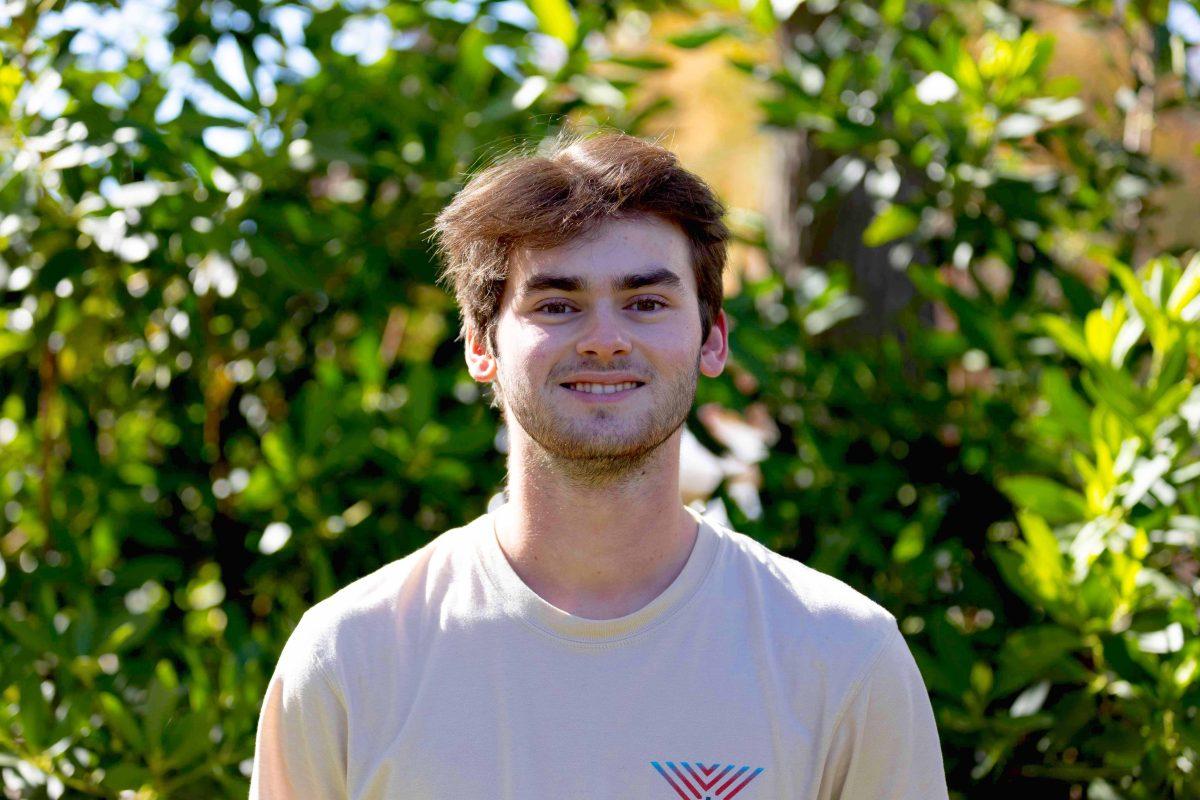
William Spangler is a freshman at UT this year studying history. He can be reached at [email protected].
Columns and letters of The Daily Beacon are the views of the individual and do not necessarily reflect the views of the Beacon or the Beacon’s editorial staff.
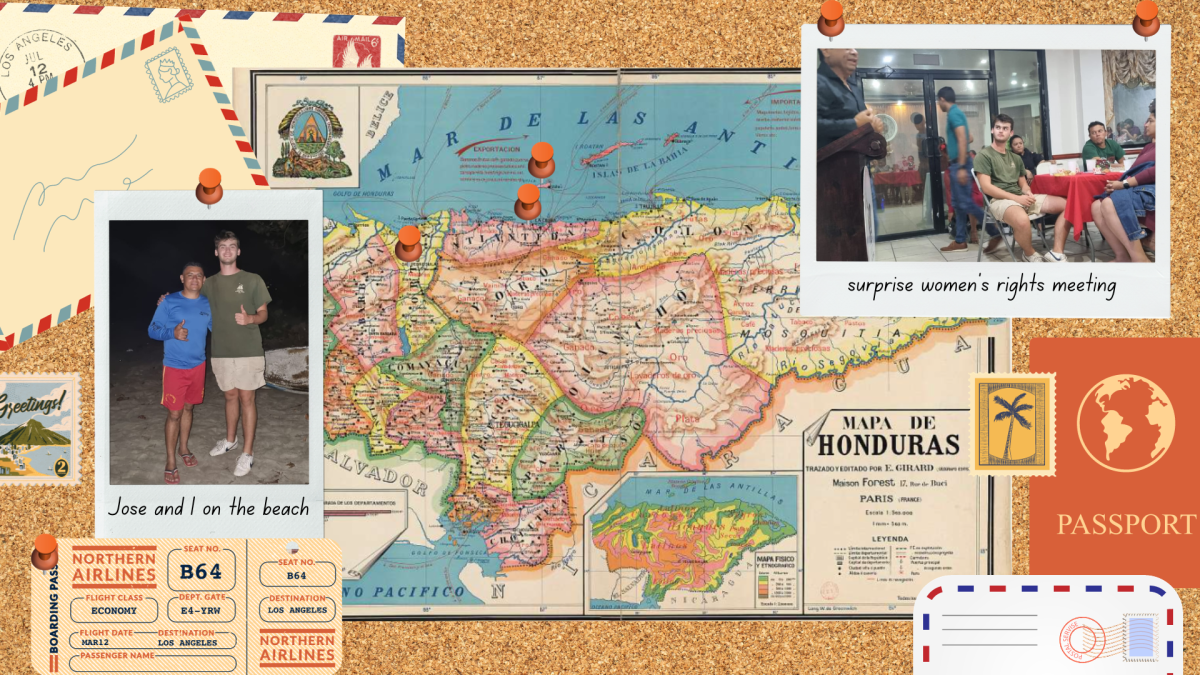
Columnist William Spangler had an unforgettable encounter in Honduras.