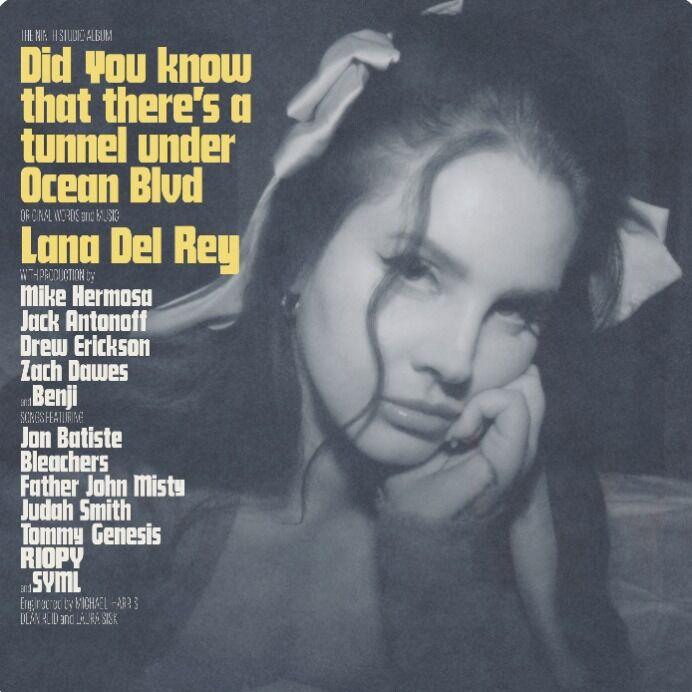
Lana Del Rey’s ninth studio album, “Did You Know That There’s a Tunnel Under Ocean Blvd” is a renaissance of teen angst along the likes of “Ultraviolence” and “Born to Die.” Her angelic voice throughout the entire 16-song record makes for an epically peaceful experience, but that is just what’s at the surface.
As with the rest of her discography, Del Rey’s music and lyrics are deeply personal, so much so that it is often difficult to discern the true meaning of the songs — but that’s okay, because they sound good anyway. Here are some of the major highlights from the newest addition to Del Rey’s discography.
“Did You Know That There’s a Tunnel Under Ocean Blvd” starts with a bang — a soft and melodic bang that is so beautiful, you could realistically run through a butterfly garden with “The Grants” playing in that background. The eccentric and angelic sound that the album starts with characterizes the rest of her album, centered around her unique voice and classic musical sounds.
The second song on the album is the namesake of the record, “Did You Know That There’s a Tunnel Under Ocean Blvd,” and was one of the three single releases before the project came out. Here, Del Rey shares with listeners a scene of desperation and liminality, continuously asking “When’s it gonna be my turn,” in a journey of self-hatred, asking the subject of the song to “love me until I love myself.”
This sort of sound that is classic to her is especially present in other tracks like “Sweet” where she returns to previous themes of self-isolation, singing “If you wanna go where nobody goes, that’s where you’ll find me.” The entire song, sonically, feels like a liminal space, with lyrics to match it as she speaks to the anxiety she feels for the moment in her life and the way she is avoiding the reality of the matter “not talking about the stuff that’s at the very heart of things.”
“A&W,” the first single release following Del Rey’s announcement of her new album, is representative of the most classic form of Lana Del Rey that many have come to know and love over the years. Her poetically blunt lyricism along with the rage and frustration of uniquely relatable experiences that she sings about is just utterly fantastic and entertaining.
In “A&W,” Del Rey conveys uniquely feminine rage, and the frustration we all must deal with around being perceived and misunderstood. And of course, it is one of the catchiest songs on the album.
This song’s counterpart comes later in the album in “Grandfather please stand on the shoulders of my father while he’s deep-sea fishing,” — yes, that is actually the name of the song. Good luck bringing this up as your favorite song during first week of class icebreakers. She sings “I know they think it took somebody else to make me beautiful … Some big men behind the scenes sewing Frankenstein black dreams into my songs.”
The absurdity of the titles just adds to the experience. If you’re ever too down while listening to these songs, just look down at your playlist and remember that the song is called “Taco Truck,” which is self-reportedly the best song to cry to in line at the CJ’s Taco Truck on campus.
In her song “Kintsugi,” Del Rey writes metaphorically about the Japanese practice of putting broken pottery back together: Kintsugi. It is one of the more profound and touching songs on the album — both disturbing and beautiful.
Del Rey sings “I can’t say I run when things get hard, it’s just that I don’t trust myself with my heart, but I’ve had to let it break a little more, ‘cause they say that’s what it’s for, that’s how the light shines in.”
In “Fingertips,” Del Rey sings “They say there’s irony in the music, it’s a tragedy, I see nothing Greek in it.”
Though, throughout this song, the tragedy is apparent as she delves deeper and darker, seemingly writing about the complexity in mourning loved ones, the past and versions of oneself as she articulates what could nearly be understood as a desire to die, finally in the end saying “but sometimes it’s just not your time … Sun bather, moon chaser, queen of empathy — I give myself two seconds to breathe.”
“Paris, Texas” is a return to her beautiful and old-fashioned sound with not much else besides a piano and her voice with lyrics that make you too want to take a trip to Spain with just a notebook in your hand as Del Rey speaks on the despair that comes with jealousy and comparison and a simple desire to just run away.
Del Rey’s presence as a powerhouse in the music industry is clear through the countless self-referential moments in this project to her other work. Her confidence to be different and to create her own sound succeeds once more in her ninth studio album that can ultimately be understood in the lyrics of “Grandfather please stand on the shoulders of my father while he’s deep-sea fishing,” when Del Rey sings “If you don’t believe me, my poetries or my melodies — feel it in your bones.”