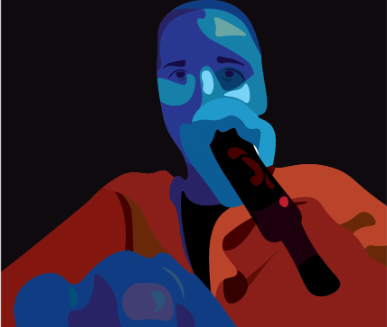
While repetition may be the key to Joe Goldberg’s success, it certainly isn’t doing his audience any favors.
When we last left Penn Badgley’s murderous lover boy, he was going by the alias Jonathan Moore: a professor of literature across the pond in London, England, who befriends a group of London socialites and nepo-babies that give Joe’s victim mentality plenty of ammunition.
Where the twist comes, however, is when a new, anonymous murderer starts taking care of Joe’s victims before he can even pull a knife out of the drawer. A twist that arguably worked as the shake up this fourth season needed for its first half – released on Feb. 9 – yet the latter five episodes don’t really seem to know where Joe’s arc goes from here.
Call it a split season curse – akin to “Stranger Things” season four – or a writer’s room burnt out on bloodshed, but something just feels missing from this season of “You,” and, surprisingly, Joe is not the main suspect.
One of the main grabs of “You” has always been the ethical dilemma of a protagonist clearly out of his mind yet surrounded by a supporting cast whose evil feels much more mulled over than Joe’s violent outbursts in the name of love. The whole “nice guys finish last” schtick is really put to the test by showrunner Sera Gamble, making both our protagonist and the television increasingly difficult to walk away from.
While this season no doubt shared the notion of plopping Joe in a pool of unsavory people, Joe – or Jonathan’s – ego still finds a way to make him just as sour to the taste as his new peers. He’s learning to be “better,” sure, but it still doesn’t stop him from addressing all the flaws in those around him as validation for his actions.
Is he a bad guy? Totally. Did the victims of this unnamed killer deserve the reckoning they got? That’s for the viewer to say. Ultimately, the latter half of this slasher satire doesn’t seem to know if it wants to sink its blade into allegory or introspection.
The script certainly doesn’t help, either. Joe’s inner monologue has always been a source of macabre clarity for viewers and eventually his own psyche, though arrogance and possessiveness make it difficult for any sympathy to fly his way.
While Badgley no doubt knows what he’s doing with the character by now, it just becomes increasingly difficult to root for him, even with a narrative that feels like it’s pushing you in that direction. It’s hard to talk about how deep this rabbit hole gets in these five episodes without going into spoilers, but it’s made very clear to the viewer what, or maybe who, the summation of Joe’s guilt has morphed itself into.
An off-kilter Badgley – amongst most of the performances – isn’t helped by a plot line that feels like it opens new doors faster than it can close the old ones. Just as our first whodunnit is solved, up sprouts a new foe overly knowledgeable about Joe’s past. Even with a change-up in formula, repetition still finds its way into this script that seemingly gets more cracks on the wall the harder the writers try to resolve it.
It’s rumored that season five will be “You’s” last. This more or less feels like the case as the final credits roll on season four, as we’re left with some grasp at redemption that may or may not get solved down the line. Through what methods that comes, if it comes at all, are far from clear.
It seems unfitting to give Joe a just redemption, yet sharing the same level of malice that he does through a more gruesome ending would just insinuate his moral high ground. As deep as the narrative hole may be, it still feels almost impossible to climb in for the ride, for better or for worse.