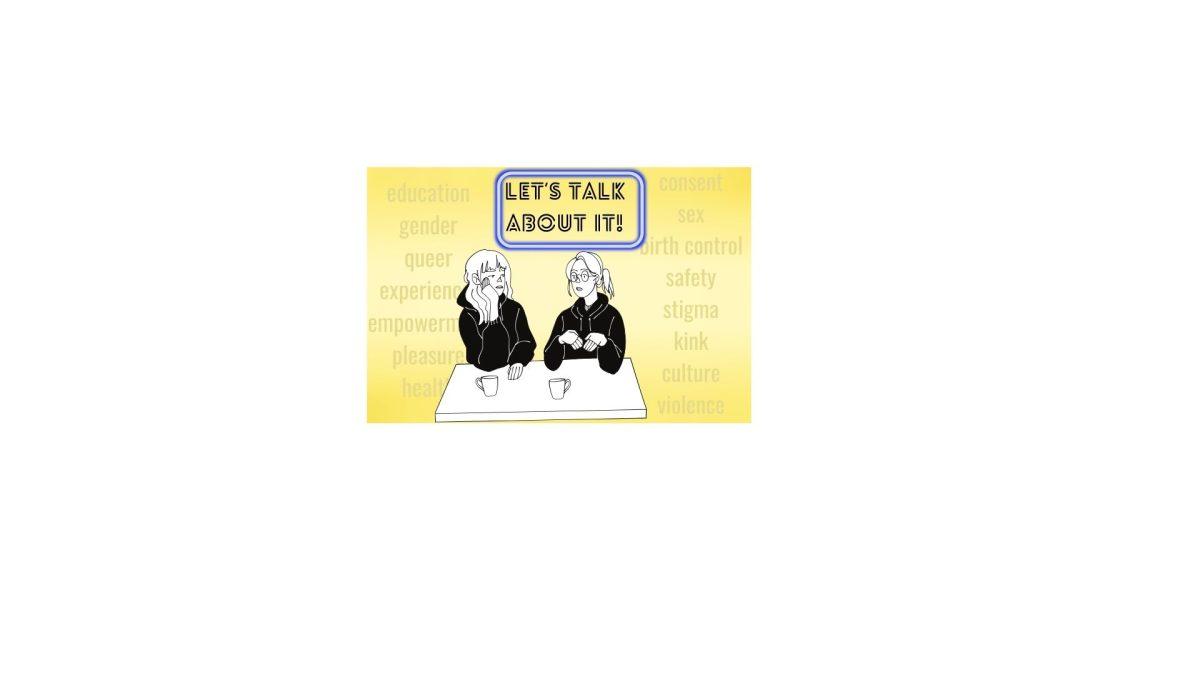

If this column’s title is eerily familiar to you, it’s because it was published in the Beacon before 2020. We’re bringing it back!
It’s now 2024 and yes, Sex Week is still here — because sex ed matters now more than ever.
If you’ve been here for a while, you know the contentious history that Sex Week and SEAT have with the university. Since 2012, we have existed to plan and host Sex Week, a week-long event that aims to foster safe, inclusive conversations around sexual health, pleasure, gender identity and consent that students desperately need.
Despite near-constant controversy and disdain from state legislation as well as our administration (as seen by 2019’s statement from interim President Randy Boyd), Sexual Empowerment and Awareness at Tennessee has returned each year, fighting to fill the gap left behind by Tennessee’s abstinence-only education.
Now, let us make our mission abundantly clear. We aim to give students a medically accurate, sex-positive education that enables them to navigate their own sexuality in a way that is safe, informed and healthy. Sex Week isn’t a bold, anti-establishment stance — it’s an unapologetic academic and social necessity.
Our work with our sister organization, Planned Parenthood Generation Action, focuses on reproductive health and preventative sexual health. Together, we provide a confidential and fast way for students on campus to get access to emergency contraception through our Contraceptive Hotline.
SEAT wants to push the boundaries of basic reproductive health to explore safe and pleasurable sex, queer culture and gender diversity. We are here to destigmatize the conversation around all avenues of sex and ensure that our peers have access to the information they’re often deprived of.
Why we’re still here and won’t “tone it down”
Despite nearly annual opposition from administration, combatant students and media, Sex Week lives on. The universe has thrown a lot at us. We’ve had run-ins with anti-choicers, neo-Nazis and your run-of-the-mill trolls. These groups often deem us as vulgar and inappropriate, despite our benevolent goals.
We even survived the COVID-19 pandemic through the first ever fully virtual Sex Week back in 2021. The continued discomfort with open discussions about sexuality does more harm than good. Tennessee ranks 10th highest of the 50 states for teen birth rates. Nationwide, adolescent STI rates have risen steadily over the years. These statistics reflect a systematic failure to educate and encourage young people to have safe, healthy sex.
Sex Week works to challenge these shortcomings directly. Through events focused on consent, communication and pleasure, we aim to give students tools to empower them in all ways. Over the years, we’ve evolved to allow the dynamics of conversations around sex and gender to reach further. We’ve expanded our mission of discussing sexual health to also embrace topics like gender identity, sexuality as a spectrum, BDSM and kink subjects that many people may never have a safe place to explore anywhere else.
We’ve come a long way since 2013 when the very first Sex Week drew scrutiny from both university officials and local politicians.
Each year, we are asked to “tone it down,” with no clear guidelines for how to do so — but we press on. While sexual education is our big goal, normalizing uncomfortable conversations — including sexual violence, gender identity with its relation to sexuality and the reality of being a college student navigating relationships — is a part of our mission too.
Ongoing resistance has shown us just how important these discussions are. We’ve fought for policy changes, advocated for better sexual assault protocols and pushed for a mandatory sexual assault course for incoming students.
We’ve succeeded in many areas, but our work is far from over. For example, the annual Red Zone intimate violence prevention program through the Center for Health Education and Wellness was once one of our main collaborative events during the fall semester. Now, that program apparently no longer exists. This highlights how we’ve come so far, but we’re also experiencing a steady backslide in a highly divisive, highly charged time in our culture.
What’s next?
As long as students come to UT without access to the skills and knowledge necessary for sexual health, we’ll be here. As long as abstinence-only education is the norm in Tennessee, we’ll be here. As long as talks about sex are shamed, we’ll be here. We will continue to provide a counternarrative that emphasizes consent, communication and empowerment.
This year, we’ll continue expanding our events and programming to include more in-depth discussions on queer culture, kink and alternative sexual identities. You can expect to see and hear about us breaking down the taboos that still stigmatize sex and ensuring that students get the information they need to thrive in relationships and beyond.
We want to hear from you! If you have questions, no matter how “obvious,” taboo or awkward they might feel, we’re here for that. You can submit your questions in our anonymous form and keep up with us on Instagram @seatutk.
Whether you’re curious about kink or just need clarity on types of birth control, we’ve got you covered. We know how hard it is to get access to this information, and we know that this kind of education changes lives.
So, join us this year. Let’s talk about it.
Renee Hamlin is a sophomore at UT this year studying linguistics and Russian studies. They can be reached at [email protected].
Columns and letters of The Daily Beacon are the views of the individual and do not necessarily reflect the views of the Beacon or the Beacon’s editorial staff.