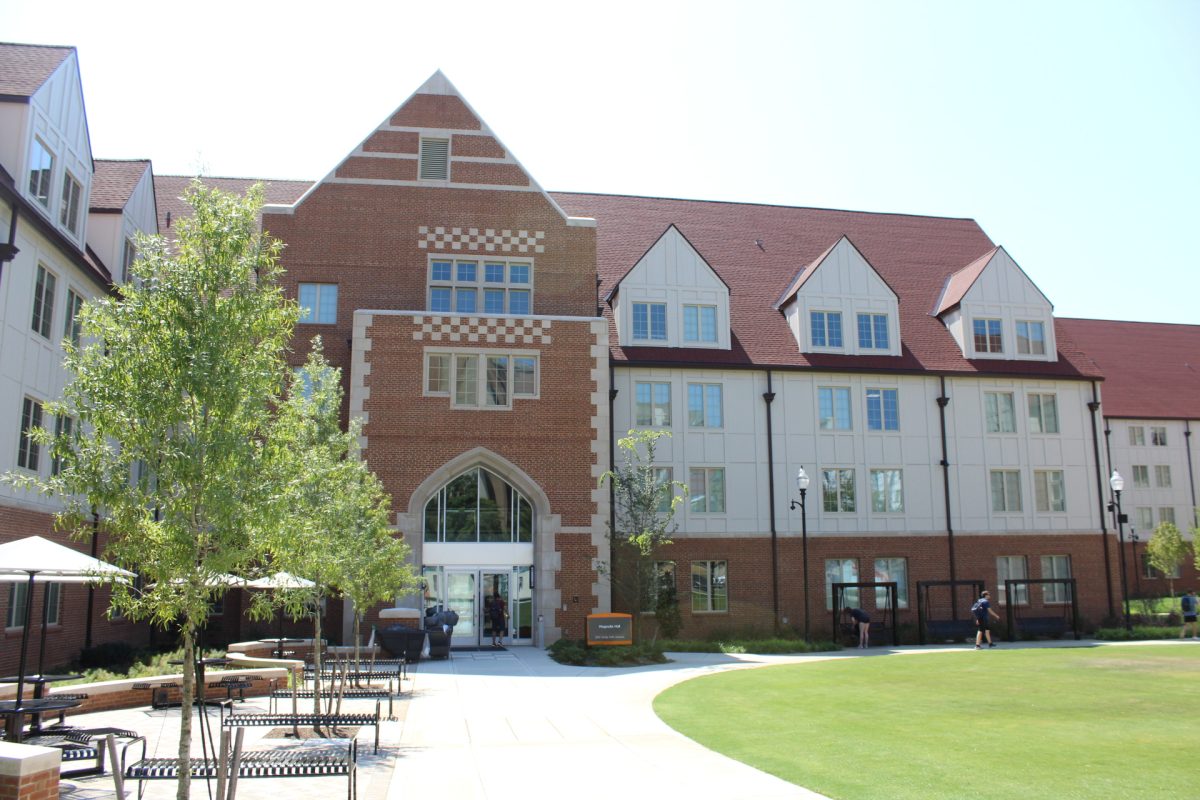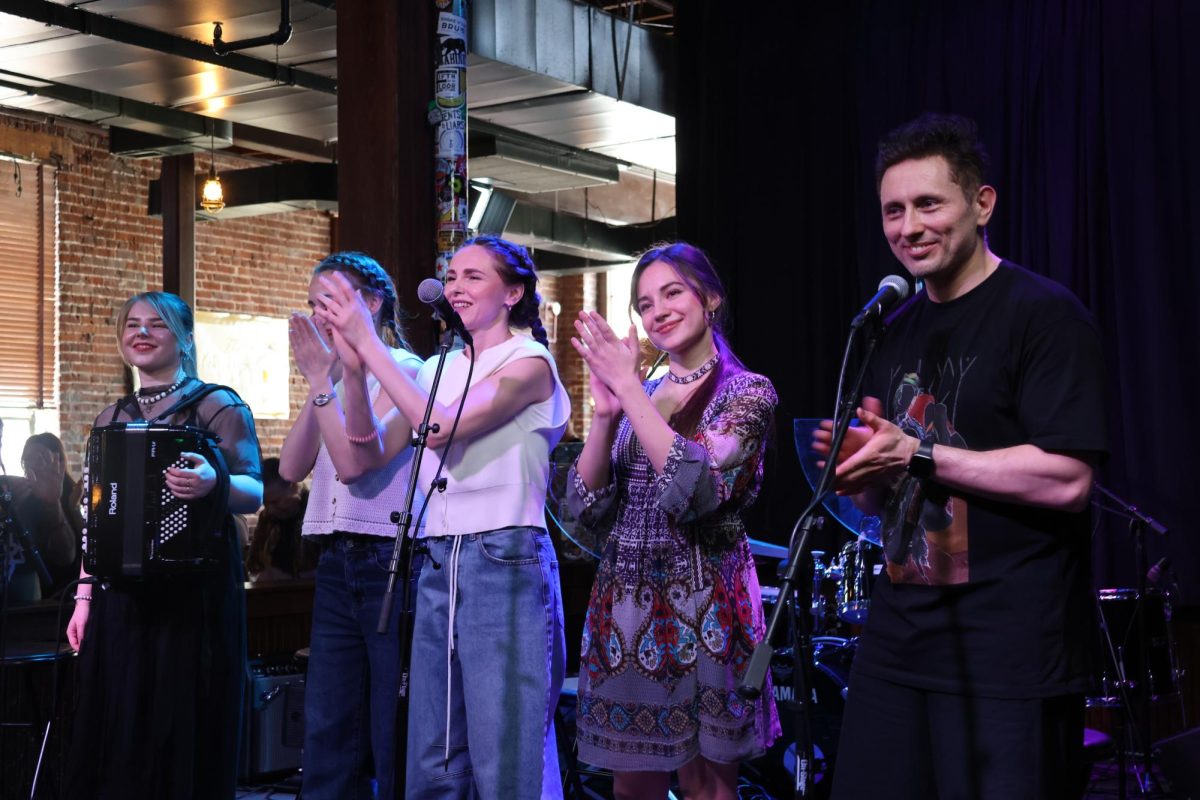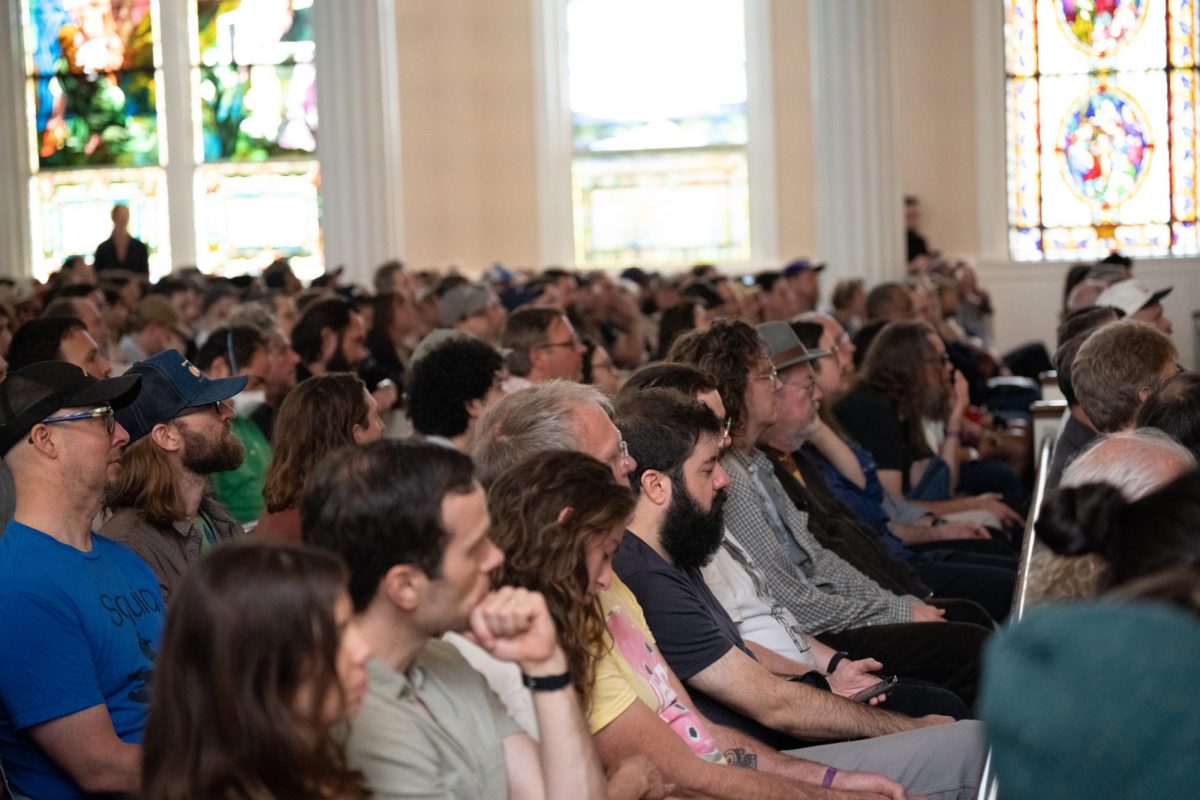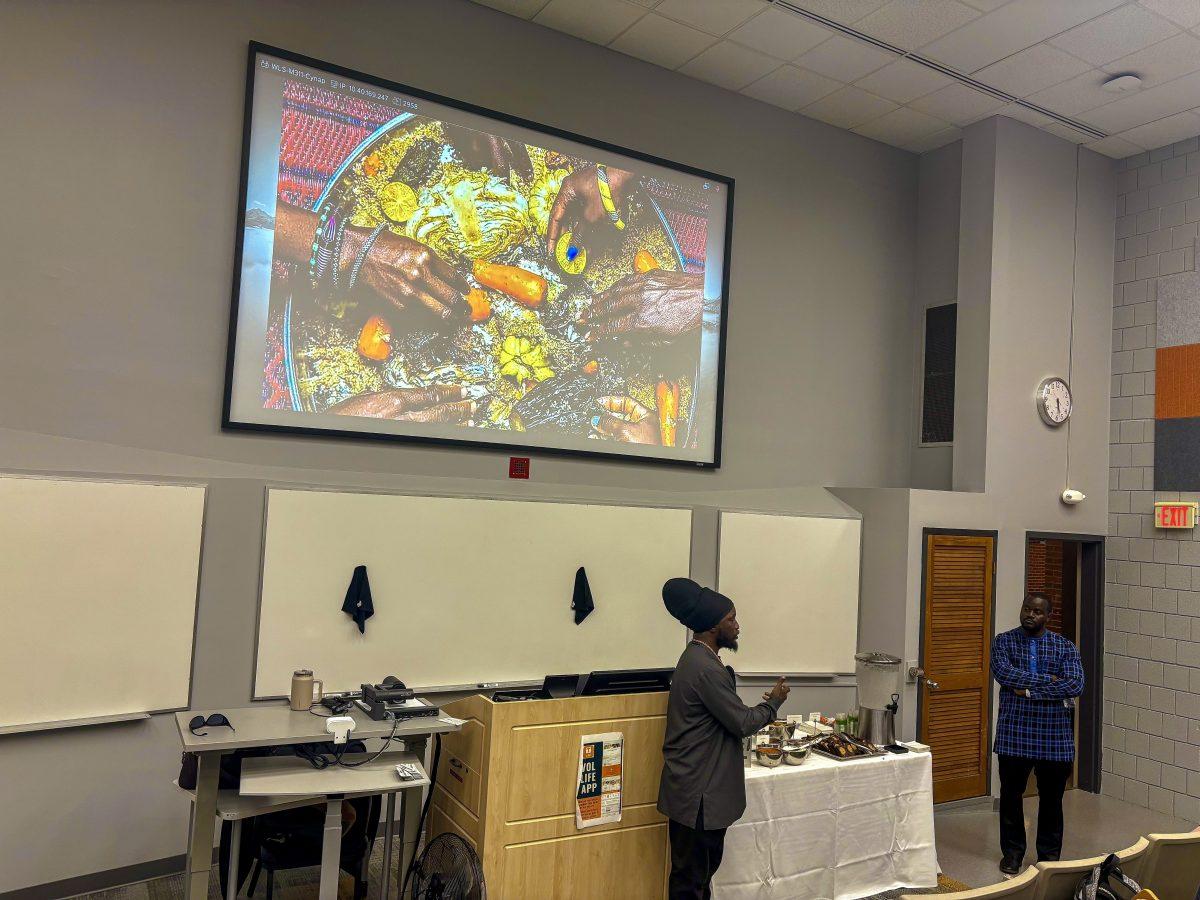
On Oct. 22, the Walters Academic Building hosted Senegalese artists Docta and Simon, who showcased their craft which highlighted the socioeconomic issues for the West African community.
This event welcomed all students and staff, offering attendees the opportunity to view videos of their artwork created in Senegal, Africa. They also heard inspiring stories, enjoyed presentations and participated in one of Simon’s songs.
Amadou Lamine Ngom — known as Docta — was recognized as the first graffiti artist to create illustrations focused on raising awareness for public health issues in Africa.
Docta’s passion for graffiti started when he was a young boy. His first supporter was his grandmother, who would allow him to paint on the walls of their house. His first piece of work was to bring attention to cleanliness and trash.
This wall not only amazed his grandmother but caught the attention of his grandfather, who Docta said never came out of his room.
“My grandfather said, ‘This should remain even after my death.’ That wall is still standing in my grandma’s house for 12 years now,” Docta said.
As Docta got older, he took his art to the next level as he initiated graffiti festivals. One of them is the most prominent graffiti festival in Africa today, called FESTIGRAFF.
From Africa to international relations, Docta’s graffiti designs caught the attention of CNN and various U.S. businesses, ultimately leading to interviews.
Docta also shared his knowledge and skills with younger generations by training the youth in Africa to engage with civic and cultural issues.
“Art is nothing without the community,” Docta said.
One of his most significant pieces was transforming a wall in Africa to display the hardships of the government. During that painting, over 10 people were killed by protests and strikes by the police.
“We are suffering from politics,” Docta said. “It divides us.”
A significant cultural aspect for Docta and his family is mealtime. This emphasizes one of the Senegalese values.
“In that moment of gathering it was a privileged moment for our elders to correct younger individuals to exchange with matters of the family,” Docta said.
Given the cultural norm of respecting elders, Docta expresses his voice through art instead of spoken words.
What makes Docta’s artwork unique compared to American graffiti is that he tells stories of specific events occurring in Africa that the U.S. does not face. In the U.S., graffiti comes with a negative connotation, but Senegal would be nothing without it.
His partner Simon is a poet and rapper from South Senegal. In 1997, he started rapping for fun.
American rap tends to brag about one’s wealth or relationships. Simon’s words illustrate the true history of Africa, demonstrating that rap can convey a deeper meaning.
A pivotal moment that motivated Simon to rap about African history is the misinformation that is taught in schools.
Simon was taught American history about how Christopher Columbus was credited with being the first to discover the U.S. Simon said they lacked teachings about Mansa Abubakari II, an African king who is theorized to have found the U.S. 200 years before Columbus did.
“At school we never learned about our own story,” Simon said. “It is time to bring our people the true story.”
He initiated the movement “Y’en a Marre,” which means “enough is enough.” This movement essentially means that the West African community is “fed up” and demands change, calling for more political engagement rather than social.
While Simon participated in the movement and performed about their president at the time, he spoke about the challenges he encountered while advocating for civic responsibility through his music.
“They put me in jail 27 times,” Simon said.
Simon’s true aspiration is to change the mindsets of people — in particular the minds of governmental authorities and politicians.
“In our country, our own government thinks we are enemies,” Simon said. “We travel everywhere, (and) they invite us to talk about rapping history, but in our own country, they fight against this because they don’t believe what we do.”