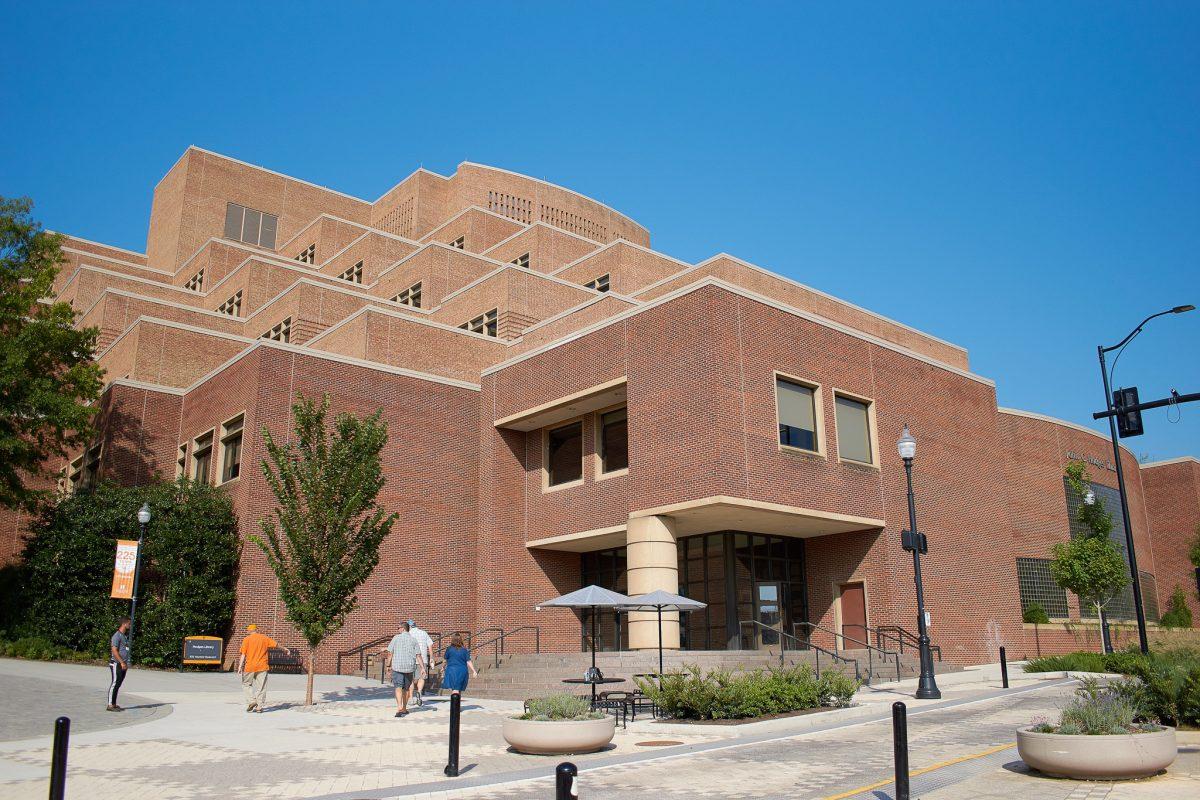
Media Literacy Week will be hosted in various rooms around Hodges Library starting Monday, Oct. 21, and running through Friday, Oct. 25. This week is an initiative under the National Association of Media Literacy in Education, and students will be able to find workshops, games, food, lectures and more.
Media Literacy librarian Paris Whalon said the week is meant to prepare students to see and react to media and understand and respond to it. She said some basics need to be understood when attaining true media literacy.
“The week emphasizes the five key components — access, analyze, evaluate, create and act,” Whalon said. “By mastering these skills, students can better navigate, critique and produce media in today’s digital age.”
These skills are relatively basic in principle, but their combination is crucial to spotting and eliminating impurities in media, according to Whalon. Misinformation is rising, and it requires a response.
“With misinformation so prevalent, understanding media literacy is essential for making informed decisions and consuming and creating content responsibly,” Whalon said. “This week’s events aim to bring visibility to these skills and help students apply them both academically and in their daily lives.”
Information literacy librarian Erin Whitaker said she and her colleagues wanted to make the events as engaging as possible, so they revitalized workshops, added games like “Is that Really True?” and emphasized “makerspace“ activities and social discussions more. According to Whitaker, learning can be a more interactive process, especially in a focus such as media.
“We’ll also be tabling some — students are welcome to drop by and informally learn about all the resources available to them through UT Libraries,” Whitaker said. “They’ll meet their librarians and get some swag, too.”
With the development of artificial intelligence in recent years, newer components will also be added to the week that focus on spotting generative misinformation and using AI ethically.
“In our AI workshop, we’ll focus on the limitations and uses of AI, exploring how it impacts the media landscape,” Whitaker said. “We’ll discuss how AI-generated content can sometimes be biased and the importance of creating media ethically and responsibly and even sustainably.”
AI is a powerful tool with a lot of potential, and that potential could be positive or negative depending on the user and their intentions. With generative content becoming better and better with each new generation, the need for solid media literacy also grows. Whalon said thinking critically is necessary now more than ever.
“In today’s digital world, media literacy is essential for navigating the constant stream of information students face. Media literacy not only enhances academic performance but also helps students make informed decisions in their personal lives,” Whalon said.
Media is now more intertwined with our personal lives than ever, so the importance translates beyond work, school or social discussions, according to Whalon. Being informed can mean the difference in one’s entire worldview and learning how to understand media content can help you gain autonomy in shaping that view.
Beyond the next week, Whalon said there are resources in Hodges available to all students year round, such as library discovery platforms, database aggregators like EBSCOhost, citation management software such as Zotero, EndNote and PowerNotes, LibGuides and online tutorials.
“As librarians, we are here to guide students in navigating these resources — whether it’s managing citations, evaluating sources or conducting research,” Whalon said. “These tools, alongside our personalized support, help ensure that students can continue to develop their media literacy skills well beyond Media Literacy Week.”
For students interested in participating in Media Literacy Week, a full schedule of events planned for the week is available here.