The third year of college is when things start to get real for students. What do I mean by this? It is time to start looking for a job.
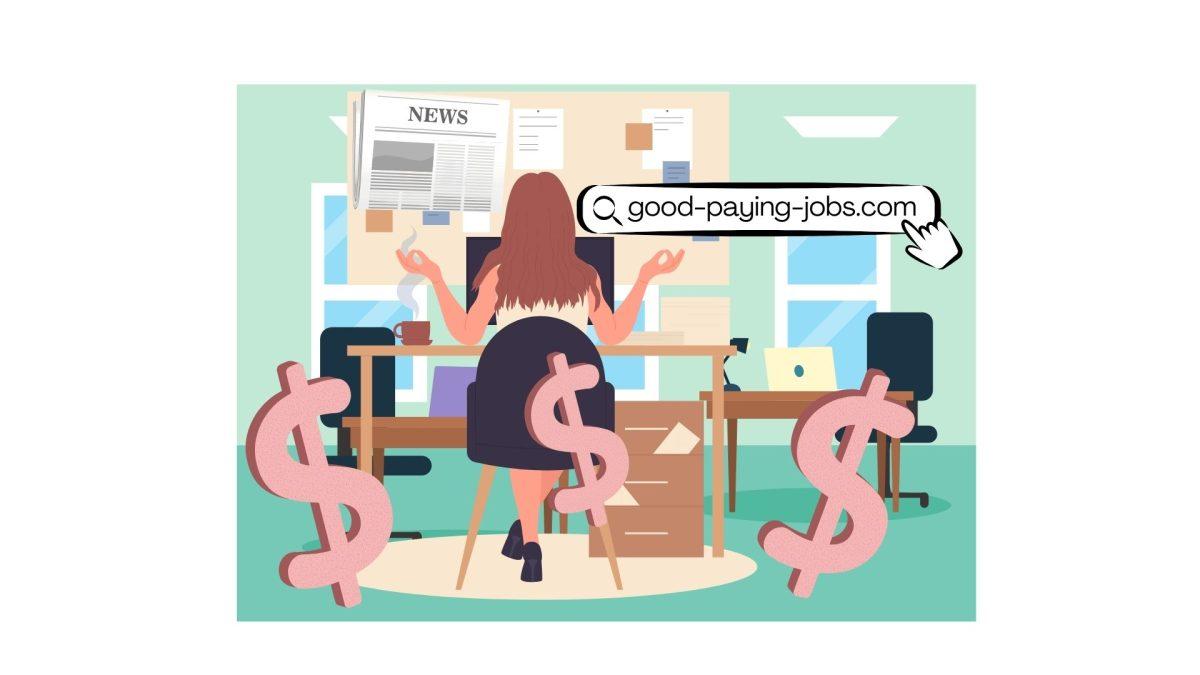
When I found myself in this very position, I started to research careers that most interest my field of work. After typing in careers such as “writer,” “journalist” and even expanding my horizons to “reporter,” I was not pleased to find the salaries that corresponded.
As a journalist and freelance writer, I wish nothing more to succeed in my career. However, succeeding is a very broad term, and I believe it means something different for every individual. This raises the question, “How does one know that they have ‘made it,’ and how does it mean they are successful?”
Truthfully, my personal definition of success is centered around how much money I will make. While this might seem like a surface-level definition, it is the truth.
Finding a high-paying and respectable job after college is something that is incredibly important to me, and I think about the possibilities of it every day. I have always believed in making my own money and being able to independently support myself.
On the other hand, while it is the biggest of my concerns, money is not the end-all-be-all. I find great importance in loving what I do as well. This is where my internal conflict comes to light, as I wish to find a career I love, while still receiving reasonable pay.
In today’s economy and ridiculously high inflation rates, having ‘a lot’ of money means something entirely different than it did 20 years ago. For example, when researching what $70,000 was worth in the year 2000, I was astonished to see the climbing growth means it is now worth $128,171. (This information was done mathematically by an inflation calculator.)
However, looking at what $70,000 was once worth two decades ago was not at random. This particular value was the calculation of an estimated salary of my dream job. When crunching the numbers, I divided this amount by 52 to discover what weekly rate I would be receiving, and ultimately came to the realization that writers do not make nearly enough as they should be making.
Per week, that is just barely $2,000. When incorporating rent, groceries, phone bills and miscellaneous expenses, it is safe to say one would just barely be making it. And that is something I am not comfortable with.
Journalists and writers are a catalyst to the social networking world. When news, updates or any information about a trending topic is needed, it is journalists and news professionals who are sought after to have those answers via their different platforms.
Additionally, this does not only apply to news, as writers play key roles in entertainment. TV show scripts, your favorite book or even an article you are led to via a Google search are all significant works done by writers and journalists, yet their pay does not reflect it.
Why is this the case? Joanne Harris illuminates this point beautifully in her article, “Horribly low pay is pushing out my fellow authors — and yes, that really does matter,” by discussing the career of a writer, almost as if it were a game of luck. Harris says that “Some of us are lucky enough to feed the right slot at the right time and hit jackpots of varying sizes. Others bring their own luck to the room — they can afford to feed the slots regardless of what they get in return. But what about everyone else? Who can honestly afford to stay?”
Essentially, if you decide to pursue a career as a writer, know that you might be re-enlightened to what your work is actually worth. This is not to steer young adults away from their dream that might lie within a world of journalism, but rather inspire them to know their skills and be prepared to take chances.
Lastly, just like with any career field, there is a great deal of uncertainty. Where someone is within their job in the early stages, compared to when they might excel in years to come, is something important to remember.
They are two entirely different scenarios that are very much attainable with the right attitude and drive.
A random sample of a $70,000 starting contributor salary will not define my career, nor push me away from my love of journalism, and I am confident that it will only go up from there.
Ansley Graves is a junior at UT this year studying journalism. She can be reached at [email protected].
Columns and letters of The Daily Beacon are the views of the individual and do not necessarily reflect the views of the Beacon or the Beacon’s editorial staff.