The state of Tennessee is in the midst of its fight against the NCAA regarding name, image and likeness guidelines.
U.S. District Judge Clifton Corker wasn’t ready to make a decision following a preliminary injunction hearing regarding the state of Tennessee and the NCAA on Feb. 13. The state of Tennessee — as part of an antitrust lawsuit filed by the attorney general for Tennessee and Virginia — is attempting to freeze the NCAA’s current name, image and likeness policies.
A decision on the preliminary injunction still hasn’t come out from the Feb. 13 trial, but the state of Tennessee feels confident in its chances.
There are a lot of questions surrounding the antitrust suit and where it goes following Corker’s ruling in the preliminary injunction hearing. Here’s a breakdown of the case, some key details to know and what it could mean for the future of the NCAA.
Overview
Why is the state of Tennessee fighting the NCAA in court?
The state of Tennessee is suing the NCAA regarding its NIL recruiting ban. The state of Tennessee argues that the NIL ban “violates federal antitrust law, thwarts the free market, and harms student-athletes.” The state of Virginia is collaborating with the state of Tennessee on the suit.
The state of Tennessee recently was denied a temporary restraining order in federal court but argued for a preliminary injunction on Feb. 13.
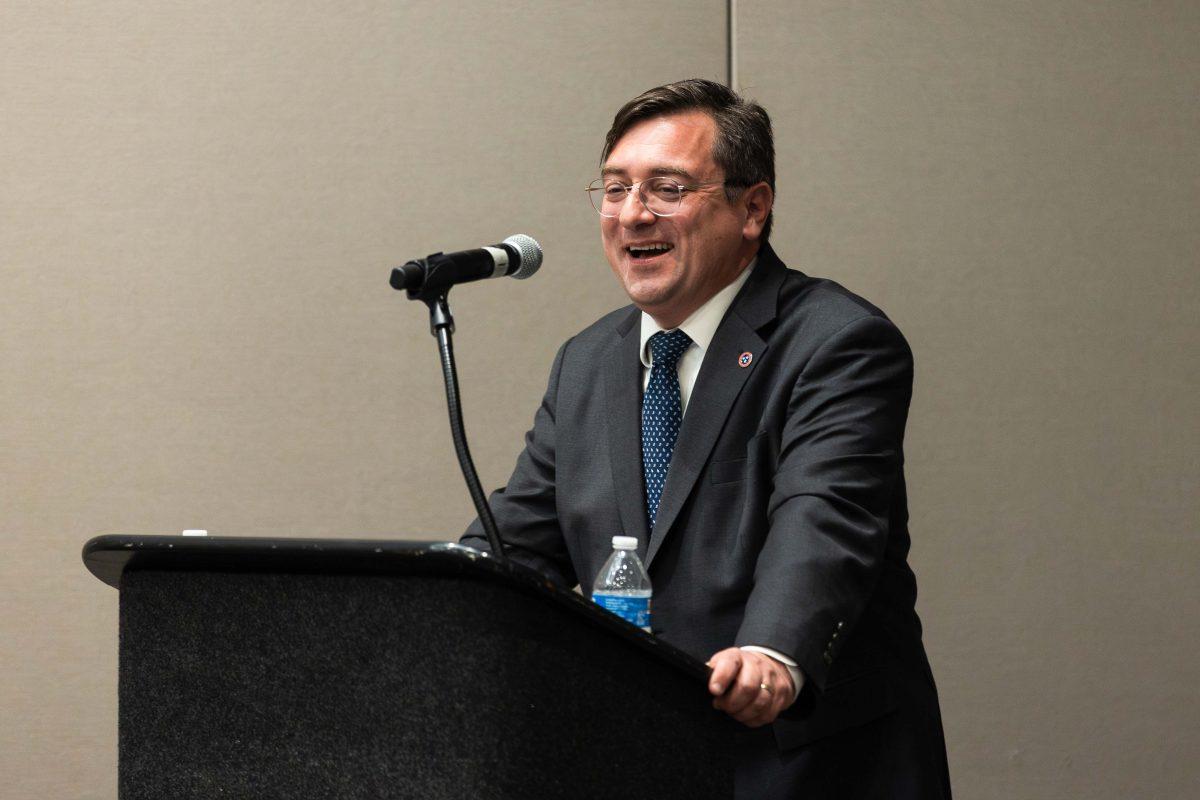
Who is Jonathan Skrmetti?
Jonathan Skrmetti is the Tennessee attorney general. In his role, he is defending the state of Tennessee and prospective athletes from the NCAA. He is serving an eight-year term which began on Sept. 1, 2022. He was chief deputy attorney general to his predecessor, Herbert Slatery.
Skrmetti’s background is in criminal law and white-collar crime. He had stints at the Department of Justice and lived in Memphis before moving his family to middle Tennessee.
Skremetti has had success against the NCAA in a previous case regarding multi-transfer rules in Ohio. In that case, a preliminary injunction was won against the NCAA. Skrmetti has found success in antitrust law since joining the state of Tennessee.
What is antitrust, and why is it used in this case?
The Sherman Antitrust Act was enacted in 1890, and the case Tennessee is bringing forth has to do with Section 1 of the act. Section 1 refers to restraints of trade, and in Tennessee’s case, it is the restraint involving competitors.
The student is only getting part of the picture before deciding on which school to take their talents to, which violates antitrust law. The state of Tennessee argues that there needs to be competition and bids regarding NIL money before a prospective athlete chooses a school.
Is history on Tennessee’s side for this case?
The recent history is on the state of Tennessee’s side regarding its antitrust suit. In NCAA v. Alston, the Supreme Court sided with Alston and paved the way for the NIL system we have today. Shawne Alston was a running back for West Virginia who chose to sue the NCAA regarding its “non-cash education-related benefits.” The Supreme Court ruled unanimously on Alston’s side and paved the way for more cases against the NCAA.
Tennessee School of Law Douglas A. Blaze Distinguished Professor of Law Maurice Stucke specializes in antitrust law and has kept up with the state of Tennessee’s case. Stucke says the amateurism argument that the NCAA relies on is no longer valid.
“I would say like 10, 15 years ago, the NCAA had a stronger argument about preserving amateurism, and amateurism is a key component about the product here,” Stucke said. “But as the Supreme Court noted in a recent decision in Alston, that ship has sailed. There’s not much left of anything of the amateurism rule.”
Following the Feb. 13 preliminary
injunction hearing…
How long will a decision take?
A decision could be imminent, or it could come in a month. As of Feb. 22, a decision has not been made. Expect Corker to take his time with the decision, which will probably be appealed either way. He wants, likely, to make sure his decision is air-tight.
Take the trials with former President Donald Trump for example — decision timelines are all over the place regarding respective judges and their decisions.
“Judges will take their time, especially in matters that have impact the way this decision might have an impact,” said Brian Krumm, associate professor of law at Tennessee. “Then that decision can be appealed too. Judges don’t like to be overruled on appeal, so they’re going to put some time into it.”
If Corker rules in favor of the NCAA, his opinion will likely be short. If he rules in favor of Tennessee, the opinion will be longer. The amount of time it has taken for the decision to be released bodes well for Tennessee.
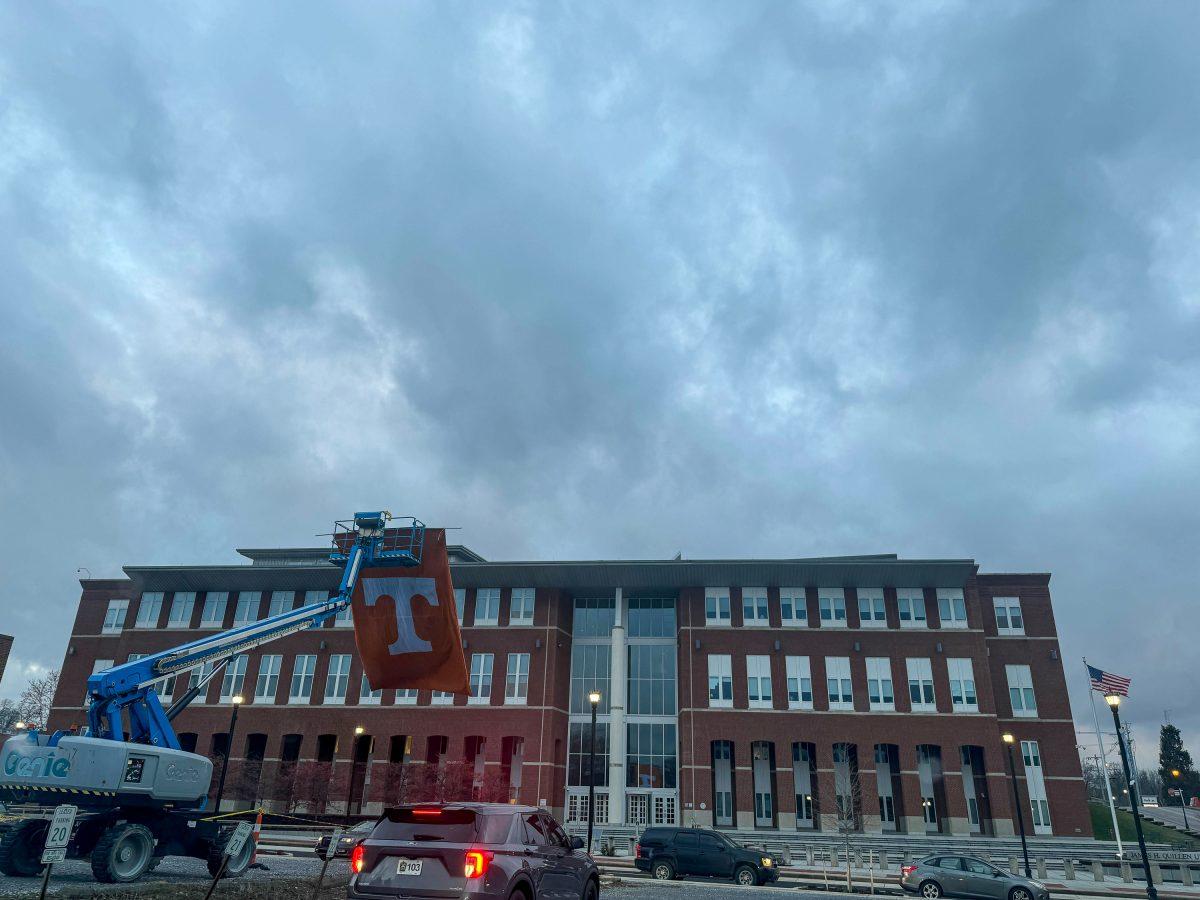
A "Power T" flag hangs outside of James H. Quillen United States Courthouse ahead of a preliminary injunction hearing between the State of Tennessee and the NCAA in Greeneville, Tennessee. Tuesday, Feb. 13, 2024.
How can Tennessee get denied a temporary restraining order but win a preliminary injunction?
The state of Tennessee was denied a temporary restraining order, but Corker wrote that the state had failed to demonstrate that recruits would be irreparably harmed.
An injunction is a stop sign to immediately stop bad acts from happening at all or continuing into the future. The injunction in this case would stop the NCAA’s enforcement of NIL rules.
A temporary restraining order is something that keeps the “status quo” in place until a hearing can take place regarding a preliminary injunction. The injunction would preserve the status quo until the trial is complete. The state of Tennessee is arguing that a preliminary injunction must be put into place now to avoid further damages to student-athletes and prospective student-athletes.
The denial of a temporary restraining order does not mean a preliminary injunction will be denied — it simply means that the judge wants more information before making that decision. It also means that the state of Tennessee must put forth more evidence to go from a denied temporary restraining order to receiving the preliminary injunction.
How much more evidence Tennessee needs depends on the opinion of the judge.
“In this case, we don’t know how many students are out there seeking NIL agreements and how that affects their long-term career,” Krumm said. “Some of the things I’ve read suggest that if you don’t know what the possibilities are, you’re at a disadvantage.”
Corker must decide if the harm to athletes is great enough to grant the preliminary injunction. He also must feel that Tennessee has a chance in the long run to win the case.
Why is the state of Tennessee arguing irreparable harm?
Once you cut down a tree, the damage is irreparable. A preliminary injunction, for example, would stop the trees from being cut down.
Convincing the judge there is damage that can’t simply be paid back is the basis of the state of Tennessee’s argument. Tennessee says that not having a competitive marketplace for student-athletes ahead of them choosing a school is something the student can’t go back and get later.
The leverage that the student-athlete once had is immeasurable and can’t simply be repaired with money considerations, according to the state.
Who is being irreparably harmed?
The state of Tennessee is arguing that student-athletes nationwide are being irreparably harmed by not being able to negotiate their NIL deals ahead of choosing a school.
The state’s representation also mentioned how NCAA investigations, like the one into the University of Tennessee, can damage the state’s economy. Tennessee football drives a lot of money into Tennessee, and an investigation could lower that number and the happiness of Vol fans.
While the main argument is regarding prospective student-athletes, state of Tennessee representation still brought up the University of Tennessee in oral arguments.
Is it the NCAA’s fault?
There are several schools of thought on the NCAA and its handling of the current landscape in college athletics. Michael Elkins, a partner and founder at MLE Law, a full-service labor and employment, sports, and business law firm, believes that the NCAA should have begun sharing money with student-athletes a while ago. In Elkins’ eyes, it would have prevented the cases we have today.
“The NCAA could have done any number of things to prevent this from happening,” Elkins said. “Which really just would’ve included sharing the wealth with the people that are essentially creating it, and they refuse to do it. And they refuse to do it for real arcane reasons, like the tradition of the game. And when kids commit, they have to stay for four years. That’s nonsense. There’s no real, actual, any analytical basis for that other than we like things the way they are.”
Krumm is of a different mind and currently working on research for a law article he hopes to get published, which relates the change to innovation economics — things, like college athletics, grow and change, then require new rules.
It is not the blacksmith’s fault that cars were invented, so it isn’t the NCAA’s fault that college athletics blew up and began making so much money. At the end of the day, it is the NCAA’s job to support amateur athletics.
“It’s a function of change,” Krumm said. “It’s a function of — alright, we recognize that we have student-athletes that probably deserve to be able to participate in some of the revenue sources that are being generated based on their performance. I mean, how long ago did professional athletes start competing in the Olympics? It’s one of those things that society evolves and sometimes that evolution is not easy.”
Can Tennessee win the preliminary injunction hearing?
The state of Tennessee has a solid chance at being granted a preliminary injunction. Corker has already written, in his denial of the temporary restraining order, that he feels Tennessee has merits to win the case long term.
He has already decided that he feels there is a violation of antitrust law based on past comments, but now he must decide if it is drastic enough for a preliminary injunction.
If the state of Tennessee is granted
a preliminary injunction…
If the state of Tennessee wins, the NCAA’s current guidelines on NIL would be paused. The opinion from Corker will likely be a long one.
What is the next step?
The NCAA will likely appeal the decision to the 6th Circuit Court of Appeals in Cincinnati. There is also reason to believe the NCAA would back off and step back from its investigation into the University of Tennessee, but that would be a call from NCAA President Charlie Baker.
Could other states join in?
It would be hard to believe that other states are not watching Tennessee in its fight against the NCAA. If a preliminary injunction is granted, Tennessee would have a “win” against the NCAA in the courtroom, which could lead to other states joining the fight.
If the state of Tennessee is denied a
preliminary injunction…
Current NIL rules would remain in place. The opinion from Corker would likely be short and look back on his denial of the temporary restraining order.
What is the next step?
Tennessee would want to see why it lost. A denial of the preliminary injunction could mean that Corker doesn’t see Tennessee succeeding long-term against the NCAA. If that is the case, the state may back off.
If that isn’t the case, then Tennessee would likely appeal to the 6th Circuit Court of Appeals in Cincinnati. A preliminary injunction could be denied, and Corker believes that Tennessee can still succeed on the merits. Then, the state would likely push onward.
Required reading
State of Tennessee, NCAA conclude preliminary injunction hearing, expect decision in ‘short order’
Why Donde Plowman sent a letter to NCAA President Charlie Baker
UT athletics director Danny White speaks out on NCAA investigation
UT Chancellor Donde Plowman calls NCAA ‘morally wrong,’ fires back amidst alleged NIL violations
Report: Tennessee under NCAA investigation for NIL violations
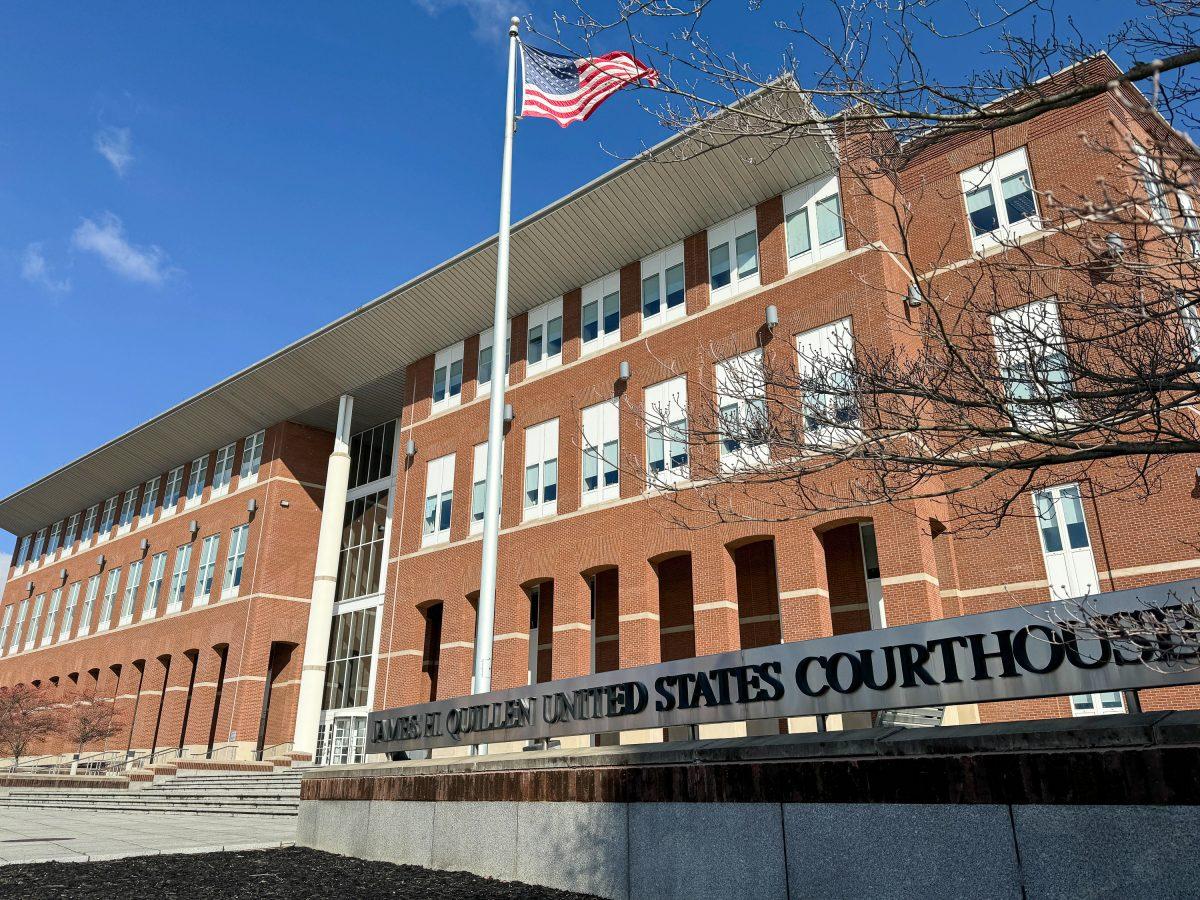
James H. Quillen United States Courthouse following a preliminary injunction hearing between the state of Tennessee and the NCAA in Greeneville, Tennessee. Tuesday, Feb. 13, 2024.