Step through the glass doors of the Thornton Athletics Student Life Center, and you’re immediately met with a calm but focused energy. The front desk greets you with a friendly smile as you check in with a quick QR scan. Straight ahead, the main study space unfolds — rows of computers hum softly, students lean into open textbooks at shared tables and printers fire off last-minute papers. To the left, a hallway buzzes with quiet conversations between athletes and advisors, where class schedules are ironed out, tutoring sessions are booked and goals are mapped. It’s a familiar rhythm for student-athletes juggling the demands of the classroom and the playing field, track and field athlete Alyssa Raymond said.
Downstairs, the atmosphere shifts. During the day, it’s a tucked-away study zone. At night, it transforms into a space where the community takes the spotlight, hosting events led by organizations like Volunteers Overcoming Illuminating Changing Empowering (V.O.I.C.E.), turning academics into something more meaningful. This is the home of Tennessee Tailored, the latest initiative at the University of Tennessee designed to help student athletes manage their academic workload through personalized support and leadership development programming.
Tennessee Tailored’s mission is “to continuously advance the experience for Vols and Lady Vols by offering a more intensive focus on each student-athlete and allowing them to become the best version of themselves academically and athletically.”
The program has proven to be successful, according to information obtained from a public records request. UT student-athletes posted an average GPA of 3.38 across all 20 varsity sports in 2024 alongside the support of Tennessee Tailored.
With Tennessee Tailored, the University of Tennessee has provided institutions nationwide with a step-by-step guide to developing a successful athletic program while maintaining excellent academic standards.
Meeting, exceeding academic standards
Student-athletes walk a tightrope between the demands of their sport and the expectations of academic success. The average college student spends about 15 hours a week in class. The average student-athlete? More than 20 hours on their sport alone — the equivalent of a part-time job — in addition to attending classes, studying and maintaining a social life. Because of the time commitment, student-athletes must be able to manage their time and maintain mental resilience.
Hunter Barnes, a junior kinesiology major and member of the Tennessee football team, handles this pressure of managing sports and academics by focusing on one task at a time.
“(I) lock in (at each) moment because there is a task at hand and tell myself ‘right here, right now,’” Barnes said.
For Barnes, a “right here, right now” is a daily reminder of the pressure of being a student-athlete. Most of his time is spent on the gridiron, especially during the season. Barnes emphasized the necessity of time management to remain ahead of assignments and minimize stress caused by early morning meetings, intense practice schedules, playbook memorization, classes, film sessions and late-night study. Tennessee Tailored offers him the support he needs to successfully execute that time management, especially when he’s on the road.
Constant travel increases the burden on student-athletes to excel academically and athletically.
“(Student-athletes) are always ‘go, go, go,’” Alyssa Klooster, an academic counselor at Thornton Athletics Student Life Center, said.
Some teams have more demanding travel schedules than others too, with some Olympic sport athletes like the men’s and women’s swim team often on the road for weeks at a time, forcing them to manage coursework — online lectures, study hours, tutoring sessions — while on the move.
“Managing my workload during the spring semester could be very challenging, especially when we miss entire weeks for SEC and NCAA competitions,” Griffin Hadley, a member of the men’s swimming and diving team, said. “Fortunately, we have a strong support team that helps us stay on track by creating plans for missed work and even proctoring exams remotely while we travel.”
Tennessee Tailored is that program, a program designed to support all student-athletes.
Klooster said she works closely with these Olympic sports athletes, monitoring grades and pushing in-house tutoring if someone falls behind.
“They’re not just here to play,” said Klooster. “We have systems in place — Canvas checks, regular grade reports, tutoring requirements. We support them, but we also hold them accountable.”
Fifth-year senior and jumper Mikele Vickers recalled that the expectations never disappeared, even when she was performing well in class.
“If you’re doing great, they’ll leave you alone. But you’ll get texts, calls and reminders if you slip,” she said. “There’s no hiding.”
Student-athletes are evaluated yearly through “Progress Toward Degree” checkpoints, ensuring they meet credit and GPA benchmarks. Without meeting those marks, they can’t compete.
“We monitor their grades and support their time management, but we also push tutoring and office hours when needed,” said Klooster. “It’s about more than just staying eligible.”
Inside the program
Mentorship is also a part of Tennessee Tailored — newcomers are often paired with upperclassmen to help ease the transition from high school to college.
“They may not appreciate it as freshmen,” Klooster said, “But by junior year, they realize how much that early support helped. It’s about teaching them how to navigate college independently but with guidance.”
Technological tools like the TeamWorks app, which sync student-athletes’ practice schedules, meeting schedules and course schedules in one place, have also transformed how athletes balance competing priorities with the support of Tennessee Tailored.
Tennessee Tailored is also home to leadership and professional development initiatives, including resume workshops, interview coaching and financial planning sessions. Through Vol to Vol Networking, alums return to campus to offer career advice and insight into life after sports.
“Alumni come back to speak with sophomores and older student-athletes to help them navigate life after college,” Klooster said.
Workshops on budgeting, taxes and personal finance help athletes take control of their money early. Networking events and resume clinics connect them to opportunities they may never have explored without the support of Tennessee Athletics.
“Many of our students have pro aspirations,” Klooster said. “But they also set themselves up to figure out what life looks like after sports.”
How Vols confront burnout, find balance
The pressure to be exceptional in multiple arenas can take a toll — especially when student-athletes are expected to perform like professionals on the field and scholars in the classroom. With cameras capturing their every move and professors expecting academic excellence, it’s easy to feel as though there’s no room for error. Klooster is aware of this and works with student-athletes to improve their mindset and mental well-being as part of Tennessee Tailored.
“I always tell my athletes — take time to breathe,” said Klooster. “They’re always on the go: class to practice, weights to film, then tutoring. But mental health matters. That’s why we have specialists who constantly check in with our athletes beyond their academics.”
Tennessee’s commitment to student well-being includes access to sports psychologists and a designated sports mental health specialist, who support student-athletes navigating intense workloads and constant expectations.
Working with this mental health coach has particularly benefited Vickers, especially after she faced an achilles injurylast season and struggled to return to form.
“I felt like I was drowning,” she said. “I almost walked away.”
Instead, she found new strategies to cope.
“I started writing everything down in my planner, listening to study music to focus and finding quiet time just to isolate and breathe,” she said. “I had to remind myself of the end goal: graduating. That’s what pushed me through.”
Her drive for excellence is still there, and her calendar — though more organized — is still packed from 8 a.m. to 7 p.m. with commitments including weight training, classes, practice and student organization meetings. Still, she has new tools to handle that pressure now.
“You have to build tough skin,” Vickers, who also majors in psychology, said. “College athletics is humbling. There are highs and lows, but the lessons in discipline and leadership stay with you forever.”
Vickers’s sentiment is shared by her peers. Tennessee athletes chase excellence in all aspects of their lives, but that pursuit can be draining.
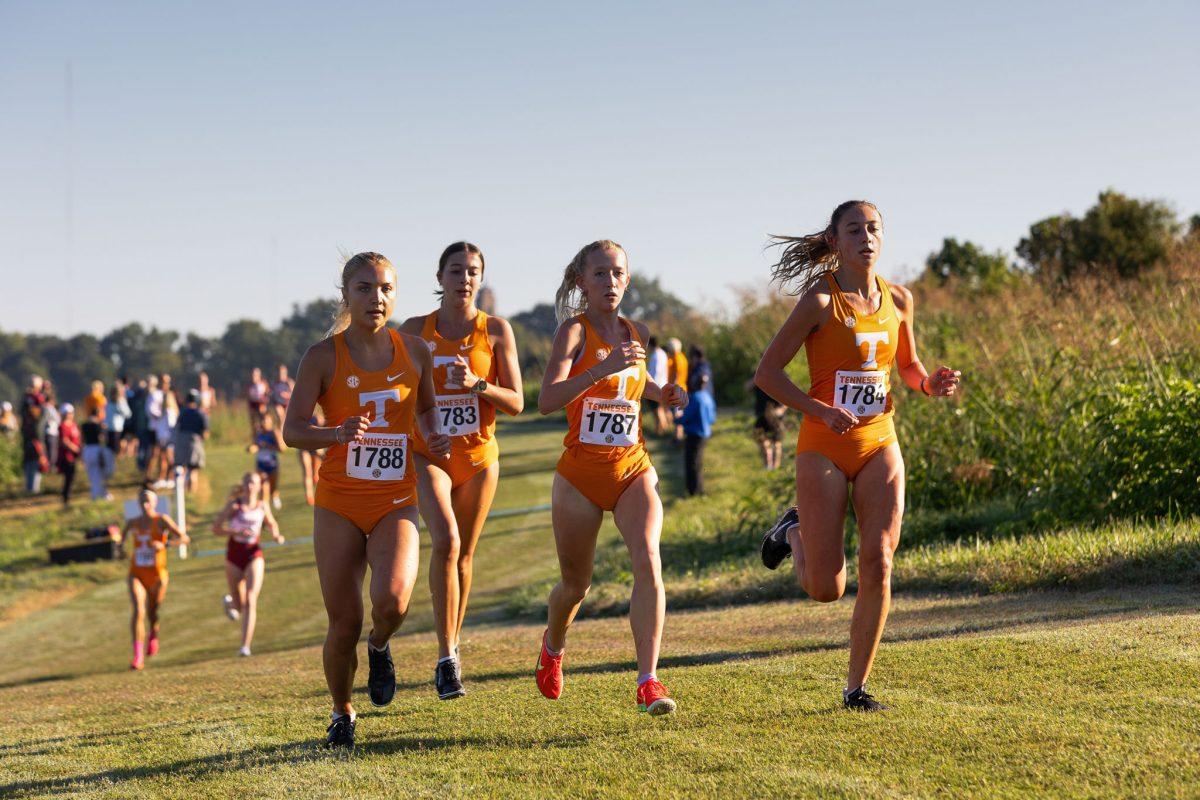
“There’s always this internal voice saying, ‘Don’t be average,’” Alyssa Raymond, a sophomore civil engineering major and track and field team member, said. “The worst feeling is knowing I have work due or a test coming up and feeling completely overwhelmed. I don’t want to be mediocre. I want to be outstanding.”
Raymond also emphasized the importance of structure and support. With a demanding academic schedule and rigorous training, she’s developed a system that works.
“I use my phone calendar religiously, and I reach out to professors ahead of time when I know I’ll miss class. You can’t wait until the last minute,” she said. “Spring semester was the toughest — it was my first time really feeling the weight of college level engineering and athletics. But I’ve learned to be self-motivated and not afraid to ask for help.”
Vickers’ and Raymond’s experience balancing school and sports is similar to Barnes’ lifestyle with football.
“People think we’re just coasting through college,” Barnes said. “But I’m up at 7:25 a.m. for special teams meetings, then practice, then class all afternoon. After that, it’s dinner, more meetings and homework. If you want to do well, you have to really lock in.”
Barnes prioritizes finishing assignments a week ahead to free up brain space for the playbook and team responsibilities.
“When I know I’m on top of school, I’m more relaxed on the field,” he said. “It’s all connected.” “You have to be present in whatever you’re doing, whether it’s football or schoolwork. That mindset helps me not get lost in the chaos.”
Building futures beyond the uniform
Student-athletes at Tennessee are setting records, earning degrees and building futures that will last long after the final whistle.
This past March, 10 seniors and recent graduates from the University of Tennessee have been designated as Torchbearers, the university’s highest undergraduate student distinction, for their academic excellence, devotion to service and leadership.
Four Torchbearers were athletes: Luke Bibee, a senior on the cheer squad, Jahmai Mashack, a senior guard on the UT men’s basketball team, Kate McCarville, a senior on the women’s swim team, and Griffin Hadley, a senior on the men’s swim team.
According to Tennessee archives, this is the first time three or more student-athletes have received the honor in the same year since the first year, with Hadley and Mashack becoming the only non-football male players to do so since 1953.
Since his freshman year at UT, Bibee has been a part of the cheerleading squad, and in 2024, he helped the team win the Gameday National Championship. He additionally had the highest GPA in the spirit program for the 2023-24 school year.
Mashack, a two-time SEC Community Service Team honoree, works closely with Second Harvest in Tennessee to address the food scarcity situation, directly feeding over 3,500 people and raising more than $1 million.
McCarville has over 200 hours of service and has participated in events such as neighborhood holiday meals, “Read to Lead” and kickball with local children. She is also a two-time CSCAA Scholar All-American, has been recognized to the SEC Academic Honor Roll three times and holds a 4.00 GPA as a therapeutic recreation and psychology student.
As a member of the VOLeaders Academy, a leadership development program for student-athletes that emphasizes personal growth, service and professional skills, Hadley has also shown leadership through his involvement with sports media. He served as the co-sports director for WUTK, interned for Omaha Productions and worked with The Volunteer Channel covering everything from the 2024 presidential election to campus sports.
Hadley said he’s learned ways to utilize sport to effect positive change in local and international communities throughout his career as a Vol.
“Ever since I arrived at UT, I realized that being a Vol meant something much bigger than yourself and operated with that mindset during my four years on campus,” Hadley recounted. “Tennessee Athletics and the VOLeaders Academy specifically are a massive reason why I was in a position to become a Torchbearer and the main reason why I have grown into who I am today.”
This article was produced in conjunction with the course JEM 475. It has been edited and reviewed by members of The Daily Beacon editorial team.